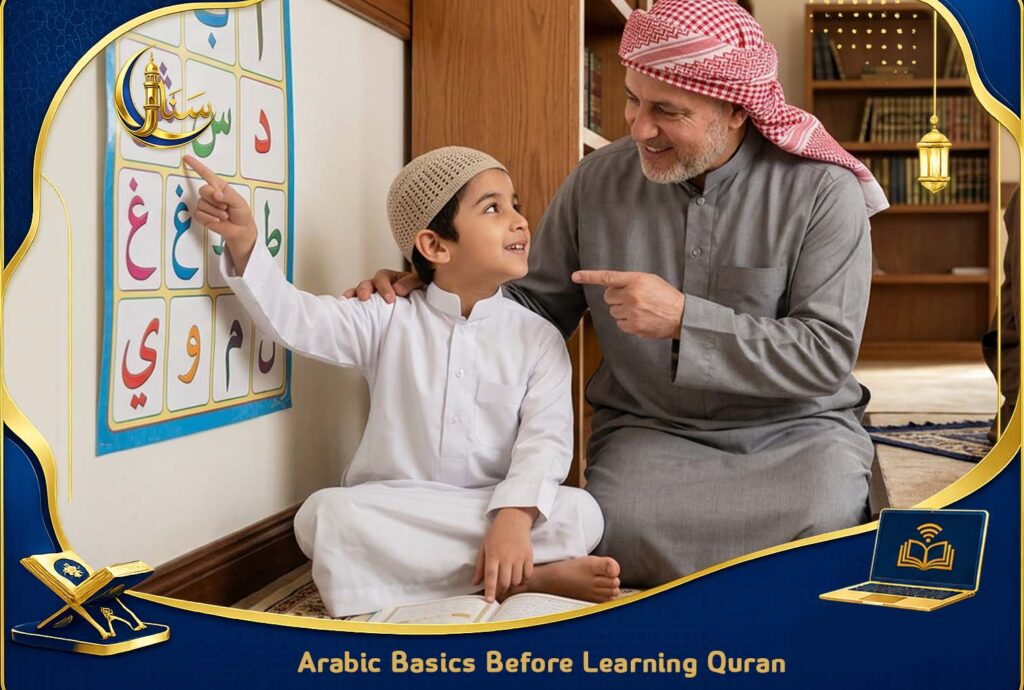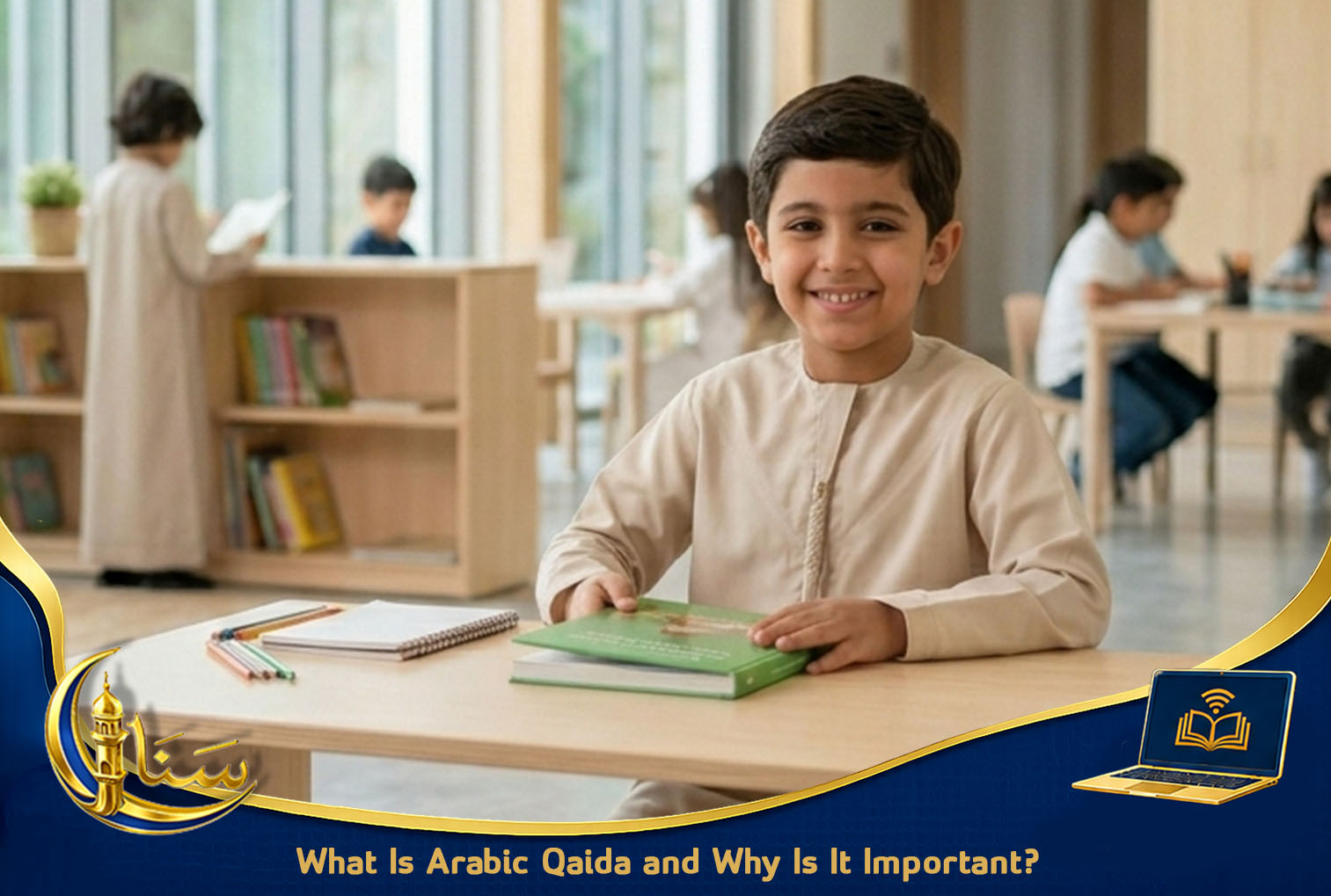
Arabic Qaida is a foundational learning system designed to teach the basics of Arabic reading from scratch. It focuses on helping learners recognize Arabic letters, understand their sounds, and connect them to form words accurately.
The importance of Qaida lies in its simplicity. Instead of overwhelming learners with complex grammar rules, it builds knowledge gradually. Students start with letters, then syllables, and finally full words. This natural progression makes reading feel easier and more intuitive.
Without a strong Qaida foundation, many learners struggle later with pronunciation mistakes, slow reading, or misunderstanding Arabic texts. That is why Qaida is often considered the first and most essential step in mastering Arabic reading and Quran recitation.
Start Your Quran Learning Journey Today with Sana Online Quran Academy
Begin your Quran learning journey today with Sana Online Quran Academy, offering structured and easy-to-follow programs designed for both children and adults. Lessons are taught step by step by qualified and experienced teachers, focusing on reading skills, Tajweed rules, and gradual memorization with clear explanations and ongoing support.
You can conveniently study from home with flexible schedules that suit your daily routine. Regular practice and continuous feedback help strengthen your recitation and deepen your understanding over time. With consistency and commitment, learning becomes smoother and more effective. Join Sana Online Quran Academy today and start a confident and rewarding journey in Quran learning.

Who Can Benefit From Learning Arabic Qaida Online?
The Benefits of joining an Online Quran academy through this learning method are that it is not limited to a specific age group or background. Anyone can start from zero and gradually build their skills. This includes:
- Children beginning their reading journey
- Adults who never learned Arabic properly before
- Non-Arabic speakers who want to read the Quran
- Students in international schools
- Individuals who struggle with pronunciation or basic reading
Because of its flexible structure, online learning makes it even more accessible. Learners can study at their own pace without pressure, which improves retention and understanding.
Why Learn Arabic Qaida Online Instead of Traditional Methods?
Many people still rely on traditional classroom learning, but online Qaida learning offers several advantages that make it more effective for today’s learners.
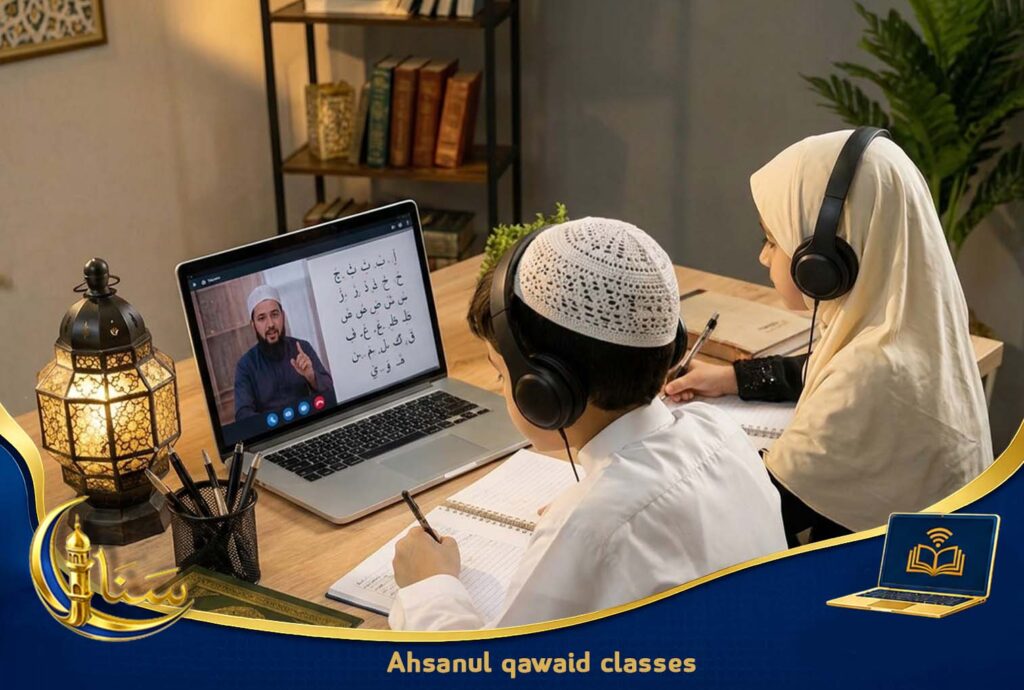
First, it provides flexibility. Students can choose their own schedule and learn arabic alphabets from home without needing to travel. This is especially helpful for working adults or busy parents.
Second, Online Arabic Classes learning offers personalized attention. Instead of large classrooms, students often receive one-on-one guidance, allowing teachers to focus on individual weaknesses.
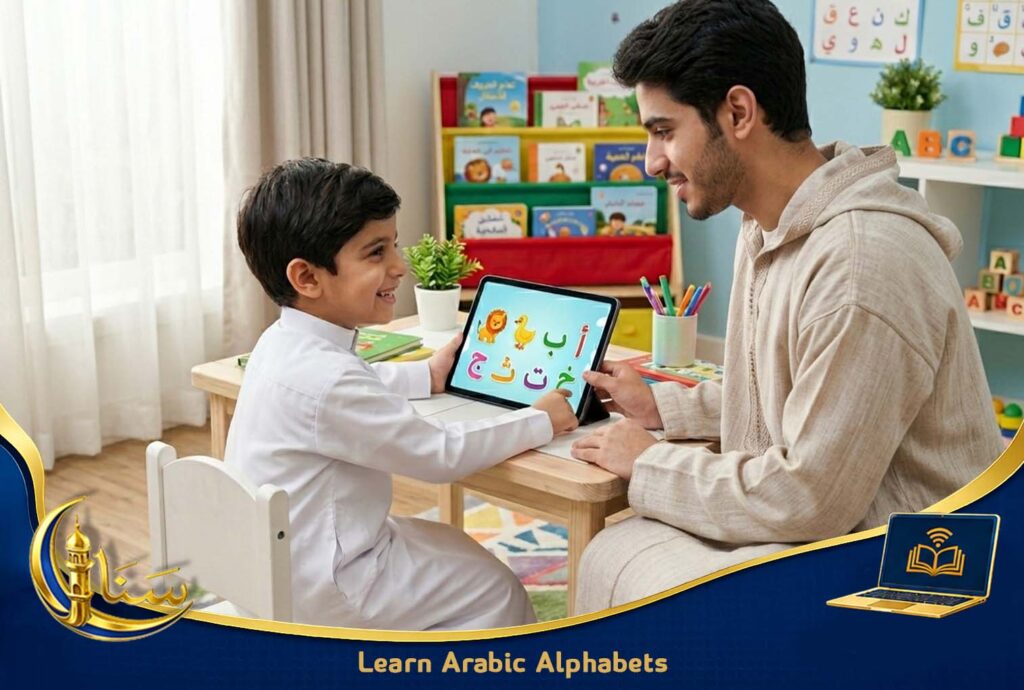
Third, digital tools make learning more interactive. Audio repetition, visual aids, and practice exercises help strengthen memory and pronunciation.
Another important point is consistency. Learners can repeat lessons as many times as needed until they fully understand, which is not always possible in traditional classrooms.
How does the Qaida System Build Strong Reading Skills?
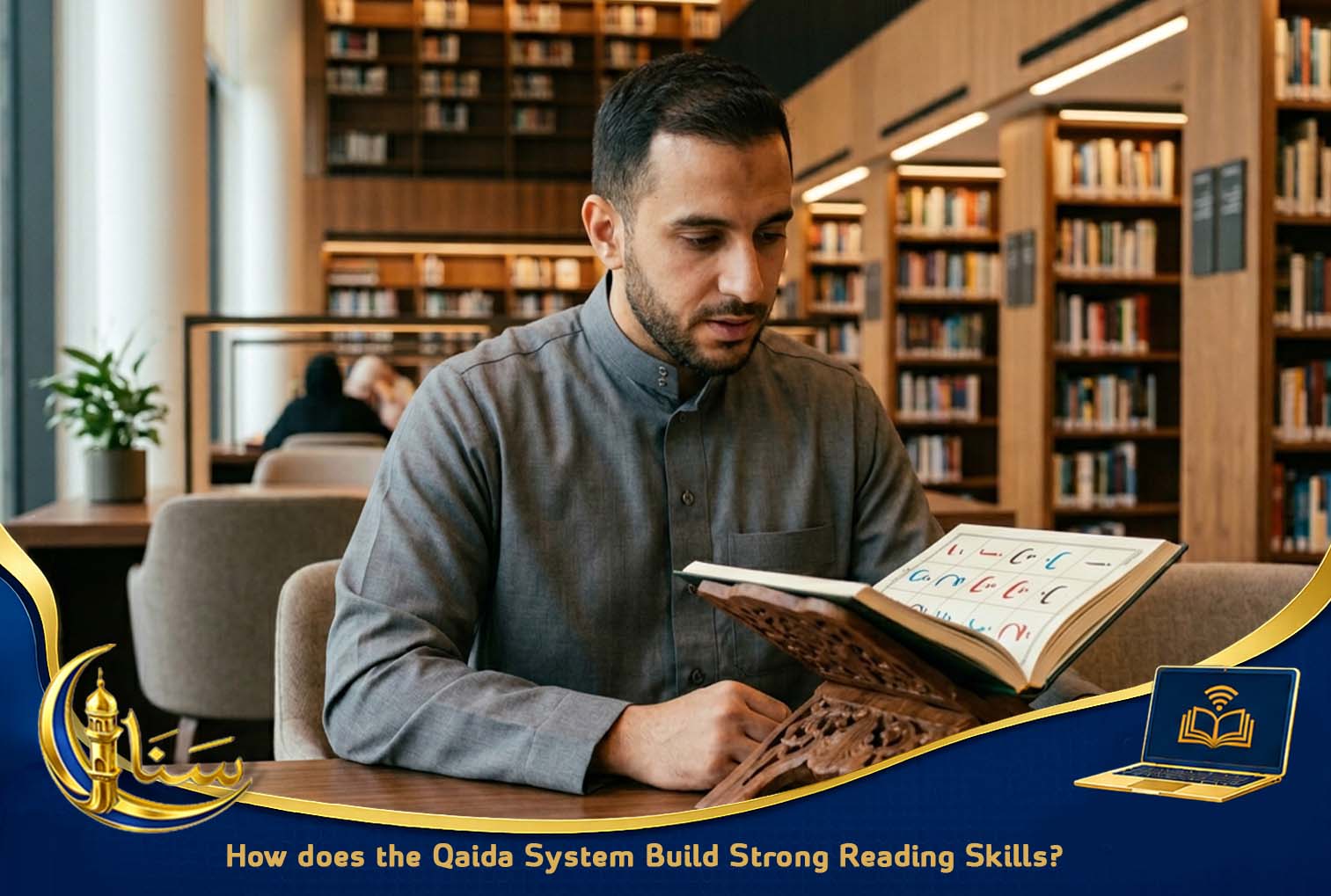
The Arabic Qaida system is based on gradual skill development. It is not just about memorizing letters but understanding how they function in real reading situations. The process usually includes:
- Recognizing Arabic alphabet letters
- Learning short and long vowel sounds
- Practicing pronunciation from the correct articulation points
- Combining letters into syllables
- Reading simple and complex words
- Developing smooth reading fluency
This method ensures that learners do not just read mechanically but understand the structure of Arabic words. At Sana Online Quran Academy, this method is enhanced with interactive practice sessions that help students correct mistakes immediately and improve faster.
Connection Between Qaida and Quran Reading
One of the main goals of learning the Arabic Qaida is to prepare students for reading the Quran correctly. Since the Quran is revealed in Arabic, proper pronunciation is essential to preserve meaning and accuracy.
The Qaida foundation helps learners recognize letters in their proper forms and pronounce them from their correct articulation points. This is especially important for avoiding common mistakes that can change meanings.
Allah says in the Quran:
“Read in the name of your Lord who created.” (Al-‘Alaq: 1)
This verse highlights the importance of reading as the first step toward understanding divine guidance. Learning Arabic correctly is therefore not just an academic skill, but also a spiritual responsibility for those who wish to engage with the Quran properly.
Teaching Methods Used in Arabic Qaida Learning
Different teaching methods are used to make the learning process easier, clearer, and more effective for learners at all levels.
1. Noorani Qaida Method
This method focuses on phonetic learning, and therefore, it helps students master correct pronunciation through repetition, listening, and gradual practice.
2. Al-Baghdadi Method
In addition, this traditional approach develops reading skills step by step, and it builds strong foundations through structured word formation and continuous practice.
3. Al-Bayan Method
A simplified system designed for beginners and children to understand Arabic basics before learning the Quran sounds easy. Each method contributes to building a strong reading foundation, and they are often combined for better results.
Step-by-Step Learning Journey
Students usually follow a clear and structured learning journey that ensures steady progress, gradual skill development, and improved reading confidence over time. Alongside the Qaida, reviewing easy Arabic words for beginners can also strengthen vocabulary early on.
- Learning Arabic alphabet letters
- Understanding letter shapes and sounds
- Practicing vowel sounds and pronunciation
- Reading syllables and small words
- Building fluency through repetition
- Reading sentences with confidence
A gradual approach reduces stress and keeps learners motivated throughout their journey. With guidance from Sana Online Quran Academy, students receive continuous feedback, helping them master each stage before progressing further.
Common Challenges in Learning Arabic for Beginners
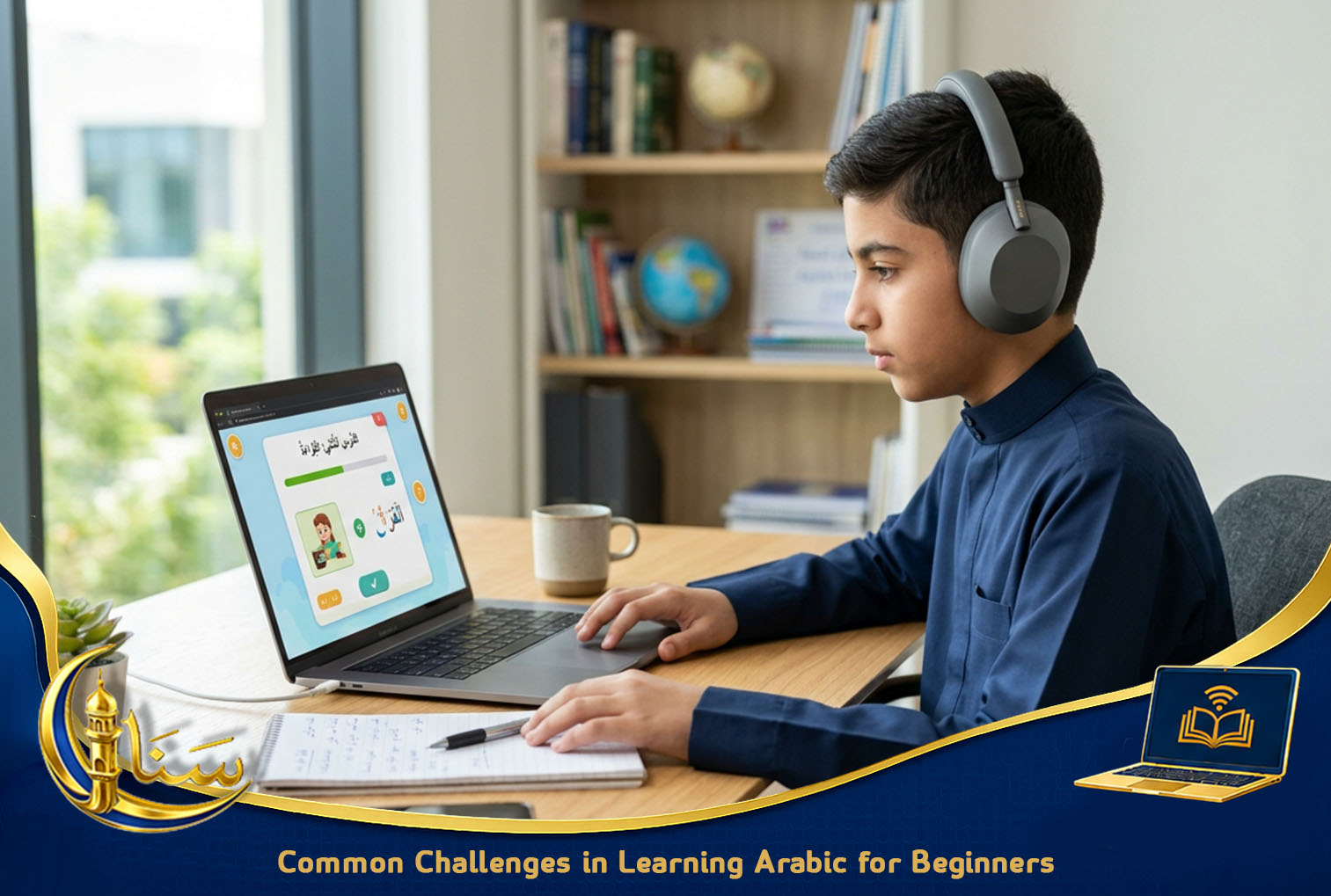
To improve progress in Arabic Qaida learning, learners can follow simple tips such as practicing daily, revising lessons regularly, focusing on pronunciation, and staying consistent with guided study sessions.
- Practice daily, even for short periods
- Repeat difficult sounds multiple times
- Listen carefully to correct pronunciation
- Avoid rushing through lessons
- Review previous lessons regularly
Consistency is more important than speed. Small daily improvements lead to strong long-term results, helping learners build confidence, strengthen reading skills, and achieve steady progress in Arabic Qaida learning.
Why Structured Learning Makes a Difference?
A structured learning system ensures that students do not miss any important step in their Arabic Qaida journey. It provides a clear path that starts from the basics and gradually moves toward advanced reading skills, making the learning process more organized and effective. It also helps teachers identify weaknesses early and correct them before they become permanent habits.
This method builds confidence, especially for adult learners who may feel nervous when starting something new. Instead of guessing or relying on self-learning without direction, students follow a well-planned roadmap that guarantees steady progress, better understanding, and long-term success in reading the Quran correctly.
What Does a Student Learn During the Learning Journey?
During this learning journey, the student goes through a series of carefully organized stages that gradually build strong Arabic reading skills. As a result, each step supports the next one, which makes the process smooth, clear, and easy to follow.
In addition, this structured approach helps learners stay consistent and confident throughout their progress.The learner studies:
- Arabic letters and their correct sounds
- Short vowels (Fatha, Damma, Kasra)
- Sukoon and Tanween rules
- How to form words from individual letters
- Basic reading and writing skills
- Correct pronunciation rules
- Step-by-step reading methods
- How to distinguish between similar sounds
Moreover, as the learner continues practicing, they gradually gain the ability to read Arabic words and sentences more clearly. Therefore, they start reading with greater confidence and accuracy. Eventually, this strong foundation also helps them better understand the Quranic text and prepares them for more advanced levels of study.
The Role of Sana Online Quran Academy in Education
Sana Online Quran Academy plays a key role in providing structured and easy-to-understand education for Quran and Arabic learners, and therefore, it focuses on delivering lessons in a clear and gradual way that suits all levels.
Moreover, it uses modern teaching methods that simplify learning, and as a result, students improve their reading and pronunciation skills step by step. In addition, the academy ensures continuous follow-up and personalized support, which helps learners correct mistakes early and progress effectively.
Furthermore, it builds confidence through regular practice and direct feedback, and consequently, learners develop stronger reading abilities. Overall, the academy aims to create a supportive learning environment that encourages steady improvement and long-term success.
Learn Arabic Qaida Step by Step for Beginners
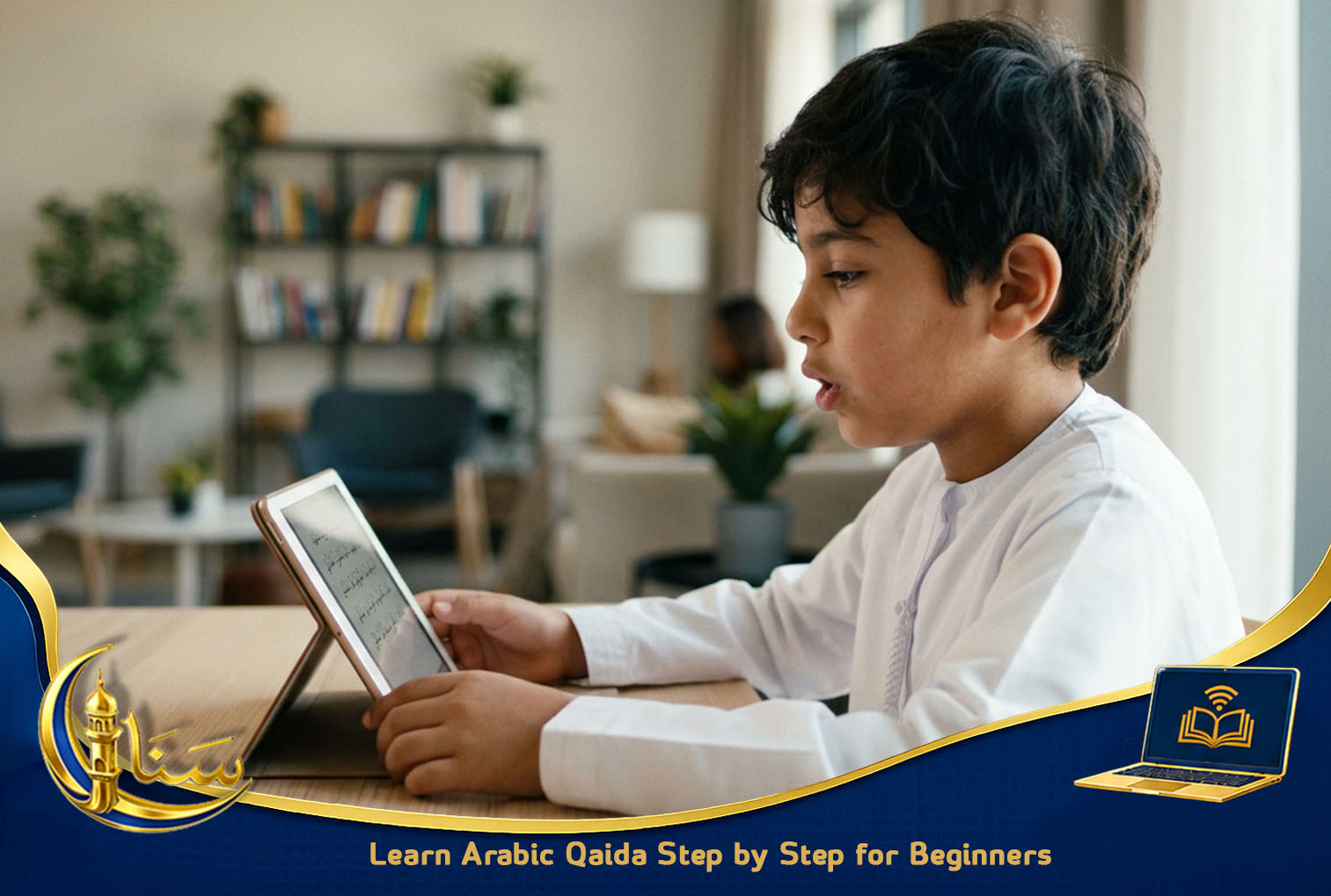
The reading journey is divided into several clear and progressive stages. Because each stage is built on the previous one, learners can develop their skills naturally without feeling overwhelmed. Furthermore, this step-by-step structure improves understanding and long-term retention.
1. Letter Recognition Stage
At this initial stage, the learner focuses on identifying each Arabic letter. In addition, they learn Quran Online Step by step, its shape and basic sound, which forms the foundation of reading.
2. Sounds and Vowels Stage
Next, short vowels are introduced. As a result, learners begin to understand how the pronunciation of letters changes depending on different vowel marks.
3. Word Formation Stage
After that, learners start combining letters to form simple words. Consequently, they begin to see how individual sounds connect to create meaning.
4. Full Reading Stage
At this point, learners practice reading multiple words together. Therefore, their confidence increases, and their reading becomes more stable and accurate.
5. Fluency Stage
Finally, learners reach a stage where reading becomes smooth and natural. In this stage, they read without hesitation, and their pronunciation becomes more automatic.
Overall, this gradual progression not only strengthens memory but also ensures that learning is deeply rooted. In addition, it reduces forgetting and helps learners build long-lasting reading skills step by step.
Frequently Asked Questions about Learn Arabic Qaida
Learn Arabic Qaida provides clear answers to common doubts, helping beginners understand the basics of learning Arabic letters, pronunciation, and how to start their Quran reading journey with confidence.
1. What is Learn Arabic Qaida?
Learn Arabic Qaida is a beginner-level method used to teach the Arabic alphabet, pronunciation, and basic reading skills, helping students prepare for Quran recitation.
2. Who can start learning the Arabic Qaida?
It is suitable for children and adults, especially beginners who have no prior knowledge of Arabic and want to learn how to read the Quran correctly.
3. How long does it take to master the Arabic Qaida?
The duration varies from student to student, but with regular practice and guided lessons, most learners can build a strong foundation within a few weeks to a few months.