
Choosing between Quran Classes vs. private classes is one of the most important decisions for anyone starting their Quran learning journey. Both learning formats help students improve their Quran recitation, Tajweed, and understanding of the Quran. However, each approach offers a completely different learning experience.
Some learners benefit from studying alongside others in a collaborative environment, while others achieve faster progress through personalized instruction. The right choice depends on your learning style, goals, available time, and the level of individual attention you need.
At Sana Online Quran Academy, students can choose the learning format that best matches their objectives. Whether you are a beginner, an adult learner, or preparing for Quran memorization, understanding the strengths and limitations of each option will help you make a confident decision.
Understanding Quran Classes vs Private Classes for Better Quran Learning
Although both teaching methods aim to improve Quran reading and Tajweed, the classroom experience differs significantly. A one-on-one Quran class allows the teacher to focus entirely on one student throughout the lesson. Every mistake is corrected immediately, every question receives a detailed explanation, and every lesson progresses according to the student’s individual pace.
On the other hand, group Quran classes involve multiple students learning together with one teacher. The teacher divides attention among everyone, creating a collaborative atmosphere while naturally reducing the amount of individual correction each student receives.
Neither format is universally better. Instead, each serves different educational needs depending on the student’s experience, confidence, and learning objectives.
Start Your Quran Learning Journey Today with Sana Online Quran Academy
Start your Quran learning journey today with Sana Online Quran Academy, where structured and simple programs are designed for both children and adults. In fact, lessons are delivered step by step by qualified teachers who focus on reading skills, basic Tajweed, and gradual improvement with clear explanations.
In addition, you can study from home with flexible schedules that fit your daily routine. Moreover, regular practice and feedback help you improve steadily. As a result, learning becomes easier, more consistent, and more effective.

Why One-on-One Quran Classes Provide Faster Progress Compared to Group Quran Classes
One of the biggest advantages of private Quran lessons is uninterrupted teacher attention. During every session, the teacher listens carefully to the student’s recitation, identifies pronunciation mistakes, corrects Tajweed errors instantly, and ensures each concept is fully understood before moving forward. This personalized approach provides several important benefits:
* Immediate correction of mistakes.
* Customized lesson plans.
* Flexible learning speed.
* Continuous performance monitoring.
* Greater confidence during recitation.
Since every minute is dedicated to one learner, students usually improve more quickly than they would in larger classes.LearnArabic Alphabet for Beginners to build a strong foundation in reading and recognizing Arabic letters.
Choosing Between Quran Classes vs Private Classes Based on Learning Goals
When comparing Quran Classes vs Private Classes, your personal learning goals should be the first factor to consider. Every student starts their Quran journey with different expectations. Some want to improve basic Quran reading, while others focus on Tajweed, memorization, or preparing for an Ijazah.
Students aiming for rapid progress often benefit from one-on-one instruction because each lesson targets their specific weaknesses. In contrast, learners who simply want to build consistency and develop a regular Quran study routine may enjoy the supportive environment of group classes. Before enrolling, ask yourself questions like:
Do I want to improve my Tajweed quickly?
Am I preparing for Quran memorization?
Do I learn better independently or with classmates?
How much personal feedback do I need?
At Sana Online Quran Academy, instructors help students identify their goals before recommending the most suitable learning format.
Benefits of Group Quran Classes for Collaborative Quran Learning
Group learning remains an excellent option for many students. Learning alongside classmates creates an encouraging atmosphere where students motivate each other, celebrate progress together, and build confidence through shared experiences. Group Quran classes are particularly beneficial for:
* Beginners seeking a supportive environment.
* Children who enjoy learning with friends or siblings.
* Families enrolling multiple children together.
* Students looking for a more affordable learning option.
* Learners who stay motivated through classroom interaction.
Listening to other students also exposes learners to different recitation styles and common mistakes, helping reinforce Tajweed rules naturally.
Quran Classes vs Private Classes: The Importance of Individual Attention
One major distinction between Quran Classes vs Private Classes is the amount of personal attention each student receives. In private lessons, every correction is directed toward the individual student. The teacher can pause repeatedly until pronunciation becomes accurate without worrying about delaying other learners. This focused instruction is especially valuable when correcting:
* Makharij (Arabic letter pronunciation)
* Ghunnah
* Madd rules
* Qalqalah
* Common fluency mistakes
Instead of sharing the teacher’s time with several students, learners receive continuous guidance throughout the session.
Quran Classes vs Private Classes for Children’s Quran Education
Parents often wonder which option gives children the strongest Quran foundation. The answer depends largely on the child’s personality, confidence, and learning pace. Children who are naturally social usually enjoy group classes because they interact with classmates, participate in activities, and feel encouraged by seeing others learn. This environment can increase motivation and make Quran learning enjoyable.
However, children who struggle with pronunciation or require extra attention often improve faster through one-on-one classes. Private lessons allow teachers to repeat explanations, practice difficult letters, and adapt every lesson according to the child’s progress.
With Sana Online Quran Academy, parents can choose either learning style while receiving regular updates about their child’s development.
Quran Classes vs Private Classes for Adult Learners
Adult learners face different challenges than children. Work responsibilities, family commitments, and limited study time often require a flexible learning schedule. Private Quran lessons offer adults the freedom to schedule sessions at convenient times without following a fixed classroom timetable. Adults also tend to feel more comfortable asking questions privately, especially if they are beginners or returning to Quran study after many years.
Group classes remain a valuable option for adults who enjoy discussion-based learning and appreciate the encouragement that comes from studying alongside others.
Choosing between Quran Classes vs Private Classes ultimately depends on balancing flexibility, learning speed, and personal comfort.
Flexibility in Quran Classes vs Private Classes Online
Busy lifestyles often make scheduling a challenge. Private Quran lessons provide greater flexibility because sessions can usually be arranged around work, school, or family commitments. Students who travel frequently or have changing schedules often find one-on-one learning much easier to maintain.
Group classes, however, follow fixed schedules that work best for everyone in the class. Missing one lesson may also mean missing important group activities or discussions. At Sana Online Quran Academy, flexible scheduling allows students to continue learning without disrupting their daily responsibilities.
Which Quran Learning Style Fits You: Group Classes or One-on-One Lessons?
Choosing between Quran Classes vs Private Classes depends largely on your personality and learning preferences. One-on-one learning is ideal for students who:
* Want rapid improvement.
* Prefer individualized instruction.
* Need extra pronunciation correction.
* Feel shy speaking in front of others.
* Have specific Quran learning goals.
Group learning is better suited for students who:
* Enjoy social interaction.
* Stay motivated by classmates.
* Prefer collaborative learning.
* Are comfortable learning at a shared pace.
* Want lower-cost classes.
Understanding how you learn best can significantly improve your overall Quran learning experience.
Comparing Student Engagement in Quran Classes vs Private Classes
Student engagement directly influences learning outcomes. Private Quran lessons naturally keep students involved because they participate throughout the entire session. Every question, recitation, and correction requires active involvement.
Group classes create engagement differently. Students benefit from discussions, collaborative learning, and listening to classmates recite. Observing others’ mistakes can reinforce Quran rules and encourage self-correction.
Both learning environments encourage participation, but they do so in different ways. Understanding your preferred learning style can help you decide which format keeps you motivated over the long term.
Quran Memorization: Which Option Works Better?
Students pursuing Hifz often require consistent feedback and daily correction. During memorization, every verse must be recited accurately while previous memorization is reviewed regularly. Since every learner memorizes differently, private instruction generally offers greater efficiency. A dedicated teacher can:
* Monitor daily memorization.
* Correct mistakes immediately.
* Adapt revision schedules.
* Focus on weak areas.
* Track long-term progress.
Group classes can still support memorization, particularly for revision sessions and peer motivation, but personalized supervision remains highly effective for serious Hifz students.
Learning Tajweed Effectively
Tajweed is a practical skill developed through continuous correction. Every learner struggles with different pronunciation challenges. Some students have difficulty producing certain Arabic letters, while others need help applying elongation rules or stopping correctly at the end of verses.
Private instruction allows teachers to spend extra time correcting these individual challenges until they become natural. Group classes introduce Tajweed concepts effectively, but limited individual practice time may slow the correction process for unique pronunciation issues.
Which Option Builds Better Tajweed Skills?
Tajweed requires continuous practice and immediate correction. Every learner develops different pronunciation habits, making personalized feedback extremely valuable.
During one-on-one lessons, teachers monitor every verse the student recites. They can stop instantly to correct articulation, rhythm, elongation, or stopping rules before mistakes become habits.
In group classes, teachers still explain Tajweed rules effectively, but individual correction time is naturally shared among several students.
Students focusing primarily on mastering Tajweed often achieve greater accuracy through personalized instruction, while group learning provides an excellent environment for reinforcing theoretical knowledge.
Quran Classes Cost Comparison: Group vs Private Lessons
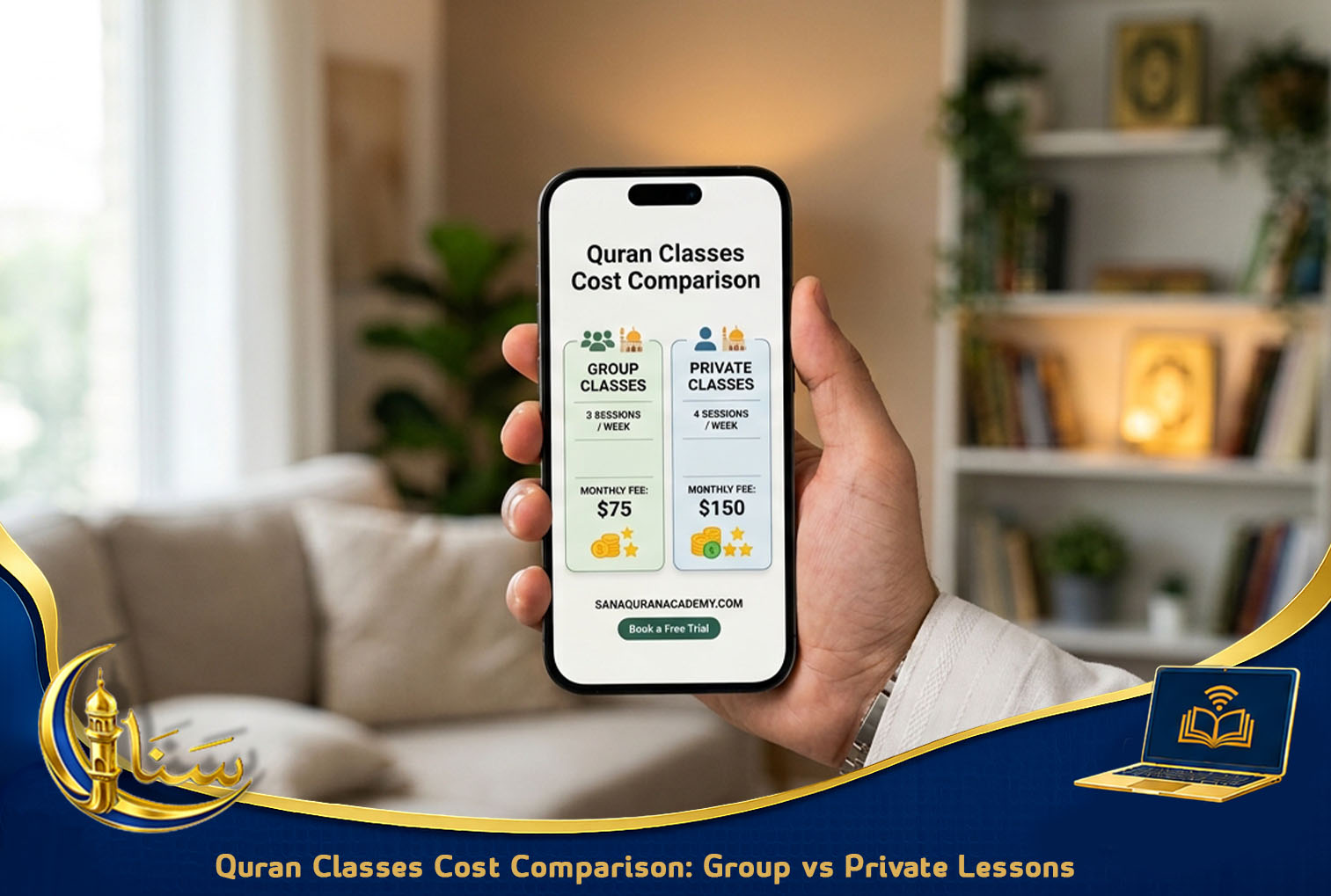
Budget is another important consideration when comparing Quran Classes vs Private Classes. Group classes generally cost less because several students share one instructor.
Private lessons typically require a higher investment since every session is dedicated to one learner. However, many students progress faster through personalized instruction, which can reduce the total learning time required to reach their goals. Instead of comparing prices alone, families should also consider:
* Learning speed.
* Lesson quality.
* Individual support.
* Scheduling flexibility.
* Long-term learning outcomes.
How Teachers Adapt Their Teaching Style
An experienced Quran teacher understands that every student learns differently. In one-on-one classes, teachers continuously adjust lesson difficulty, teaching methods, and revision schedules according to the learner’s progress. For example, if a student masters Makharij quickly but struggles with Madd rules, the teacher can immediately modify future lessons to focus on that specific area.
In group classes, teachers usually follow a structured curriculum that keeps the entire class progressing together. While individual support is still provided whenever possible, lesson planning must consider the needs of every student rather than one learner alone. At Sana Online Quran Academy, qualified instructors adapt their teaching methods to maximize student progress regardless of the learning format.
Online Learning Technology Makes Both Options Effective
Modern technology has transformed Quran education. Interactive virtual classrooms, screen sharing, digital Quran Mushafs, audio recording, and real-time communication allow students to receive high-quality instruction from anywhere in the world. Whether choosing Group Quran Classes vs One-on-One Classes, students can enjoy:
HD video lessons.
Live Tajweed correction.
Interactive whiteboards.
Recorded progress tracking.
Flexible scheduling.
Secure online classrooms.
These tools create an engaging learning experience while maintaining the quality of traditional Quran instruction.
Why Choose Sana Online Quran Academy?
At Sana Online Quran Academy, students receive professional Quran education designed around their individual needs. The academy offers:
* Qualified male and female Quran teachers.
* Interactive online learning.
* Flexible scheduling.
* Personalized lesson plans.
* Tajweed and Quran memorization programs.
* Classes for children and adults.
* Regular progress assessments.
* Supportive learning environment.
Whether you prefer private instruction or collaborative group learning, the academy provides high-quality education that helps students build confidence while strengthening their relationship with the Quran.
The Role of Teacher-Student Relationship in Quran Learning Success

The relationship between the Quran teacher and the student is one of the most important factors that influences the success of the learning journey. A skilled teacher does more than explain Quran rules and correct recitation mistakes; they also provide encouragement, motivation, and continuous support that helps students remain committed to learning.
Choosing the right instructor is essential for achieving better results, and many learners prefer an Egyptian quran teacher online because experienced teachers can provide accurate Quran pronunciation, proper Tajweed guidance, and effective learning methods suitable for students from different backgrounds.
In One-on-One Quran Classes, this relationship becomes stronger because the teacher spends the entire lesson focusing on one student. The teacher can understand the student’s strengths, identify personal challenges, and create a learning approach that matches their abilities. This personal connection helps students feel more comfortable asking questions, practicing difficult verses, and improving without hesitation.
In Group Quran Classes, students can also benefit from a positive relationship with their teacher through regular interaction and classroom activities. However, the teacher must divide attention among multiple learners, which may reduce the opportunity to understand every student’s individual needs in detail.
A supportive Quran teacher can make the learning experience more enjoyable and effective by creating a positive atmosphere where students feel encouraged to continue improving. Whether learning individually or in a group, having a qualified and caring teacher plays a major role in developing confidence, consistency, and accurate Quran recitation.
The Importance of Regular Quran Practice Between Classes
Attending Quran lessons regularly is important, but practicing between classes is equally necessary for achieving continuous improvement. Quran learning requires repetition, consistency, and daily effort to strengthen reading skills, pronunciation, and memorization.
Students who review previous lessons, repeat difficult verses, and practice Tajweed rules outside class usually make faster progress. Regular practice helps prevent forgetting and allows learners to build stronger connections with the verses they study.
For students who are also learning Arabic, practicing basic vocabulary such as Easy Arabic Words for Beginners can help improve their understanding of Quranic words and make reading experiences more meaningful.
For Quran memorization students, daily revision is especially important because maintaining previously memorized portions requires continuous repetition. Even a short daily practice routine can create noticeable improvement over time.
Teachers at Sana Online Quran Academy guide students on how to organize their practice outside lessons by providing suitable revision methods and recommendations based on each learner’s level and goals.
A successful Quran learning plan does not depend only on the number of classes attended but also on the student’s commitment to regular practice and revision.
How Does Progress Assessment Help Quran Students Improve?
Regular progress assessment is an essential part of effective Quran education because it helps students understand their current level and recognize areas that require more attention.
Through continuous evaluation, teachers can identify pronunciation mistakes, Tajweed weaknesses, reading difficulties, or memorization challenges. This allows them to adjust lesson plans and provide targeted support instead of following the same approach for every learner.
In One-on-One Quran Classes, progress assessment is usually more detailed because the teacher closely follows one student’s development throughout every lesson. The teacher can measure improvement, track difficulties, and modify the learning strategy whenever needed.
When comparing different educational systems, students often consider Online Arabic Academy vs. Traditional Classes because online programs typically offer flexible progress tracking, direct communication with teachers, and structured learning plans.
In Group Quran Classes, assessment helps teachers monitor the general progress of the class and provide guidance that benefits all students. Learners can also improve by observing corrections and applying the teacher’s recommendations.
A structured assessment system ensures that students continue to make progress and achieve their Quran learning goals in an organized way.
The Importance of Choosing Qualified Quran Teachers
Choosing a qualified Quran teacher is one of the most important steps for anyone who wants to learn the Quran correctly. A professional teacher should have strong knowledge of Tajweed, accurate Quran recitation, teaching experience, and the ability to explain concepts clearly.
A qualified Quran teacher helps students avoid developing incorrect pronunciation habits by correcting mistakes from the beginning. This is especially important for beginners because early learning foundations strongly affect future progress.
Experienced teachers also understand that students have different abilities and learning speeds. They can simplify difficult concepts, provide suitable exercises, and adapt their teaching methods according to the student’s age and level.
Many beginners search for the Best Online Arabic Academy for Beginners because they need structured programs, qualified instructors, and simple teaching methods that help them build strong foundations from the start.
Whether a student chooses Group Quran Classes or One-on-One Classes, the quality of the teacher remains a key factor in achieving successful results. Learning with a knowledgeable and patient instructor creates a stronger foundation for improving Quran reading, Tajweed, and memorization skills.
Long-Term Benefits of Online Quran Learning

Online Quran learning has become an effective solution for students who want to study the Holy Quran while managing their daily responsibilities. Modern technology allows learners to connect with qualified Quran teachers from anywhere without the need for physical attendance.
One of the biggest long-term benefits of online Quran classes is accessibility. Students can continue their Quran education even when they move to a different location or have busy schedules. This flexibility helps learners maintain consistency and develop a lifelong connection with the Quran.
Online learning also provides families with more options when choosing between different teaching styles. Parents can select group classes for a collaborative experience or private lessons for personalized attention according to their children’s needs.
Before registering, many families compare Free vs Paid Online Quran Academies to understand the differences in teacher qualifications, lesson quality, personal support, and long-term learning benefits.
With features such as live video lessons, digital learning tools, and direct communication with teachers, online Quran education combines convenience with effective teaching methods.
As online Quran platforms continue to develop, more students can benefit from structured programs that support Quran reading, Tajweed improvement, and memorization goals in a comfortable learning environment.
Frequently Asked Questions: Quran Classes vs Private Classes
Yes. Many students begin with group classes and later move to private lessons as their goals become more advanced or they require individualized correction.
2. Are online group Quran classes interactive?
Absolutely. Most online group classes include live recitation, teacher feedback, discussions, and opportunities for students to ask questions throughout the lesson.
3. How often should I attend Quran classes each week for steady progress?
For consistent improvement, attending two to four sessions per week while practicing independently between lessons is generally an effective approach.
4. What age is best for starting one-on-one Quran classes?
Children can begin personalized Quran lessons as soon as they are ready to recognize Arabic letters and follow simple teacher instructions, while adults can start at any stage regardless of prior experience.
In conclusion, when comparing Group Quran Classes vs One-on-One Classes, there is no single answer that fits every learner.
Students seeking personalized guidance, faster improvement, and continuous correction often benefit most from one-on-one lessons. Meanwhile, learners who enjoy collaboration, peer motivation, and structured classroom interaction may find group classes more enjoyable and affordable.
The most effective learning experience is the one that matches your goals, schedule, and preferred learning style. At Sana Online Quran Academy, both options are designed to help students develop accurate Quran recitation, strengthen Tajweed skills, and build lifelong confidence in reading the Quran.