Easy Arabic Words for Beginners are the perfect starting point for anyone who wants to learn Arabic in a simple, practical, and enjoyable way. Instead of trying to memorize difficult grammar rules or hundreds of unfamiliar words, beginners can build confidence by learning useful vocabulary they can hear and use every day. As a result, learning becomes less stressful and much more rewarding.
Whether you are a parent teaching your child Arabic, a student preparing to understand the Quran, or an adult learning Arabic for personal or professional reasons, starting with easy vocabulary is the smartest approach. Moreover, common words help you recognize everyday conversations, understand simple texts, and gradually build longer and more meaningful sentences.
Arabic is spoken by more than 400 million people around the world. Therefore, it is one of the most valuable languages to learn. However, becoming fluent does not require memorizing thousands of words at once. Instead, focusing on the most frequently used vocabulary allows you to make steady progress while staying motivated throughout your learning journey.
At Sana Online Quran Academy, beginners learn Arabic through interactive lessons, practical vocabulary, and engaging activities designed for students of all ages. In addition, experienced teachers guide learners step by step, making the learning process enjoyable, organized, and easy to follow.
In this comprehensive guide, you’ll discover the most useful Easy Arabic Words for Beginners, effective memorization techniques, practical study strategies, and simple daily habits that will help you improve your Arabic with confidence.
Why Learning Easy Arabic Words for Beginners Is the Best Way to Start?
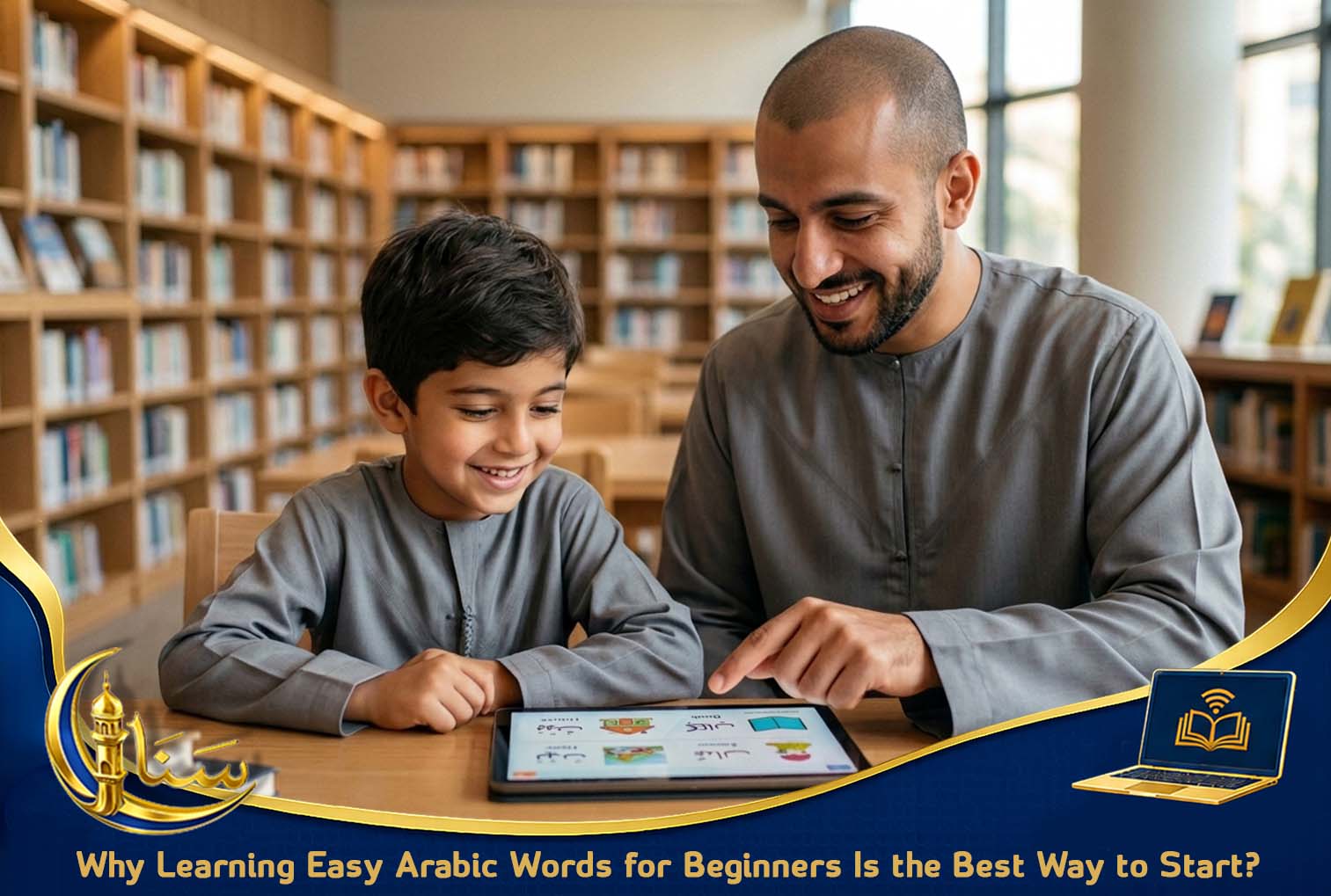
Many learners believe they must first master the Arabic alphabet, grammar rules, and sentence structure before they can speak the language. However, this belief often makes learning feel more difficult than it really is.
Instead, think about how children learn their first language. They do not begin by studying grammar books. Rather, they first hear simple words like “mom,” “water,” and “food.” Then, they connect those words with real-life situations before gradually forming complete sentences.
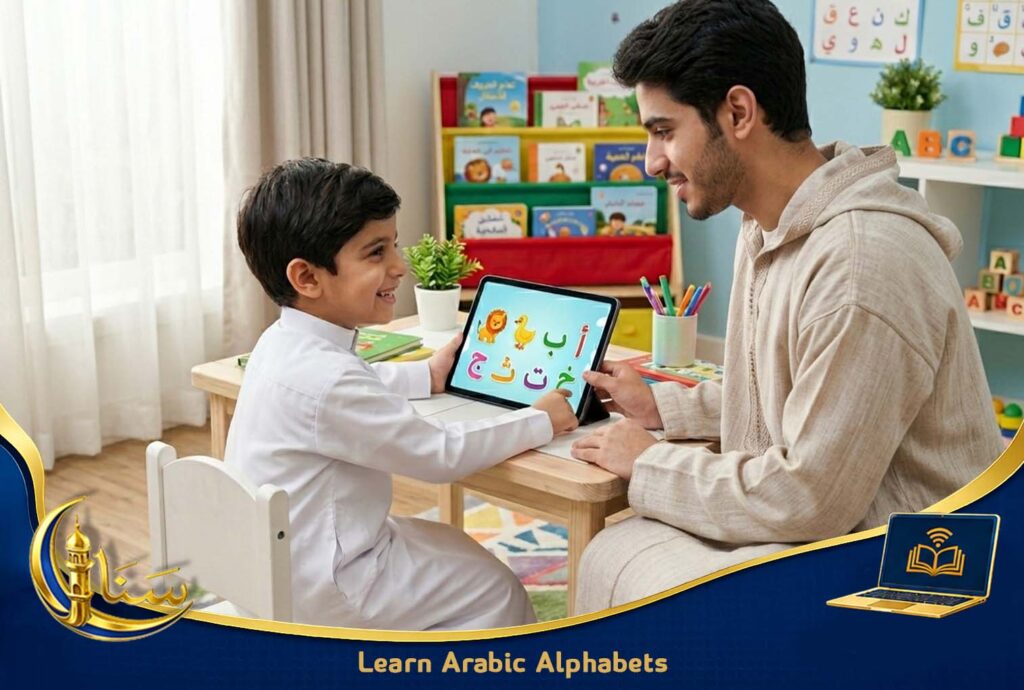
Likewise, this natural learning process works extremely well for Arabic learners. By focusing on Easy Arabic Words for Beginners, students develop practical communication skills while building a strong language foundation.LearnArabic Alphabet for Beginners to build a strong foundation in reading and recognizing Arabic letters.
Start Your Quran Learning Journey Today with Sana Online Quran Academy
Start your Quran learning journey today with Sana Online Quran Academy, where structured and simple programs are designed for both children and adults. In fact, lessons are delivered step by step by qualified teachers who focus on reading skills, basic Tajweed, and gradual improvement with clear explanations.
In addition, you can study from home with flexible schedules that fit your daily routine. Moreover, regular practice and feedback help you improve steadily. As a result, learning becomes easier, more consistent, and more effective.

How Learning Easy Arabic Words Helps Beginners Improve?
Learning easy Arabic words helps beginners build a strong vocabulary foundation, improve communication skills, and understand basic expressions used in daily conversations. By learning common words step by step, students can develop confidence in reading, speaking, and connecting with the Arabic language more effectively.
- Build confidence from your very first lesson.
- Understand common words used in everyday conversations.
- Improve pronunciation through regular repetition.
- Read simple Arabic texts more comfortably.
- Prepare for grammar lessons without feeling overwhelmed.
- Stay motivated by seeing continuous progress.
Furthermore, learning familiar vocabulary first makes Arabic much less intimidating. Instead of memorizing long random word lists, beginners can concentrate on words they are likely to hear every day.
For example, greetings, numbers, colors, family members, and household objects appear frequently in conversations, children’s books, educational videos, and beginner Arabic lessons. Therefore, reviewing these words regularly helps learners remember them faster and use them more naturally in real-life situations.
Benefits of Learning Easy Arabic Words for Beginners Every Day
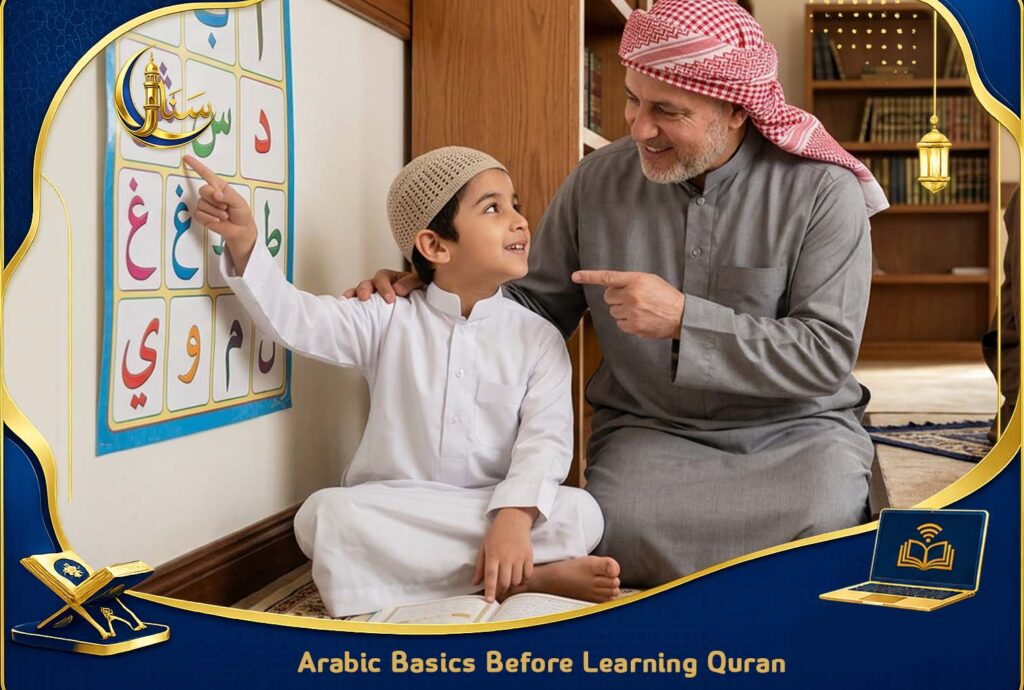
Learning a few Arabic Basics Before Learning Quran words every day may seem like a small step. However, these small daily efforts create remarkable results over time. Instead of trying to memorize dozens of new words in one study session, consistent practice allows your brain to store vocabulary more effectively.
Faster Vocabulary Growth
Learning just five to ten useful words each day can build a vocabulary of hundreds of practical expressions within a few months. As a result, you’ll recognize more words while reading, listening, and speaking Arabic.
Better Listening Skills
The more familiar words you know, the easier it becomes to understand Arabic conversations, educational videos, and online lessons. In addition, recognizing common vocabulary naturally improves your pronunciation because you repeatedly hear words used correctly.
Stronger Reading Ability
Reading becomes much easier when you already recognize frequently used vocabulary. Therefore, beginners can focus on understanding the overall meaning instead of translating every single word.
Improved Speaking Confidence
Knowing everyday vocabulary allows learners to introduce themselves, answer basic questions, and participate in simple conversations. Consequently, speaking Arabic becomes less stressful and much more enjoyable.
Easier Quran Learning
For students who want to understand the Quran, learning basic Arabic vocabulary provides an excellent foundation. Moreover, recognizing familiar words makes Quran study more meaningful while improving overall comprehension.
Long-Term Language Success
Vocabulary forms the foundation of every language. Once you know enough useful words, learning grammar, sentence structure, and conversation becomes much easier. For this reason, Sana Best Online Quran Academy for Kids encourages beginners to develop consistent vocabulary-building habits before moving on to more advanced lessons.
How Many Easy Arabic Words for Beginners Do You Really Need?
One of the biggest myths about learning Arabic is that you must memorize thousands of words before you can communicate. Fortunately, that is not true. Instead, beginners should focus on learning the most common vocabulary first. As a result, they can start understanding and using Arabic much sooner than they expect.
Language experts agree that mastering frequently used words allows learners to communicate in many everyday situations. Moreover, this approach reduces stress because students focus on practical vocabulary instead of overwhelming themselves with long word lists. Therefore, every new lesson feels more achievable and rewarding. A practical learning plan looks like this:
- First, learn the first 50
- to recognize common greetings and conversations.
- Next, expand your vocabulary to 200–300 words covering family, food, colors, numbers, and daily activities.
- Then, reach 500–1,000 words to understand beginner conversations, short stories, and simple Arabic lessons.
- Finally, continue building your vocabulary through reading, listening, and regular speaking practice.
As a result, every new word connects with vocabulary you already know. In addition, this gradual learning method keeps you motivated because your progress becomes noticeable after every study session.
50 Easy Arabic Words for Beginners You Should Learn First
One of the fastest ways to improve your Arabic is by learning vocabulary you can actually use every day. Rather than memorizing random words, focus on vocabulary that appears in conversations, children’s books, beginner lessons, and everyday situations. Consequently, you’ll remember the words more easily and use them with greater confidence.
Below, you’ll find some of the most practical Easy Arabic Words for Beginners that every learner should know.
Easy Arabic Words for Beginners – Common Greetings
Greetings are usually the first expressions learners use. Therefore, mastering them allows you to start conversations confidently from your very first lesson. Moreover, these expressions are used every day, making them easy to remember through regular practice.
| English | Arabic | Pronunciation |
|---|---|---|
| Hello | مرحبًا | Marhaban |
| Peace be upon you | السلام عليكم | As-salamu Alaikum |
| Goodbye | مع السلامة | Ma’a As-Salama |
| Thank you | شكراً | Shukran |
| Please | من فضلك | Min Fadlak / Min Fadlik |
| Yes | نعم | Na’am |
| No | لا | La |
| Welcome | أهلاً وسهلاً | Ahlan wa Sahlan |
Practice Tip: Instead of reading these greetings only once, use them throughout your day. For example, greet your family in Arabic every morning or say “Shukran” whenever someone helps you. Over time, these expressions will become natural parts of your daily conversations.
Easy Arabic Words for Beginners for Everyday Objects
Learning the names of everyday objects is one of the easiest ways to build your vocabulary. After all, you see these items every day. Therefore, connecting each object with its Arabic name becomes much easier.
| English | Arabic | Pronunciation |
|---|---|---|
| House | بيت | Bayt |
| Door | باب | Bab |
| Window | نافذة | Nafidhah |
| Table | طاولة | Tawilah |
| Chair | كرسي | Kursi |
| Book | كتاب | Kitab |
| Pen | قلم | Qalam |
| Bag | حقيبة | Haqibah |
| Bed | سرير | Sareer |
| Key | مفتاح | Miftah |
Furthermore, labeling these objects with small Arabic notes is an excellent memory technique. Every time you walk past one, read its Arabic name aloud. As a result, your brain gradually connects the object directly with its Arabic name instead of translating it into English.
Easy Arabic Words for Beginners – Arabic Numbers
Numbers are useful in almost every situation. Whether you’re shopping, telling the time, counting objects, or talking about your age, you’ll use numbers regularly. For this reason, learning them early makes everyday conversations much easier.
| Number | Arabic | Pronunciation |
|---|---|---|
| One | واحد | Wahid |
| Two | اثنان | Ithnan |
| Three | ثلاثة | Thalatha |
| Four | أربعة | Arba’a |
| Five | خمسة | Khamsah |
| Six | ستة | Sittah |
| Seven | سبعة | Sab’ah |
| Eight | ثمانية | Thamaniyah |
| Nine | تسعة | Tis’ah |
| Ten | عشرة | Asharah |
In addition, try counting objects around your home in Arabic every day. For example, count books, chairs, or cups while saying each number aloud. Consequently, you’ll improve both your pronunciation and your ability to remember new vocabulary.
Easy Arabic Words for Beginners – Basic Colors
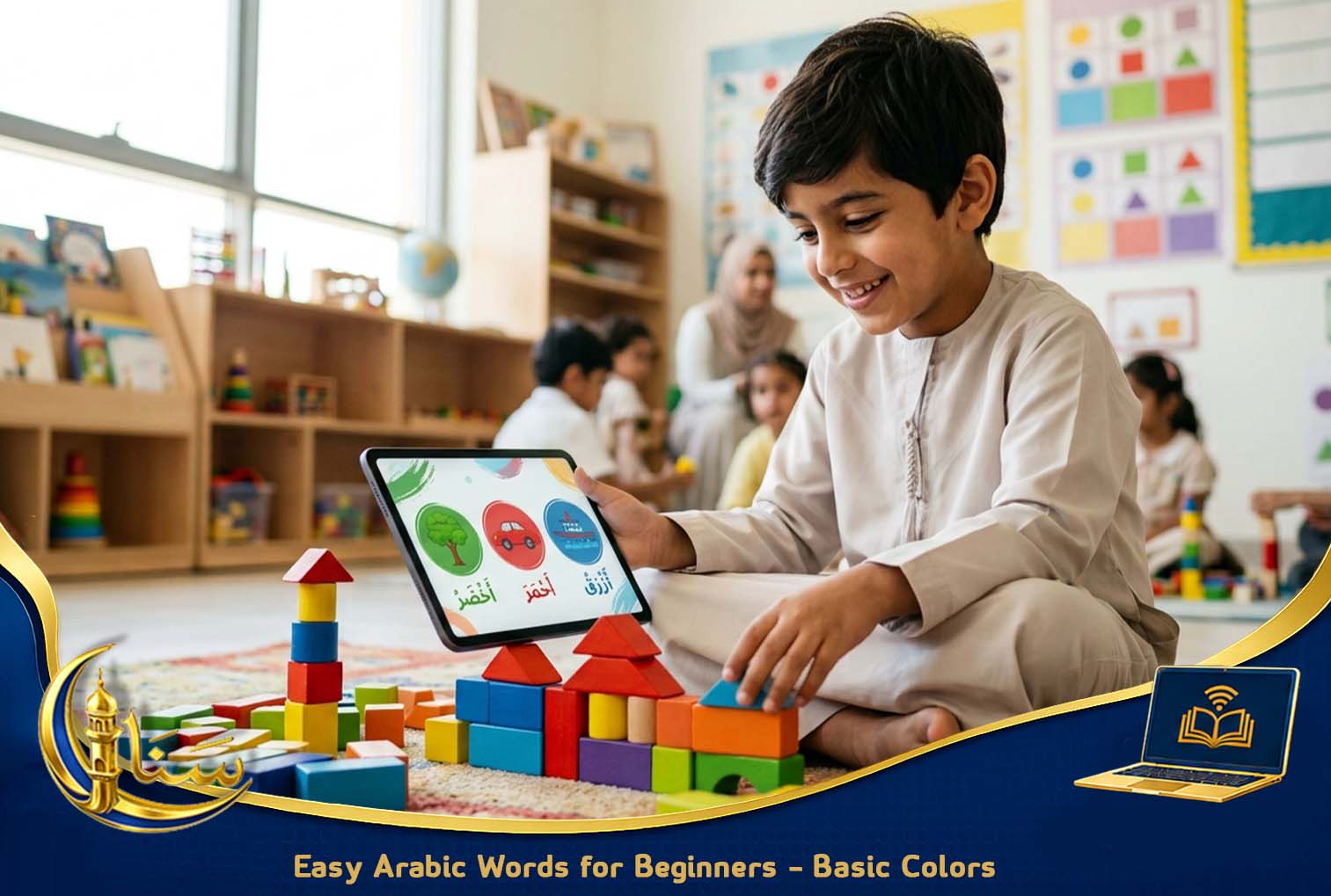
Colors are among the easiest vocabulary categories because learners can immediately connect them with real objects. As a result, they become easier to remember than isolated words.
| English | Arabic | Pronunciation |
|---|---|---|
| Red | أحمر | Ahmar |
| Blue | أزرق | Azraq |
| Green | أخضر | Akhdar |
| Yellow | أصفر | Asfar |
| White | أبيض | Abyad |
| Black | أسود | Aswad |
| Pink | وردي | Wardi |
| Orange | برتقالي | Bortoqali |
| Purple | بنفسجي | Banafsaji |
Moreover, turn this lesson into a fun activity by choosing one color each day and finding matching objects around your home. This way, you’ll strengthen your memory while making the learning process more enjoyable.
Easy Arabic Words for Beginners – Essential Verbs
Once you’ve learned basic nouns, it’s time to add simple action words. After all, verbs help you create complete sentences instead of memorizing vocabulary in isolation. Therefore, they are essential for improving your communication skills.
| English | Arabic | Pronunciation |
|---|---|---|
| Eat | أكل | Akala |
| Drink | شرب | Shariba |
| Read | قرأ | Qara’a |
| Write | كتب | Kataba |
| Go | ذهب | Dhahaba |
| Come | أتى | Ata |
| Sleep | نام | Nama |
| See | رأى | Ra’a |
| Speak | تكلم | Takallama |
| Listen | استمع | Istama’a |
Next, combine these verbs with the nouns you’ve already learned.
For example:
- أنا أقرأ كتابًا.
- أنا أشرب الماء.
- أنا أذهب إلى البيت.
- أنا أكتب بالقلم.
Therefore, instead of memorizing separate words, you’ll begin using Arabic naturally in complete sentences. Over time, this practice will improve both your speaking confidence and your overall fluency.
Practical Ways to Memorize Easy Arabic Words for Beginners
Learning new vocabulary is only the beginning. However, remembering those words and using them confidently is what truly helps you improve. Fortunately, you don’t need to spend hours studying every day to make real progress. Instead, practicing a few simple habits consistently can make a significant difference. As a result, you’ll remember new words faster and use them more naturally in everyday conversations.
Below are some of the most effective strategies for memorizing Easy Arabic Words for Beginners while keeping the learning process enjoyable and stress-free.
Label Everyday Objects with Easy Arabic Words for Beginners
One of the easiest learning techniques is to place Arabic labels on common household items. This method works well because you see these objects many times throughout the day. Consequently, your brain reviews the vocabulary without requiring extra study time. For example, you can label objects such as:
- باب (Door)
- كتاب (Book)
- كرسي (Chair)
- نافذة (Window)
- قلم (Pen)
- طاولة (Table)
Every time you walk past one of these objects, read its Arabic name aloud. As a result, your brain gradually associates the object with its Arabic name instead of translating it into English. Furthermore, this technique requires very little effort while providing continuous vocabulary review throughout the day. Because of this, many beginners remember words much faster than they expect.
Learn Five New Easy Arabic Words for Beginners Every Day
Many beginners believe that learning more words in one session leads to faster progress. However, studying too much at once often causes learners to forget most of the vocabulary. Instead, focus on learning just five useful words each day. Although this number seems small, it produces excellent results over time.
In fact, learning only five words every day gives you more than 1,800 words in a single year.
Therefore, consistency is much more valuable than studying for several hours once a week. Moreover, daily practice helps your brain retain information more effectively because it reviews vocabulary regularly.
Create Short Sentences Using Easy Arabic Words for Beginners
Memorizing individual words is helpful. However, using them in complete sentences is even more effective. Once you understand how words work together, speaking Arabic becomes much easier. Whenever you learn an Arabic qaida word, immediately create a simple sentence with it.
For example:
- هذا كتاب.
- أنا أشرب الماء.
- أحب اللون الأزرق.
- هذا باب كبير.
- أنا أقرأ كل يوم.
As a result, you’ll understand how each word is naturally used in Arabic instead of remembering isolated vocabulary. Eventually, creating sentences will become automatic.
Listen Before You Speak
Pronunciation is one of the biggest challenges for Arabic learners. Therefore, listening carefully should always come before speaking.
Before repeating any new word:
- Listen to a native speaker.
- Repeat the pronunciation several times.
- Focus on difficult Arabic letters.
- Compare your pronunciation with the original audio.
Pay special attention to letters such as:
- ع
- خ
- ق
- غ
Meanwhile, don’t worry if your pronunciation isn’t perfect at first. After all, every learner improves through regular practice. Over time, your pronunciation will become clearer and more natural.
Review Vocabulary Regularly
Learning new words is important. However, reviewing them is what helps you remember them permanently.
A simple review schedule might look like this:
- First, review today’s words before bedtime.
- Next, review them again the following day.
- After that, review them three days later.
- Finally, review them once more after one week.
This way, vocabulary gradually moves from short-term memory into long-term memory. Consequently, you’ll spend less time relearning words you’ve already studied.
Fun Activities Using Easy Arabic Words for Beginners
Studying vocabulary doesn’t have to feel like homework. Instead, turning learning into enjoyable activities keeps both children and adults motivated. Moreover, fun practice encourages learners to stay consistent, which is the key to long-term success.
Practice Easy Arabic Words for Beginners with Flashcards
Flashcards remain one of the simplest and most effective learning tools. Not only do they improve memory, but they also make reviewing vocabulary quick and enjoyable. Write:
- English on one side.
- Arabic on the other side.
Then use the cards to:
- Test yourself.
- Match pictures with words.
- Practice with family members.
- Review vocabulary in just a few minutes.
Additionally, digital flashcard apps make reviewing even more convenient because you can study anywhere and anytime.
Read Simple Arabic Stories
Reading children’s books introduces vocabulary naturally. Instead of memorizing isolated words, learners see vocabulary used in meaningful situations. While reading:
- Point at pictures.
- Repeat important words.
- Ask easy questions.
- Encourage children to answer using Arabic vocabulary.
Consequently, learners remember words through context rather than memorization alone. Furthermore, reading regularly improves both vocabulary and sentence recognition.
Try a Vocabulary Treasure Hunt
Children especially enjoy movement-based learning. Therefore, turning vocabulary practice into a game makes lessons much more exciting. Ask children to:
- Find the كتاب.
- Touch the باب.
- Bring the قلم.
- Point to the نافذة.
- Find the كرسي.
As a result, they connect movement with vocabulary, making every lesson more memorable. In addition, physical activities help children stay focused for longer periods.
Learn Through Arabic Songs
Songs help learners remember pronunciation, rhythm, and vocabulary much more easily. Moreover, repeating songs naturally improves listening skills.
Choose songs about:
- Numbers.
- Colors.
- Animals.
- Greetings.
- Everyday objects.
Because songs are repetitive, learners remember vocabulary much faster. At the same time, they develop better pronunciation without feeling like they’re studying.
Match Pictures with Words
Visual learning is highly effective for beginners. Therefore, print pictures of common objects and match them with their Arabic names. This activity improves:
- Vocabulary recognition.
- Reading skills.
- Memory.
- Speaking confidence.
Overall, combining pictures with vocabulary makes learning easier, more enjoyable, and much more memorable. As a result, learners become confident using Easy Arabic Words for Beginners in real-life situations.
Common Mistakes When Learning Easy Arabic Words for Beginners
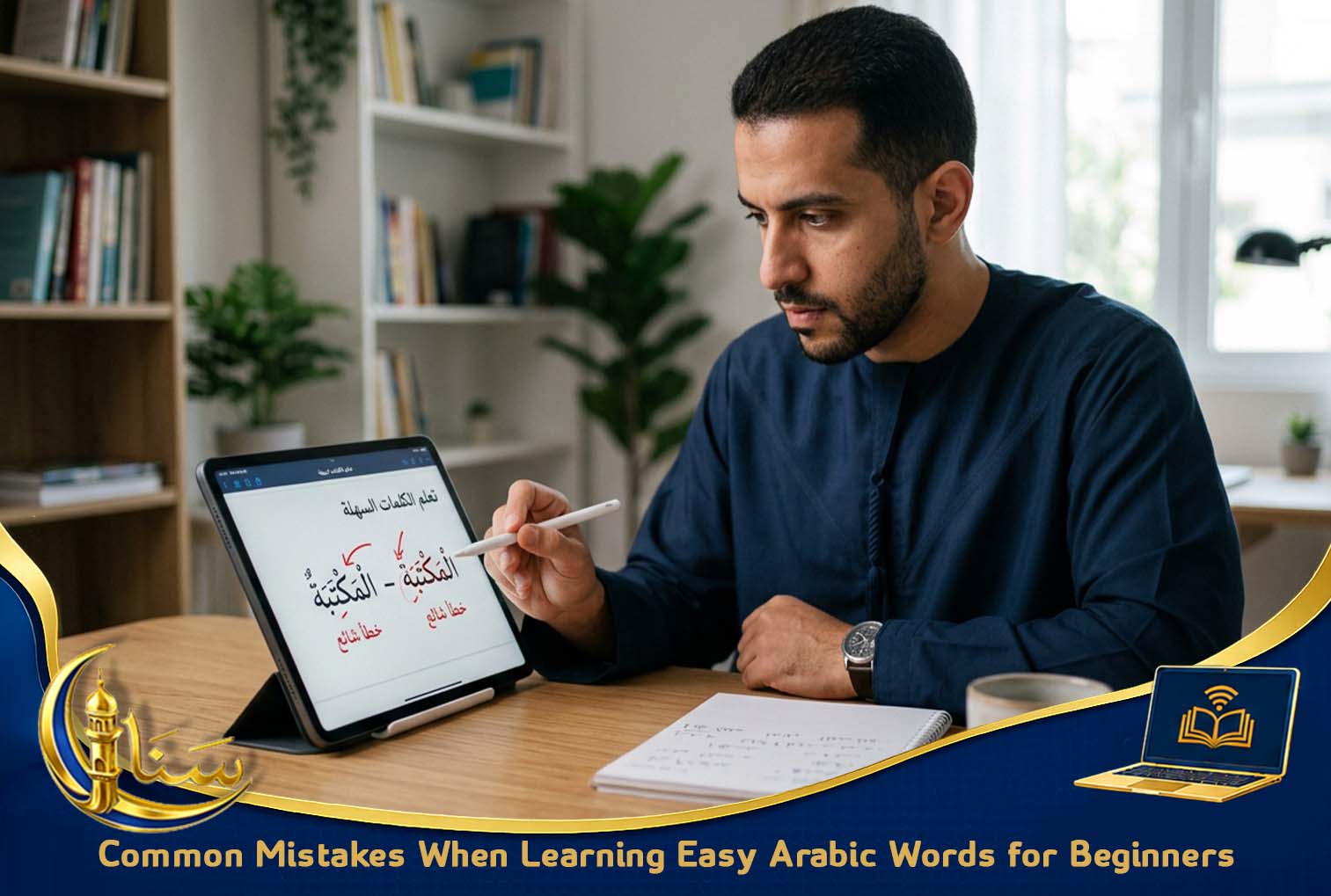
Every beginner makes mistakes. However, recognizing these mistakes early can save you months of frustration. Fortunately, most learning problems are easy to fix once you understand what to avoid. Therefore, following the right approach from the beginning will help you make steady progress.
Memorizing Random Vocabulary
Many learners choose random words from books or websites. Although this may seem productive, those words are often forgotten quickly because they are not connected to everyday life. Instead, organize your vocabulary into practical categories such as:
- Family
- Food
- Animals
- Colors
- School
- Daily activities
- Household objects
As a result, your brain creates stronger connections between related words. Furthermore, learning becomes more organized and much easier to review later.
Ignoring Pronunciation
Some learners focus only on reading Arabic words. Unfortunately, incorrect pronunciation becomes much harder to correct later. Therefore, always listen to native speakers before repeating new vocabulary. To improve pronunciation:
- Listen carefully.
- Repeat each word several times.
- Record your voice.
- Compare your pronunciation with native speakers.
- Practice difficult letters every day.
Consequently, you’ll develop clearer pronunciation and greater confidence when speaking Arabic.
Practicing Too Little
Reading vocabulary once is rarely enough. In fact, language learning requires regular repetition to build long-term memory. Instead, make vocabulary part of your daily routine by:
- Speaking new words aloud.
- Writing them several times.
- Using them in short conversations.
- Listening to Arabic every day.
- Reviewing previous lessons.
As a result, you’ll remember more vocabulary while improving your speaking and listening skills at the same time.
Expecting Fast Results
Many beginners hope to become fluent within a few weeks. However, every language takes time to learn. Although progress may seem slow in the beginning, every study session builds a stronger foundation. Eventually, those small improvements become noticeable. Therefore, stay patient and celebrate every milestone along your learning journey.
Translating Every Word
Translation is useful during the early stages of learning. However, depending on translation forever slows your progress. Instead, connect Arabic words directly with pictures, actions, sounds, and real-life situations.
For example, when you see a book, think of “كتاب” immediately instead of mentally translating from English. As a result, your brain gradually begins thinking in Arabic rather than translating every sentence.
How Sana Online Quran Academy Helps You Learn Easy Arabic Words for Beginners?
Learning Arabic becomes much easier when you follow a clear plan with experienced teachers. Instead of trying to learn everything by yourself, a structured learning program helps you stay motivated and make continuous progress.
At Sana Online Quran Academy, every beginner follows a carefully designed learning path. Rather than starting with difficult grammar rules, students first learn arabic alphabets practical vocabulary they can use immediately. As a result, they build confidence from their very first lesson.
Interactive One-to-One Lessons
Every learner has different goals and abilities. Therefore, personalized lessons allow teachers to adjust the learning pace according to each student’s needs. During every lesson, students:
- Learn useful everyday vocabulary.
- Practice correct pronunciation.
- Build simple Arabic sentences.
- Review previously learned words.
- Improve listening and speaking skills.
In addition, one-to-one classes provide more opportunities to ask questions and receive immediate feedback. Consequently, students learn more efficiently than they would in large classrooms.
Qualified Arabic Teachers
A skilled teacher can make a huge difference in language learning. For this reason, Sana Online Quran Academy works with experienced Arabic and Egyptian Quran teachers online who understand how beginners learn best. Teachers help students:
- Pronounce Arabic letters correctly.
- Understand vocabulary in context.
- Build confidence while speaking.
- Improve reading fluency.
- Develop effective study habits.
As a result, students avoid many of the common mistakes beginners often make when learning on their own.
Structured Vocabulary Lessons
One reason many learners lose motivation is that they study random vocabulary without a clear plan. However, Sana Online Quran Academy introduces vocabulary step by step, making each lesson easier than the last. Students usually begin with:
- Greetings
- Family members
- Colors
- Numbers
- Food
- Animals
- Daily activities
- Household objects
After that, they gradually move on to longer sentences and everyday conversations. Because every lesson builds on previous knowledge, students feel continuous improvement instead of frustration.
Pronunciation Practice with Native Speakers
Arabic pronunciation can feel challenging at first. Nevertheless, regular listening and speaking practice make a remarkable difference. Students practice:
- Correct pronunciation.
- Listening comprehension.
- Speaking naturally.
- Reading aloud.
- Everyday conversations.
As a result, learners develop clearer pronunciation, stronger communication skills, and greater confidence.
Flexible Learning for Busy Families
Many students struggle to find time for language study. Fortunately, online learning offers far greater flexibility than traditional classrooms. Students can:
- Choose convenient lesson times.
- Learn from home.
- Save travel time.
- Study from anywhere in the world.
- Maintain a consistent study schedule.
Therefore, busy parents, university students, and working professionals can continue learning without interrupting their daily responsibilities. Moreover, flexible scheduling helps learners remain consistent, which is one of the most important factors in mastering Easy Arabic Words for Beginners.
A 30-Day Plan to Master Easy Arabic Words for Beginners
Many beginners wonder how long it takes to build a useful Arabic vocabulary. The answer depends largely on consistency. However, following a simple and realistic study plan can help you achieve noticeable progress within just one month. Instead of trying to learn everything at once, focus on small daily goals. As a result, you’ll build confidence while avoiding frustration.
Week 1 – Learn Everyday Greetings
First, begin with words and expressions you can use immediately in daily conversations. These phrases appear frequently, so you’ll have many opportunities to practice them. Focus on greetings such as:
- Hello
- Peace be upon you
- Goodbye
- Thank you
- Please
- Yes
- No
During this week, repeat these expressions several times each day. In addition, try using them whenever possible with family members or classmates. By the end of the week, these greetings should feel natural and easy to remember.
Week 2 – Learn Household Vocabulary
Next, move on to objects that you see every day. Because these items are part of your daily routine, they’re much easier to remember. Examples include:
- Book
- Chair
- Door
- Table
- Window
- Pen
- Bag
- Bed
- Key
Meanwhile, place small Arabic labels on these objects around your home. Every time you see one, read its Arabic name aloud. Consequently, your vocabulary will grow naturally without requiring extra study time.
Week 3 – Practice Verbs and Simple Sentences
Once you’ve learned enough vocabulary, it’s time to begin using action words. Practice common verbs such as:
- Eat
- Drink
- Read
- Write
- Sleep
- Go
- Come
- Speak
- Listen
Then, combine these verbs with the nouns you’ve already learned. For example:
- I read a book.
- I drink water.
- I write every day.
- I go home.
- I eat bread.
As a result, your vocabulary becomes active instead of remaining isolated words. Furthermore, you’ll begin thinking in complete Arabic sentences rather than memorizing individual terms.
Week 4 – Speak Every Day
Finally, dedicate the last week to speaking Arabic every day. You can practice by:
- Introducing yourself.
- Counting objects.
- Naming colors.
- Describing your room.
- Talking about your daily routine.
- Asking simple questions.
Even if your sentences are short, daily speaking practice builds confidence much faster than memorizing vocabulary alone. Moreover, regular conversation helps improve pronunciation and listening skills at the same time.
Best Resources for Learning Easy Arabic Words for Beginners
Using a variety of learning resources makes studying more enjoyable and much more effective. Instead of relying on a single method, combine different tools to strengthen your vocabulary from several angles. As a result, you’ll improve more quickly and stay motivated.
Interactive Online Classes
Live online lessons provide immediate guidance from experienced teachers. Therefore, students receive instant corrections whenever they make mistakes. Additionally, interactive classes encourage learners to practice speaking regularly instead of only studying vocabulary.
Flashcards
Flashcards remain one of the fastest vocabulary-building tools. Not only are they simple to create, but they also make reviewing previous lessons quick and convenient. Furthermore, digital flashcards allow learners to study anytime using their phones or tablets.
Children’s Storybooks
Simple Arabic storybooks introduce vocabulary naturally. Instead of memorizing isolated words, learners discover how vocabulary is used in meaningful situations. Moreover, stories improve reading comprehension while expanding vocabulary at the same time.
Educational Videos
Watching beginner-friendly Arabic videos is another excellent learning strategy. These videos help improve:
- Listening skills.
- Pronunciation.
- Vocabulary recognition.
- Speaking confidence.
- Sentence comprehension.
At the same time, learners hear authentic Arabic spoken naturally. Consequently, understanding everyday conversations becomes much easier.
Mobile Learning Apps
Short daily lessons are often easier to maintain than long study sessions. Therefore, language-learning apps are perfect for busy learners. In addition, many apps include quizzes, pronunciation exercises, and vocabulary review games that make learning more engaging.
Keep a Vocabulary Notebook
Writing down new vocabulary remains one of the most effective learning habits. For every new word, write:
- Arabic spelling.
- Pronunciation.
- English meaning.
- One example sentence.
- The lesson date.
Finally, review your notebook every few days. This way, you’ll strengthen your long-term memory while tracking your progress. Over time, your notebook will become one of your most valuable learning resources for mastering Easy Arabic Words for Beginners.
Tips for Parents Teaching Easy Arabic Words for Beginners at Home
Parents play an essential role in helping children enjoy learning Arabic. However, success does not come from long lessons or difficult textbooks. Instead, it comes from creating a positive and encouraging environment where Arabic becomes part of everyday life. As a result, children develop confidence while learning naturally. The following tips can help children master Easy Arabic Words for Beginners in a fun and effective way.
Keep Lessons Short and Consistent
Young children learn best through short, enjoyable lessons. Rather than studying for an hour, aim for just 10 to 15 minutes each day. This approach keeps children interested while preventing them from feeling overwhelmed. Moreover, short lessons are easier to fit into busy family schedules.
As a result, children stay focused, enjoy the learning process, and remember vocabulary much more effectively.
Celebrate Every Achievement
Every new Arabic word your child learns is an important milestone. Therefore, celebrate every success, no matter how small it may seem. You can reward progress with:
- Stickers
- Extra playtime
- A favorite activity
- Positive words of encouragement
- Small achievement charts
Consequently, children become more motivated to continue learning. In addition, positive reinforcement helps build long-term confidence.
Use Arabic During Everyday Activities
Children remember vocabulary much faster when they hear and use it in real-life situations. For example, you can:
- Count toys in Arabic.
- Name fruits during meals.
- Identify colors while drawing.
- Use Arabic greetings every morning.
- Name furniture around the house.
- Ask simple questions using familiar vocabulary.
Little by little, these habits become part of everyday life. As a result, children begin using Arabic naturally without realizing they are practicing.
Learn Together as a Family
Children often feel more excited when parents participate in the learning process. Even if you are also a beginner, learning together creates a supportive atmosphere. Furthermore, practicing as a family makes lessons more enjoyable and encourages regular practice.
You might:
- Read Arabic flashcards together.
- Watch beginner Arabic videos.
- Practice greetings at home.
- Play vocabulary games.
- Review new words before bedtime.
Consequently, everyone improves together while building positive learning habits.
Review Previously Learned Vocabulary
Learning new words is exciting. However, reviewing old vocabulary is equally important because repetition strengthens memory. Try reviewing:
- Yesterday’s words.
- Last week’s vocabulary.
- Previous conversation exercises.
- Favorite flashcards.
- Recently learned verbs and nouns.
This way, children remember vocabulary for much longer instead of forgetting it after only a few days. Moreover, regular review makes learning future lessons much easier.
Why Consistency Is the Secret to Learning Easy Arabic Words for Beginners?

Many people believe they are simply not good at learning languages. In reality, success depends far more on consistency than on natural talent. For example, studying for just 15–20 minutes every day is much more effective than studying for several hours only once a week.
Furthermore, daily practice helps your brain review vocabulary before it begins to fade from memory. Because of this, learners remember words for much longer.
Imagine learning five new words today and reviewing them tomorrow. Then, review them again after three days and once more at the end of the week. As a result, those words become part of your long-term memory instead of being forgotten. Therefore, building a simple daily habit is one of the smartest ways to master Easy Arabic Words for Beginners.
Frequently Asked Questions About Easy Arabic Words for Beginners
Yes. Learning common vocabulary provides the foundation needed for simple conversations. After that, you can gradually add grammar and sentence patterns. As a result, your speaking skills will improve naturally over time.
2. How many Easy Arabic Words for Beginners should I learn each day?
Most language experts recommend learning 5 to 10 new words daily. Although this may seem like a small number, consistent practice leads to significant progress. In fact, this method helps learners remember vocabulary much better than studying large word lists.
3. What’s the fastest way to remember Easy Arabic Words for Beginners?
The most effective approach combines several learning techniques. For example, listen to native pronunciation, practice speaking aloud, review vocabulary regularly, and use new words in everyday situations. Consequently, you’ll remember them more quickly and use them with greater confidence.
4. Can children and adults learn Easy Arabic Words for Beginners using the same methods?
Yes. However, teaching methods should match the learner’s age and experience. Generally, children learn better through games, songs, and stories, while adults benefit from structured lessons and regular conversation practice. Nevertheless, both groups achieve the best results when they practice consistently and use Arabic in real-life situations.
In conclusion, learning Arabic may seem challenging at first, but every fluent speaker started their journey by learning simple and useful words. Focusing on Easy Arabic Words for Beginners is one of the best ways to build a strong foundation that supports your reading, listening, speaking, and writing skills.
By learning common vocabulary, practicing regularly, and listening to correct pronunciation, Arabic learning becomes easier, more enjoyable, and more effective. A strong vocabulary base also makes it easier to understand grammar rules and create meaningful sentences as you continue progressing.
Remember that success in learning Arabic comes from consistency rather than speed. Learn a few new words every day, review what you have learned, and try to use Arabic in real-life situations. With patience and continuous practice, you will gradually gain more confidence and improve your language skills.
If you are looking for structured lessons, experienced teachers, and a supportive learning environment, Sana Online Quran Academy provides beginner-friendly Arabic courses for children and adults. Whether your goal is everyday communication or understanding the Quran, the academy offers a practical learning path to help you succeed.
Start your Arabic learning journey today with simple vocabulary, effective strategies, and proper guidance, and you will steadily expand your knowledge and confidence in the Arabic language