
Online Arabic Academy vs. Traditional Classes is one of the most important comparisons Muslim parents make when choosing the right educational path for their children. Every family wants a learning environment that helps students build a strong connection with the Quran, improve their Arabic language skills, and develop Islamic values in a way that fits modern life.
For decades, traditional Quran classes at local mosques and Islamic centers have served as the foundation of Islamic education. These classes continue to provide valuable opportunities for face-to-face interaction, community engagement, and group learning. However, changing family schedules, technological advancements, and the growing demand for personalized education have encouraged many parents to explore online alternatives.
Today, live online learning has evolved far beyond recorded videos or self-paced courses. Professional academies now offer interactive one-on-one classes led by qualified Quran and Arabic teachers who guide students in real time, monitor their progress, and adapt lessons to their individual learning needs.
At Sana Online Quran Academy, students benefit from structured educational programs that combine authentic Islamic knowledge with modern teaching methods. Through live classes, personalized lesson plans, and continuous communication with parents, the academy helps learners of all ages improve their Quran recitation, Arabic language proficiency, Tajweed, and Islamic understanding from the comfort of home.
This comprehensive guide compares Online Arabic Academy vs Traditional Classes from every important perspective, including flexibility, educational quality, Tajweed instruction, student engagement, safety, costs, technology, parental involvement, and long-term learning outcomes. By the end, you’ll have a clear understanding of which option best supports your child’s educational journey.
Understanding Online Arabic Academy vs Traditional Classes

Before comparing the advantages and challenges of each option, it’s important to understand how both educational models operate. Although they share the same objective—helping students learn the Quran and Arabic—they differ significantly in teaching methods, classroom structure, communication, and student support.
Traditional classes usually take place inside mosques, Islamic centers, or community schools where several students learn together under the guidance of one instructor. Online academies, on the other hand, connect students with qualified teachers through live virtual classrooms, allowing lessons to be tailored to individual learning goals.
Understanding these differences makes it much easier for parents to choose the learning environment that aligns with their child’s personality, schedule, and educational needs. Learn the Arabic Alphabet for Beginners to build a strong foundation in reading and recognizing Arabic letters.
Start Your Quran Learning Journey Today with Sana Online Quran Academy
Start your Quran learning journey today with Sana Online Quran Academy, where structured and simple programs are designed for both children and adults. In fact, lessons are delivered step by step by qualified teachers who focus on reading skills, basic Tajweed, and gradual improvement with clear explanations.
In addition, you can study from home with flexible schedules that fit your daily routine. Moreover, regular practice and feedback help you improve steadily. As a result, learning becomes easier, more consistent, and more effective.

What Are Traditional Quran and Arabic Classes?
Traditional Quran classes have served Muslim communities for centuries and remain an important source of Islamic education around the world.Parents looking for structured language lessons for children can explore what makes the best online Arabic academy for kids suitable for their child’s age and learning level.
Typically, children attend lessons after school or during weekends, joining classmates to study Quran recitation, Tajweed, Arabic reading, memorization, and Islamic studies. Besides academic learning, these classes also help students build friendships, strengthen their connection with the local Muslim community, and develop positive social skills. Traditional education offers several advantages:
- Face-to-face interaction with teachers.
- A strong sense of community.
- Opportunities for group learning.
- Islamic social environment.
- Regular classroom discipline.
Despite these strengths, traditional classrooms also present certain limitations. Since one teacher often supervises many students simultaneously, lesson time must be shared among everyone.Online learning can provide flexibility, but learners may still ask is learning Arabic online effective when choosing between different learning methods.
Consequently, children sometimes spend more time waiting than actively practicing Quran recitation. Students who learn at different speeds may also find it difficult to receive individualized attention. For learners who need additional pronunciation correction or personalized guidance, this classroom structure can slow overall progress.
What Is an Online Arabic Academy?
An online Arabic academy delivers live Quran and Arabic lessons through secure video conferencing platforms where students interact directly with experienced instructors.
Unlike recorded courses, live online education creates real-time communication between teacher and student. Learners ask questions immediately, receive instant pronunciation correction, practice Quran recitation aloud, and benefit from continuous guidance throughout every lesson.
At Sana Online Quran Academy, every class is designed to recreate the effectiveness of traditional teaching while offering greater flexibility and personalization. Students can enroll in programs such as:
- quran reading classes
- Noorani Qaida
- Tajweed
- quran memorization course (Hifz)
- Arabic Language
- Islamic Studies
- Daily Duas
- Islamic Manners
Rather than following a fixed lesson for every learner, instructors evaluate each student’s current level before developing a customized learning plan. This individualized approach helps students gain confidence while progressing at a pace that matches their abilities. For beginners, understanding how to start learning Arabic can make the first stages more organized and easier to follow.
Why Families Are Choosing Online Arabic Academy vs Traditional Classes?
As technology continues to transform education, more Muslim families are exploring flexible ways to help their children learn the Quran and Arabic. Understanding why parents are increasingly choosing Online Arabic Academy vs. traditional classes provides valuable insight into the benefits that modern online learning can offer.
Although many parents initially explored virtual learning because of convenience, they soon discovered educational benefits that extended far beyond flexible scheduling. Families now appreciate online learning because it provides:
- Individual attention during every lesson.
- Qualified Quran teachers.
- Flexible class timings.
- Comfortable home learning.
- Continuous progress monitoring.
- Easier parent-teacher communication.
- Reduced transportation time.
- Personalized lesson planning.
Instead of adjusting family life around fixed classroom schedules, online learning adapts to each family’s daily routine. As a result, students attend lessons more consistently while maintaining better balance between school, family responsibilities, and Quran education.
Why Online Arabic Academy vs Traditional Classes Matters More Than Ever?
Choosing between Online Arabic Academy vs Traditional Classes is not simply about selecting a learning format. It is about finding an educational approach that supports your child’s unique abilities, learning style, and long-term Islamic goals. Understanding these differences helps parents make informed decisions with greater confidence.
Every child learns differently.
Some students enjoy learning alongside classmates, while others thrive when teachers focus entirely on their individual needs. Because of these differences, parents should evaluate several important factors before making a decision. When comparing Online Arabic Academy vs. Traditional Classes, consider:
- Teacher qualifications.
- Teaching methods.
- Class size.
- Student engagement.
- Tajweed correction.
- Quran memorization support.
- Curriculum quality.
- Parent involvement.
- Learning flexibility.
- Long-term educational progress.
Looking beyond convenience allows families to choose the educational approach that supports both academic excellence and personal development. Learners who prefer a gradual approach can follow a structured plan to learn Arabic online step by step and develop their skills progressively.
Flexibility in Online Arabic Academy vs Traditional Classes
Modern families often balance work, school, extracurricular activities, homework, and family commitments every day. Therefore, finding Quran classes that fit naturally into this schedule has become increasingly important.
Traditional classes generally follow fixed schedules that cannot easily accommodate unexpected events or changing routines. Online learning offers a different experience.
Parents can select lesson times that match their child’s energy level and availability, helping students participate when they are most focused and prepared to learn. This flexibility supports greater consistency throughout the year.
Flexible Scheduling in Online Arabic Academy vs Traditional Classes
At Sana Online Quran Academy, families can arrange lessons during:
- Morning
- Afternoon
- Evening
- Weekends
This flexibility allows parents to avoid scheduling conflicts with:
- School hours.
- Homework.
- Sports activities.
- Family gatherings.
- Travel plans.
Instead of forcing children to attend classes when they feel exhausted, families create a routine that encourages active participation and stronger concentration. Students who learn at their best time of day often retain information more effectively and enjoy their lessons significantly more.
Less Commuting in Online Arabic Academy vs Traditional Classes
Transportation is another major consideration. Traditional learning often requires parents to:
- Drive across town.
- Wait outside classrooms.
- Return home late.
- Rearrange work schedules.
Although each trip may seem short, these daily routines quickly add up over months and years. Learning online eliminates these challenges. Students simply prepare their study space, log in, and begin learning within minutes. The time saved can instead be spent reviewing Quran lessons, practicing memorization, or enjoying valuable family time.
Better Balance Between School and Quran Learning
Children today face demanding academic schedules. Homework, examinations, extracurricular activities, and social commitments can make fixed educational programs difficult to maintain. When comparing Online Arabic Academy vs Traditional Classes, online education provides greater adaptability.
If a student has school exams or unexpected family obligations, lesson times can often be adjusted without interrupting long-term progress. This flexibility helps students remain consistent while reducing unnecessary stress. The time needed to communicate comfortably varies from one learner to another, so understanding how long it takes to speak Arabic can help set realistic learning expectations.
Learning Environment in Online Arabic Academy vs Traditional Classes
The environment where children study has a direct influence on motivation, concentration, and confidence. Traditional classrooms provide valuable social interaction.
However, they may also include distractions such as classroom noise, waiting for other students, or feeling nervous about reading aloud in front of peers. Learning from home offers a different experience.
Students work in a familiar setting where they feel comfortable asking questions and practicing Quran recitation without embarrassment. Many parents notice that children become more confident because they receive the teacher’s full attention throughout each lesson.
Parent Involvement in Online Arabic Academy vs Traditional Classes
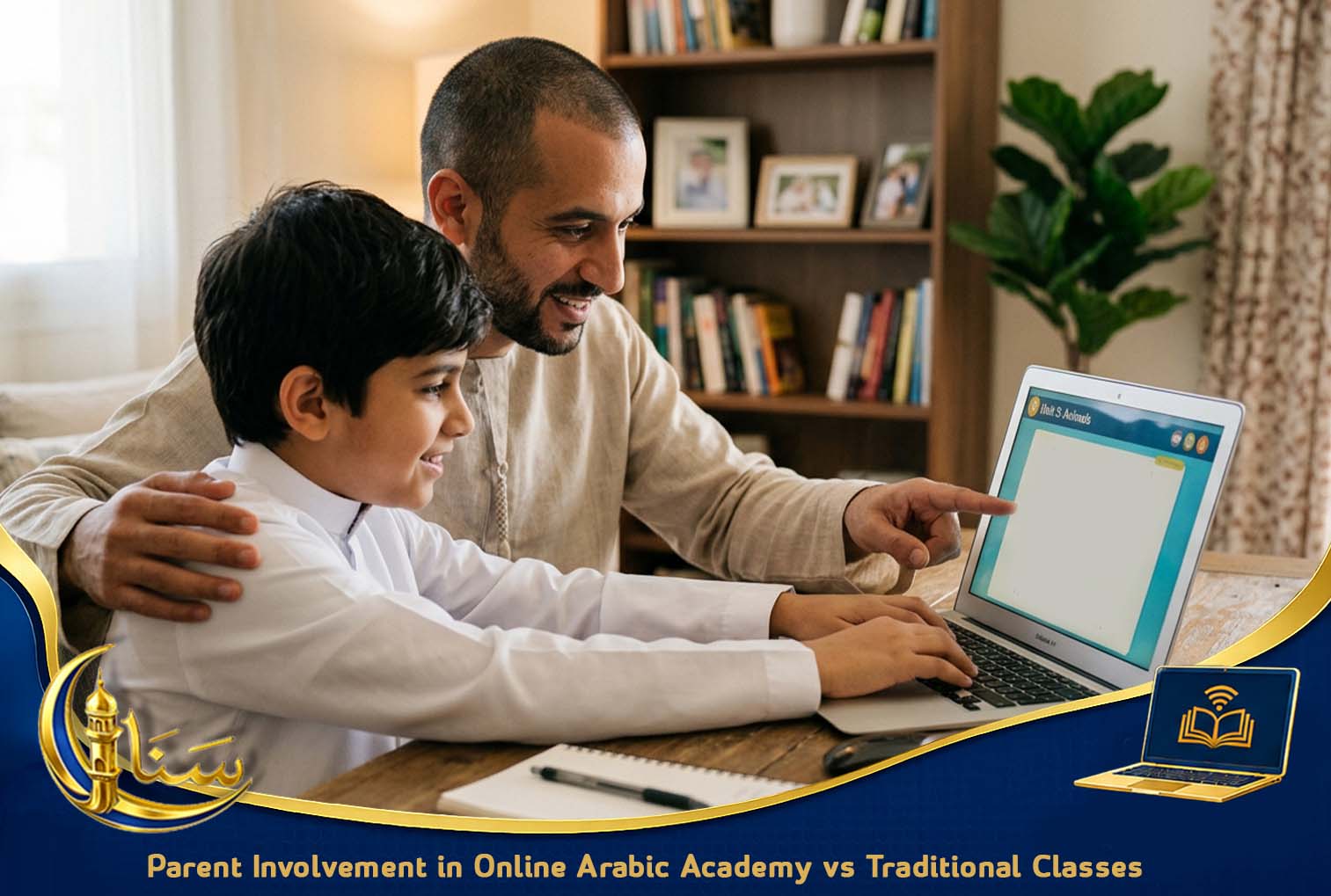
Parents play an essential role in successful Quran education. One important advantage of online learning is the ability to remain closely involved throughout the educational journey. At Sana Online Quran Academy, parents can easily:
- Review lesson reports.
- Discuss progress with teachers.
- Monitor attendance.
- Support revision at home.
- Track memorization goals.
- Celebrate student achievements.
This regular communication strengthens cooperation between families and teachers while helping children remain motivated. Choosing the best way to learn Arabic online often depends on the learner’s goals, current level, available practice time, and preferred learning format.
Why Sana Online Quran Academy Makes Flexible Learning Easier
Flexibility alone is not enough. Students also need structured educational planning that ensures consistent progress. For this reason, Sana Online Quran Academy combines flexible scheduling with:
- Live one-on-one instruction.
- Qualified male and female Quran tutors.
- Personalized learning plans.
- Continuous assessments.
- Interactive teaching methods.
- Individual academic support.
Rather than following the same routine for every learner, teachers adjust each lesson according to the student’s strengths, challenges, and educational goals. This personalized strategy keeps students engaged while encouraging long-term success.
Why Flexibility Improves Learning Outcomes in Online Arabic Academy vs Traditional Classes?
Flexibility is much more than convenience. Students who learn when they are relaxed and mentally prepared often experience:
- Better concentration.
- Faster Quran memorization.
- Improved Tajweed application.
- Stronger Arabic language development.
- Higher lesson attendance.
- Greater self-confidence.
- Better long-term motivation.
For these reasons, flexibility has become one of the strongest advantages parents identify when evaluating Online Arabic Academy vs Traditional Classes. Children may stay more engaged when lessons include fun ways kids can learn Arabic alongside regular practice and age-appropriate activities.
Transitioning to Educational Quality
Flexibility certainly helps families maintain consistent learning routines. However, convenience alone does not determine educational success. The next question parents usually ask is even more important: Does an online Arabic academy provide the same educational quality as traditional classroom instruction?
In the next section, we’ll compare Online Arabic Academy vs Traditional Classes based on teacher qualifications, one-on-one instruction, curriculum design, progress tracking, and student achievement to determine which learning method delivers the strongest educational outcomes.
Quality of Education in Online Arabic Academy vs Traditional Classes
For most parents, educational quality is the deciding factor when comparing Online Arabic Academy vs Traditional Classes. While flexibility and convenience are valuable, every family ultimately wants to ensure their child receives authentic Quran education, develops strong Arabic language skills, and progresses steadily under qualified teachers.
The encouraging news is that both learning methods can produce excellent results when experienced instructors and well-designed curricula are involved. However, the teaching experience differs in several important ways, particularly regarding personalization, lesson structure, and progress monitoring.
At Sana Online Quran Academy, educational quality is built on individualized instruction, structured programs, and continuous assessment, allowing every student to receive the support they need to succeed.
Teacher Qualifications in Online Arabic Academy vs Traditional Classes
One of the first questions parents ask is whether online Quran teachers have the same level of expertise as instructors in traditional Islamic centers. The answer depends entirely on the academy. Professional online academies carefully select teachers based on their
- Quran recitation expertise.
- Tajweed knowledge.
- Arabic language proficiency.
- Teaching experience.
- Communication skills.
- Ability to work with children and adults.
At Sana Online Quran Academy, students learn from qualified male and female instructors who combine authentic Islamic knowledge with modern educational techniques. Unlike some community programs that depend on volunteer availability, professional online academies follow consistent recruitment standards and teacher evaluations. As a result, students receive reliable instruction throughout their educational journey.
One-on-One Instruction in Online Arabic Academy vs Traditional Classes
Perhaps the biggest difference between Online Arabic Academy vs Traditional Classes is the amount of personal attention each learner receives. Traditional classrooms often include students with different ages and learning levels. Consequently, teachers must divide lesson time among everyone.
Although group learning has its own benefits, students sometimes spend valuable minutes waiting for classmates to finish reading or answering questions. Online one-on-one classes eliminate this issue. Every minute belongs to one student. Teachers can:
- Listen carefully to every verse.
- Correct pronunciation immediately.
- Answer questions without interruption.
- Adjust lesson speed.
- Focus on individual weaknesses.
- Celebrate personal achievements.
This personalized learning environment often helps students progress more quickly while building stronger confidence.
Curriculum Design in Online Arabic Academy vs Traditional Classes
A well-structured curriculum plays a significant role in long-term educational success. Some traditional programs rely heavily on the individual teacher’s experience. Although many instructors follow excellent teaching practices, lesson progression may differ from one classroom to another.
At Sana Online Quran Academy, every student follows a carefully organized curriculum that builds knowledge step by step. Students gradually develop skills through stages such as:
- Arabic alphabet recognition.
- Correct pronunciation.
- Noorani Qaida.
- Quran reading fluency.
- Tajweed application.
- Quran memorization.
- Arabic vocabulary.
- Islamic studies.
Because each level has clearly defined objectives, students understand exactly what they need to master before advancing. This structured approach creates confidence while reducing learning gaps.
Student Progress Tracking in Online Arabic Academy vs Traditional Classes
Another major difference lies in how progress is monitored. Traditional classrooms often evaluate students during scheduled tests or periodic meetings. While this system works well for many learners, smaller challenges may go unnoticed between assessments. Online learning allows teachers to monitor progress continuously. At Sana Online Quran Academy, instructors regularly evaluate:
- Reading fluency.
- Tajweed accuracy.
- Memorization progress.
- Homework completion.
- Attendance.
- Lesson participation.
- Learning consistency.
Parents receive frequent updates that help them understand their child’s strengths and identify areas needing additional practice. Continuous assessment keeps students motivated because they can clearly see their improvement over time.
Communication Between Teachers and Parents
Strong parent-teacher communication supports long-term educational success. Traditional classrooms sometimes make regular communication difficult because teachers supervise many students throughout the day. Online education creates more opportunities for collaboration. Parents can communicate directly with instructors regarding:
- Weekly progress.
- Memorization goals.
- Homework.
- Pronunciation challenges.
- Schedule adjustments.
- Individual learning strategies.
This partnership allows everyone to work toward the same educational objectives while providing students with consistent encouragement both inside and outside the classroom.
Personalized Learning in Online Arabic Academy vs Traditional Classes
No two children learn in the same way. Some memorize Quran quickly but struggle with pronunciation. Others read fluently yet require extra Tajweed practice. Some students simply need additional encouragement before becoming confident readers. This is where personalized education becomes invaluable. Teachers at Sana Online Quran Academy adapt every lesson according to:
- Learning pace.
- Educational goals.
- Strengths.
- Weaknesses.
- Age.
- Previous experience.
Instead of comparing students with classmates, teachers help each learner achieve steady personal improvement. This individualized approach builds confidence while encouraging lifelong learning.
Technology in Online Arabic Academy vs Traditional Classes
Technology has transformed the way Islamic education is delivered. Years ago, online learning was often limited to simple video calls. Today, professional online academies use interactive educational tools that create engaging learning experiences.
At Sana Online Quran Academy, technology enhances education rather than replacing traditional teaching principles. Teachers use digital resources to:
- Highlight Quran verses.
- Share interactive whiteboards.
- Display Tajweed rules visually.
- Annotate reading mistakes.
- Review previous lessons.
- Share learning materials instantly.
These tools improve student understanding while making lessons more interactive and enjoyable. Rather than becoming distracted by technology, students use it as a learning resource under the guidance of experienced instructors.
Interactive Learning Tools Improve Student Engagement
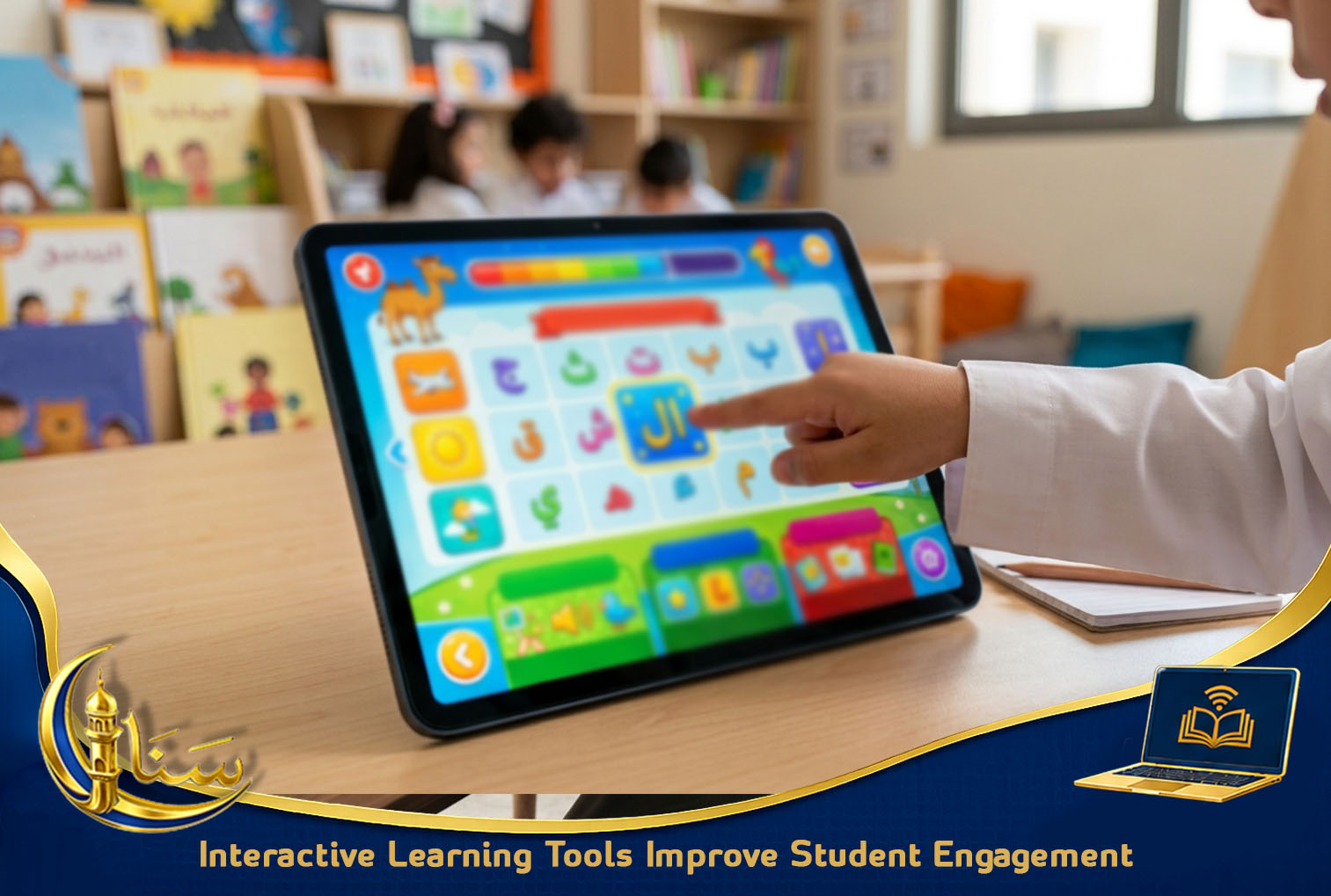
Keeping children engaged is essential for successful Quran education. Interactive online classrooms encourage students to participate actively instead of simply listening. Teachers frequently use:
- Screen sharing.
- Digital Quran pages.
- Visual Tajweed demonstrations.
- Reading exercises.
- Pronunciation practice.
- Live discussions.
- Interactive questioning.
Because students remain actively involved throughout the lesson, concentration naturally improves. Many parents notice that children become excited about attending classes because every lesson feels dynamic and engaging.
Lesson Recordings Support Revision
One advantage unique to many online academies is the ability to revisit learning materials. Some lessons or teacher notes can be reviewed later, allowing students to reinforce difficult concepts at their own pace. This additional revision opportunity helps learners:
- Correct repeated mistakes.
- Practice pronunciation.
- Strengthen memorization.
- Review Tajweed rules.
- Prepare for assessments.
Instead of relying entirely on memory, students have additional resources that support long-term retention.
Student Motivation in Online Arabic Academy vs Traditional Classes
Motivation is one of the strongest predictors of educational success. Regardless of teaching method, students learn more effectively when they enjoy the learning process. Online education encourages motivation by providing:
- Individual praise.
- Personalized goals.
- Immediate feedback.
- Achievement tracking.
- Interactive lessons.
- Flexible scheduling.
Rather than feeling lost within a large classroom, students receive continuous encouragement that builds confidence lesson after lesson.
Setting Personal Learning Goals
Every learner benefits from clear objectives. At Sana Online Quran Academy, teachers help students establish realistic goals based on their abilities. Examples include:
- Completing Noorani Qaida.
- Memorizing one Surah each month.
- Improving pronunciation.
- Reading fluently.
- Mastering selected Tajweed rules.
- Expanding Arabic vocabulary.
Breaking larger goals into manageable milestones allows students to celebrate progress regularly. These small achievements increase motivation and encourage long-term consistency.
Recognition Encourages Long-Term Success
Positive reinforcement is particularly important for younger learners. Instead of focusing only on mistakes, experienced teachers celebrate improvement through:
- Encouraging feedback.
- Progress certificates.
- Achievement milestones.
- Parent recognition.
- Verbal praise.
Children who feel appreciated often become more confident readers and more enthusiastic learners. Positive learning experiences also strengthen their emotional connection with Quran education.
Which Method Provides Better Educational Quality?
When comparing Online Arabic Academy vs. Traditional Classes, both methods can provide excellent Islamic education when taught by qualified instructors. Traditional learning remains an outstanding option for families who value classroom interaction and local community involvement. However, online education offers additional advantages, including:
- Personalized one-on-one instruction.
- Structured curriculum.
- Continuous assessments.
- Flexible scheduling.
- Interactive learning technology.
- Strong parent communication.
- Individual progress monitoring.
For many families, these benefits create a more effective and enjoyable learning experience. At Sana Online Quran Academy, students receive comprehensive educational support that combines authentic Islamic teaching with modern educational practices.
Transition to Tajweed Comparison
Educational quality is essential, but accurate Quran recitation requires something even more specific—proper Tajweed. Many parents wonder whether live online instruction can truly develop precise pronunciation, correct Makharij, and confident Quran recitation.
In the next section, we’ll explore Online Arabic Academy vs Traditional Classes from the perspective of Tajweed education, real-time pronunciation correction, Makharij training, and practical Quran recitation to determine which approach helps students achieve the highest level of accuracy.
Learning Quran With Proper Tajweed in Online Arabic Academy vs Traditional Classes
For many Muslim families, learning the quran with a tajweed course correctly is the highest priority. That is why Tajweed often becomes the deciding factor when comparing Online Arabic Academy vs Traditional Classes. Parents want to know whether online instruction can truly help their children pronounce every letter correctly, apply Tajweed rules accurately, and develop beautiful Quran recitation.
The answer depends less on the learning format and more on the quality of instruction. A qualified teacher who provides immediate feedback can help students master Tajweed effectively, whether lessons take place online or in a classroom. However, the level of individual attention often differs significantly.
At Sana Online Quran Academy, Tajweed instruction combines live interaction, structured progression, and personalized correction to help students build strong recitation skills from the very beginning.
Can Students Master Tajweed Through an Online Arabic Academy?
Many parents initially worry that online learning may not provide the same level of pronunciation correction as face-to-face classes. Fortunately, today’s technology has changed that completely. During live online lessons, teachers listen carefully to every word the student recites.
They immediately identify mistakes, explain the correct pronunciation, and ask the learner to repeat the verse until it is recited accurately. Unlike prerecorded videos, live instruction allows continuous interaction throughout the lesson. Students can:
- Ask questions instantly.
- Repeat difficult verses.
- Receive personalized correction.
- Practice until pronunciation improves.
- Build confidence gradually.
Because every lesson is interactive, students remain actively involved instead of becoming passive listeners.
Live Teachers vs Recorded Lessons in Online Arabic Academy vs Traditional Classes
Many educational platforms advertise Quran learning through recorded lessons or mobile applications. Although these resources can support revision, they cannot replace a qualified teacher. Tajweed requires continuous supervision because every student makes different pronunciation mistakes. A live teacher can:
- Hear every recitation.
- Explain Makharij clearly.
- Correct mistakes immediately.
- Demonstrate mouth positioning.
- Adjust teaching methods.
- Encourage consistent practice.
At Sana Online Quran Academy, every class is conducted live because authentic Quran education depends on direct teacher-student interaction. This personal guidance helps students avoid developing incorrect reading habits that can become difficult to correct later.
Learning Makharij Before Advanced Tajweed Rules
Strong Quran recitation begins with mastering Makharij, the articulation points of Arabic letters. Many beginners focus on memorizing Tajweed rules without first learning how each letter should be pronounced.
This often creates confusion. For that reason, Sana Online Quran Academy introduces students to pronunciation fundamentals before advancing to more complex Tajweed concepts. Students first learn:
- Arabic letter pronunciation.
- Correct tongue placement.
- Mouth positioning.
- Letter characteristics (Sifaat).
- Common pronunciation mistakes.
Only after mastering these foundations do students begin applying detailed Tajweed rules during Quran recitation. This gradual progression produces stronger long-term results.
Immediate Error Correction Improves Quran Recitation
One of the greatest strengths of personalized online education is instant feedback. Rather than allowing mistakes to continue throughout an entire lesson, teachers stop students immediately, explain the correction, and practice the verse together. This teaching style helps students:
- Build correct habits early.
- Improve pronunciation faster.
- Strengthen listening skills.
- Gain confidence while reading.
- Avoid repeating common mistakes.
Immediate correction is especially valuable for younger children because pronunciation habits become deeply established over time. Correcting mistakes early creates a stronger foundation for lifelong Quran recitation.
More Individual Reading Time in Online Arabic Academy vs Traditional Classes
Another major difference between Online Arabic Academy and traditional classes is the amount of active reading each student receives. In traditional classrooms, teachers divide their attention among multiple learners.
As a result, students may spend part of the lesson waiting for classmates to finish reading. One-on-one online learning changes this completely. Every lesson focuses entirely on one learner. Students spend most of their class:
- Reading aloud.
- Reviewing previous lessons.
- Practicing difficult verses.
- Correcting pronunciation.
- Applying Tajweed rules.
- Asking questions.
Technology Enhances Tajweed Learning
Technology is often viewed as a convenience, but it also strengthens the learning experience. Professional online academies use modern educational tools that improve communication between teachers and students. Teachers can:
- Highlight Quran verses.
- Mark pronunciation mistakes.
- Display Tajweed colors.
- Zoom into Arabic text.
- Share educational resources.
- Review memorization visually.
These interactive features help students understand both theoretical rules and practical application more effectively. Instead of replacing traditional instruction, technology supports it.
Cost Comparison in Online Arabic Academy vs Traditional Classes
Educational quality is essential; however, cost is another important factor for many families. When comparing Online Arabic Academy vs Traditional Classes, parents should evaluate both direct and indirect expenses rather than focusing only on tuition fees. For example, traditional classes often include additional costs such as:
- Transportation expenses.
- Fuel costs.
- Registration fees.
- Printed learning materials.
- Time away from work.
- Waiting during lessons.
In contrast, online learning eliminates many of these hidden expenses. Moreover, students can attend classes from home using only a computer or tablet with a reliable internet connection. As a result, families save both time and money.
Furthermore, households with multiple children often experience even greater savings throughout the year, making online education a cost-effective long-term option.
Which Option Offers Better Long-Term Value?
Although affordability matters, the lowest price does not always provide the best educational experience. Instead, parents should consider the overall value each program delivers. For instance, ask the following questions:
- How much individual attention does my child receive?
- Are the teachers qualified and experienced?
- Is progress monitored regularly?
- Are lesson schedules flexible?
- Does the academy follow a structured curriculum?
When these factors are evaluated together, many families discover that personalized online learning offers outstanding value. After all, every lesson focuses entirely on one student’s progress, which often leads to faster and more consistent improvement.
Safety and Comfort in Online Arabic Academy vs Traditional Classes
Academic success depends not only on teaching quality but also on the learning environment. Children who feel comfortable usually participate more actively, ask more questions, and enjoy learning.
Traditional classrooms certainly provide valuable social interaction. However, online education offers additional benefits for families seeking a calm and familiar learning environment.
Learning From Home Builds Confidence
Many children naturally feel more relaxed when studying at home. Instead of adapting to unfamiliar classrooms or worrying about reading in front of large groups, students learn in an environment where they already feel safe. Consequently, they are more likely to:
- Read with confidence.
- Participate actively.
- Ask questions without hesitation.
- Accept corrections positively.
- Practice without fear of embarrassment.
Parent Involvement in Online Learning
Another major advantage of Online Arabic Academy vs. Traditional Classes is the opportunity for parents to stay actively involved throughout the learning journey. For example, at Sana Online Quran Academy, parents can:
- Review regular progress reports.
- Communicate directly with teachers.
- Monitor attendance.
- Support revision at home.
- Follow memorization goals.
- Celebrate their children’s achievements.
As a result, this close partnership creates a stronger support system that encourages continuous progress and long-term success.
Safe Learning Without Daily Travel
Transportation is another practical factor that many families should consider. For example, traveling to traditional classes may involve:
- Heavy traffic.
- Scheduling conflicts.
- Long waiting times.
- Evening travel.
Fortunately, online learning removes these challenges completely. Instead, students simply prepare their study area and join their lesson within minutes. In addition, this routine saves valuable time while reducing daily stress for both parents and children.
Which Students Benefit Most From an Online Arabic Academy?
Every student learns differently. Nevertheless, certain learners benefit especially from personalized online instruction. For example, online learning is an excellent choice for:
- Young children beginning Quran reading.
- Busy families with changing schedules.
- Teenagers balancing school responsibilities.
- Adults returning to Quran study.
- New Muslims seeking personal guidance.
- Students preparing for Hifz.
- Learners needing additional Tajweed practice.
Because every lesson is customized, students progress according to their own abilities rather than the pace of an entire classroom.
Mistakes When Comparing Online Arabic vs Traditional Classes

Choosing the right academy requires careful evaluation. Unfortunately, some parents focus on only one factor while overlooking others that have a greater influence on long-term success. For example, common mistakes include:
- Choosing the cheapest option instead of the best educational quality.
- Ignoring teacher qualifications.
- Skipping the free trial lesson.
- Overlooking curriculum structure.
- Not asking about progress reports.
- Focusing only on convenience.
- Forgetting long-term educational goals.
Therefore, avoiding these mistakes helps families make informed decisions that benefit their children for many years.
Frequently Asked Questions About Online Arabic Academy vs Traditional Classes
Many parents still have important questions before selecting the best learning method. Therefore, the following answers address some of the most common concerns about Online Arabic Academy vs Traditional Classes.
What equipment is needed for online Quran classes?
Generally, students only need a reliable internet connection, a computer or tablet, headphones, and a copy of the Holy Quran.
How many lessons per week are recommended?
Typically, attending two to four lessons each week allows students to make steady progress, although the ideal schedule depends on individual goals and availability.
Can siblings study through the same academy?
Yes. In fact, many families enroll several children while selecting different schedules and personalized learning plans for each student.
Are trial classes available?
Yes. Moreover, professional academies such as Sana Online Quran Academy often provide free trial lessons, allowing parents to evaluate the teaching quality before enrolling.
In conclusion, ultimately, choosing between Online Arabic Academy vs Traditional Classes depends on your child’s learning needs, your family’s schedule, and your long-term educational goals rather than simply selecting one method over the other.
While traditional classrooms continue to offer valuable face-to-face interaction and community engagement, online learning provides greater flexibility, personalized one-to-one instruction, and consistent progress tracking. As a result, many families find that online education better fits today’s busy lifestyles without compromising educational quality.
At Sana Online Quran Academy, students benefit from experienced teachers, customized lesson plans, structured Quran and Arabic programs, and continuous communication with parents. Furthermore, every lesson is designed to help learners improve Quran recitation, master Tajweed, strengthen Arabic language skills, and build confidence step by step.
In the end, the right educational choice is the one that encourages a lifelong love of learning and a deeper connection with the Holy Quran. Therefore, by carefully evaluating Online Arabic Academy vs. Traditional Classes, parents can choose the learning path that best supports their children’s academic success and long-term spiritual growth.