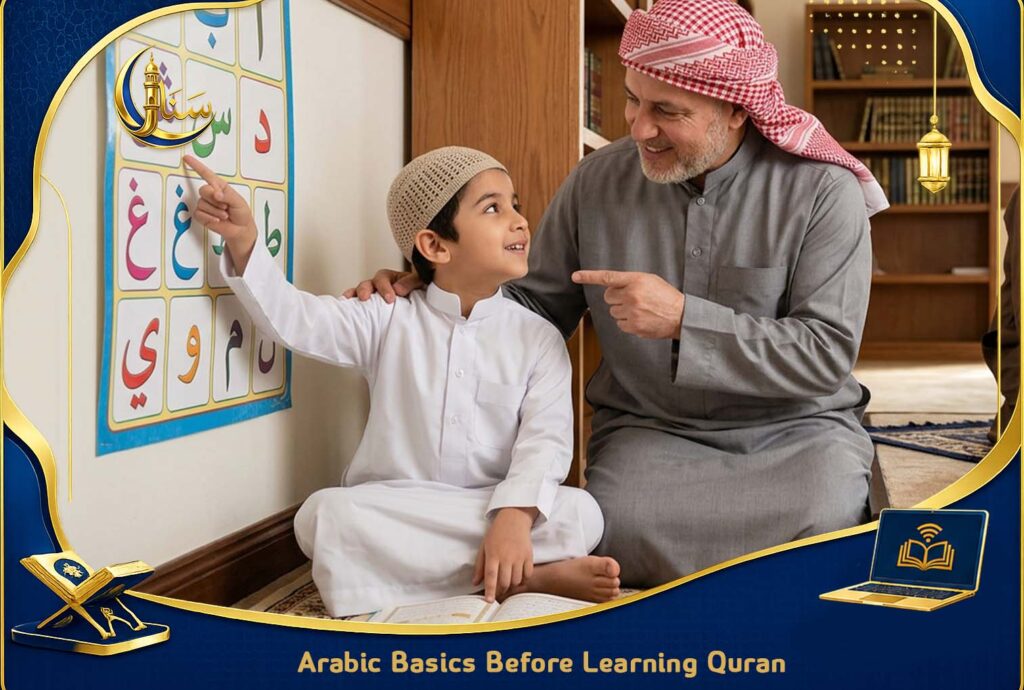
The best way to learn Arabic Online depends on having a clear learning path rather than simply collecting lessons, vocabulary lists, or language apps. Arabic has several interconnected skills, including reading, writing, listening, speaking, grammar, vocabulary, and pronunciation. Therefore, learners usually make better progress when they follow a structured plan that develops these skills gradually.
Online learning has made Arabic more accessible to beginners, adults, students, parents, and busy professionals. Instead of traveling to a language center, learners can study from home and choose lesson times that fit their routines. More importantly, online instruction can provide direct interaction with a teacher, personalized practice, and feedback that independent study may not provide.
At Sana Online Quran Academy, learners can approach Arabic study through organized lessons designed around their current level and goals. Whether the objective is understanding Arabic texts, communicating in everyday situations, improving reading skills, or developing a stronger foundation for Quranic Arabic, the learning process should begin with realistic expectations and a consistent routine.
The key is not to search for a single resource that promises instant fluency. Instead, learners should combine qualified instruction, active practice, useful learning materials, and regular review. The following roadmap explains how to build that process and how to avoid common mistakes that slow Arabic learners down.
Best Way to Learn Arabic Online for Beginners
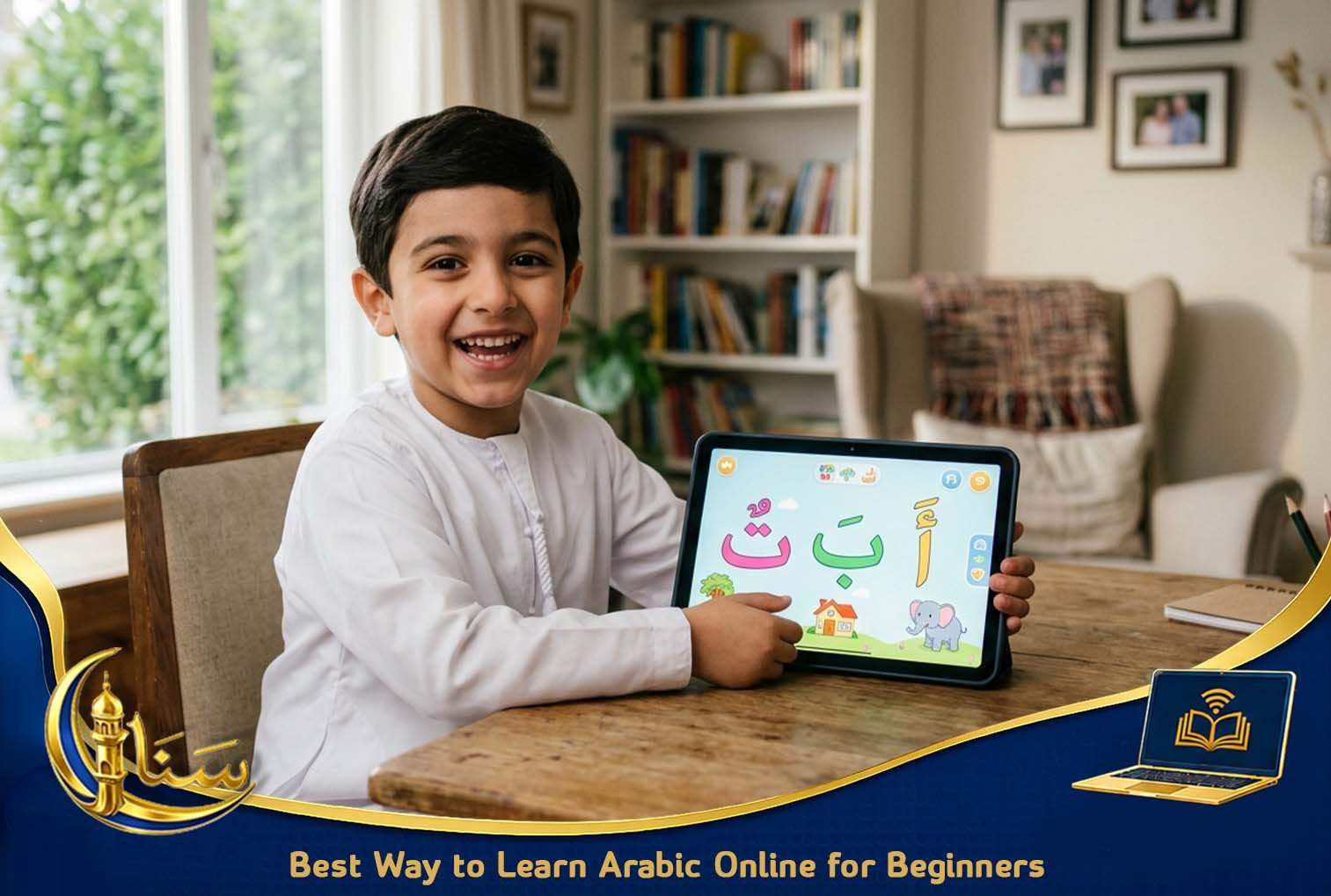
For a beginner, the priority should be building a strong foundation. Trying to study advanced grammar or memorize hundreds of unrelated words before understanding basic sentence patterns can quickly become overwhelming.
A practical beginner plan should introduce Arabic in a logical order:
- Learn the Arabic alphabet and letter shapes.
- Practice connecting letters in different positions.
- Develop accurate pronunciation.
- Build a core vocabulary.
- Understand simple sentence structures.
- Practice listening to short Arabic expressions.
- Begin speaking with simple phrases.
- Review previously learned material regularly.
However, the exact order can change according to the learner’s goals. Someone interested mainly in conversation may need more speaking practice early on, while a learner focused on reading Arabic texts may spend additional time on script recognition and vocabulary.
For this reason, Sana Online Quran Academy can be positioned as a structured learning option for students who need guidance rather than random lessons. A teacher can identify the learner’s starting level and adjust the material instead of forcing every student through the same sequence.
Start Your Quran Learning Journey Today with Sana Online Quran Academy
Start your Quran learning journey today with Sana Online Quran Academy, where structured and simple programs are designed for both children and adults. In fact, lessons are delivered step by step by qualified teachers who focus on reading skills, basic Tajweed, and gradual improvement with clear explanations.
In addition, you can study from home with flexible schedules that fit your daily routine. Moreover, regular practice and feedback help you improve steadily. As a result, learning becomes easier, more consistent, and more effective.

What Makes the Best Way to Learn Arabic Online Effective?
An effective online Arabic program should do more than transfer information from a textbook to a screen. The learner needs opportunities to understand, use, review, and receive feedback on the language.
Several elements make online study more productive:
Clear Learning Goals
Before starting, determine what you want Arabic to help you accomplish. Your goal could be speaking with Arabic speakers, understanding written material, reading religious texts, improving pronunciation, or developing overall fluency.
A specific objective makes it easier to choose appropriate lessons and measure progress.
Qualified Teacher Support
A teacher can identify pronunciation problems, explain difficult grammar, correct sentence formation, and answer questions when a concept is unclear. This becomes especially valuable when a learner has developed an incorrect habit and does not realize it.
Active Practice
Watching lessons alone is not enough. Learners should speak, write, read aloud, listen carefully, and produce their own sentences.
Consistent Review
Arabic contains many words, patterns, and grammatical structures. Regular review helps move information from short-term recognition toward long-term recall.
Appropriate Materials
Learning resources should match the student’s level. Material that is far too difficult can discourage beginners, while material that is too easy may not provide enough progress.
When these elements work together, online learning becomes a complete educational process instead of a collection of disconnected resources.
Best Way to Learn Arabic Online Through One-to-One Lessons
One-to-one instruction can be particularly useful for learners who want lessons adapted to their individual needs. In a private lesson, the teacher can spend more time on a student’s specific difficulties instead of dividing attention among several learners.
For example, one student may understand vocabulary but struggle to form sentences. Another may read Arabic comfortably but hesitate when speaking. A third learner may know basic grammar but need more listening practice.
A personalized lesson can respond to these differences.
During a private session, learners can also ask questions immediately. Instead of postponing confusion until the next class, they can request another explanation, practice an example, or repeat a difficult pronunciation pattern.
Furthermore, private lessons make it easier to adjust the pace. A beginner who needs additional practice does not have to move forward simply because the rest of a group has completed a topic. Likewise, an advanced learner can progress without spending excessive time reviewing elementary material.
This individual attention is one reason structured online tutoring can become an important part of the Best Way to Learn Arabic Online for learners who value personalized guidance.
Build Arabic Vocabulary Without Memorizing Random Words
Vocabulary is essential, but memorizing isolated word lists is rarely enough to create practical language ability. A learner may remember the meaning of a word yet struggle to use it naturally in a sentence.
Instead, learn vocabulary within meaningful contexts.
For example, rather than memorizing a single word for “book,” practice several simple expressions involving that word. Then connect the vocabulary to questions, descriptions, and everyday situations.
A useful vocabulary routine can include:
- Learning a small number of new words each day.
- Grouping words by topic.
- Creating simple sentences with new vocabulary.
- Reviewing older words before adding many new ones.
- Listening to the pronunciation of unfamiliar words.
- Using new vocabulary during speaking practice.
- Writing short sentences rather than copying definitions.
Additionally, learners should distinguish between recognizing a word and actively using it. Recognition is useful for reading and listening, while active recall is necessary for speaking and writing.
Sana Online Quran Academy can incorporate vocabulary practice into structured lessons so that new words are connected to meaningful language rather than memorized without context.
Best Way to Learn Arabic Online Through Listening Practice
Listening is sometimes neglected by beginners because written Arabic appears easier to control. However, real communication requires the ability to understand spoken language at different speeds.
Start with short and understandable audio rather than forcing yourself to listen to advanced conversations immediately. At first, focus on identifying familiar words and common sentence patterns.
A useful listening routine might look like this:
- Listen once without pausing.
- Listen again and identify familiar words.
- Check the meaning of important unfamiliar expressions.
- Listen again while following the written text.
- Repeat selected sentences aloud.
- Return to the same recording later for review.
Gradually, the learner should move from highly controlled audio toward more natural conversations.
It is also useful to listen repeatedly rather than constantly changing resources. Repetition helps the brain recognize sounds, rhythm, common expressions, and grammatical patterns more naturally.
Most importantly, do not expect to understand every word. Comprehension develops progressively, and understanding the main meaning is a valuable step before achieving complete listening accuracy.
Best Way to Learn Arabic Online for Speaking Confidence
Speaking requires active production, so learners need opportunities to use Arabic rather than simply study it.
Beginners can start with basic introductions, questions, descriptions, and everyday expressions. Once these patterns become familiar, they can combine them into longer responses.
For example, a learner might progress from saying a single sentence about their name to explaining where they live, what they study, what they enjoy, and what they plan to do.
Speaking practice should also include correction. Without feedback, learners may repeat the same pronunciation or grammar mistake until it becomes difficult to change.
A useful speaking session can include:
- Warm-up questions.
- Review of previous vocabulary.
- Guided conversation.
- Pronunciation correction.
- Sentence-building exercises.
- A short free-speaking activity.
- Feedback at the end of the lesson.
The objective is not to speak perfectly from the beginning. Instead, learners should gradually become more comfortable producing Arabic without translating every sentence word by word in their heads.
With consistent practice, speaking becomes less mentally demanding, and familiar structures begin to appear more naturally.
How Grammar Fits Into the Best Way to Learn Arabic Online?

Grammar is important, but studying grammar rules without using them can make Arabic feel unnecessarily complicated.
A better approach is to connect each grammatical concept to examples. After learning a structure, use it in several sentences and then apply it during speaking or writing practice.
Beginners do not need to master every grammatical detail immediately. They should first understand the structures that allow them to communicate and recognize common sentences.
For instance, learning how Arabic sentences are organized can help learners understand why words appear in particular positions. Later, they can explore more advanced topics such as verb patterns, grammatical endings, agreement, and sentence variations.
A structured program can introduce these concepts gradually. This prevents learners from facing too many rules at once while still giving them a reliable foundation.
Moreover, grammar becomes easier when learners repeatedly encounter the same structures in reading and listening. Over time, they begin to recognize patterns instead of treating every sentence as a completely new problem.
Create a Realistic Arabic Study Schedule
Even excellent lessons cannot compensate for an inconsistent study routine. Learners often begin with ambitious plans and then stop when their schedule becomes busy.
A realistic routine is usually more sustainable.
For example, a learner could divide study into several short activities during the week:
- Two or three structured lessons.
- Daily vocabulary review.
- Short listening sessions.
- Regular speaking practice.
- One weekly review session.
- Occasional writing exercises.
The exact schedule should depend on the learner’s availability. Someone with limited time may benefit more from shorter, consistent sessions than from one long study period followed by several days without practice.
Consistency also makes it easier to identify progress. If you study regularly, you can compare your speaking, reading, and listening ability over several weeks.
Sana Online Quran Academy can be incorporated into such a routine by providing organized instruction while the learner uses additional time for review and independent practice.
Best Way to Learn Arabic Online With a Personalized Learning Plan
A personalized learning plan should begin with an assessment of the learner’s current ability. Starting at the wrong level can create unnecessary frustration.
A beginner may need to start with the alphabet and basic expressions. An intermediate learner, by contrast, may benefit more from conversation, reading comprehension, and grammar refinement.
The plan should also consider the learner’s purpose.
Someone studying Arabic for travel may prioritize practical conversations. A student interested in academic Arabic may need stronger reading and writing skills. Someone studying Quranic Arabic may require vocabulary and structures relevant to understanding Quranic texts.
Therefore, personalization should involve more than changing the difficulty of the textbook. It should influence lesson topics, activities, vocabulary, practice methods, and progress goals.
A useful learning plan should answer several questions:
- What is my current Arabic level?
- Why am I learning Arabic?
- Which skills matter most for my goal?
- How much time can I study each week?
- Which areas currently cause the most difficulty?
- How will I measure progress?
Once these questions are clear, the learning process becomes more focused.
Use Reading and Writing to Reinforce Arabic Skills
Reading exposes learners to vocabulary and sentence structures in context. Writing, meanwhile, forces learners to actively retrieve and organize what they know.
Beginners should start with short texts that contain familiar vocabulary. The objective is to understand the overall message rather than translate every single word immediately.
As reading ability develops, learners can gradually work with longer and more complex material.
Writing practice can begin with simple sentences. Later, students can write short descriptions, messages, summaries, or responses to questions.
A strong routine combines both skills. After reading a short passage, for example, a learner can write three sentences explaining its main idea. This connects comprehension with active language production.
Additionally, writing provides teachers with useful evidence of progress. A teacher can identify recurring grammar mistakes, spelling issues, vocabulary gaps, and sentence-structure problems that may not appear during a speaking lesson.
Best Way to Learn Arabic Online Without Becoming Overwhelmed
Arabic can initially appear difficult because learners encounter a new alphabet, unfamiliar sounds, grammar patterns, and a large vocabulary. Trying to master everything simultaneously can make the learning process unnecessarily stressful.
Instead, divide the journey into manageable stages.
Stage One: Build the Foundation
Focus on reading the alphabet, pronunciation, basic vocabulary, and simple expressions.
Stage Two: Form Simple Sentences
Learn common sentence patterns and practice describing familiar situations.
Stage Three: Increase Comprehension
Add listening and reading activities that remain slightly above your current comfort level.
Stage Four: Develop Conversation
Use increasingly longer responses and participate in guided conversations.
Stage Five: Refine Accuracy
Focus on grammar, pronunciation, vocabulary range, and natural expression.
This progression creates a sense of direction. Rather than asking whether you can “speak Arabic” yet, you can measure smaller achievements along the way.
For many learners, this gradual approach is more sustainable than trying to reach fluency as quickly as possible.
Choose an Arabic Teacher Based on Your Learning Goals
The teacher you choose can influence the quality of your learning experience. However, the ideal teacher is not necessarily the same for every student.
Consider factors such as:
- Experience teaching your current level.
- Ability to explain concepts clearly.
- Pronunciation and language proficiency.
- Experience with your specific learning goals.
- Availability that matches your schedule.
- Willingness to provide corrections.
- Ability to adapt lessons when you need additional practice.
- Teaching style that keeps you engaged.
It is also useful to determine whether the teacher provides a clear progression. Lessons should connect rather than feel like unrelated conversations.
Sana Online Quran Academy can be presented as an option for learners who prefer organized online instruction and teacher-guided study. The important point is that students should select an educational approach based on their own objectives rather than choosing a program solely because it is popular.
Best Way to Learn Arabic Online With Self-Study

Self-study remains useful even when a learner attends live lessons. In fact, combining guided instruction with independent practice can create a stronger routine.
After a lesson, spend a few minutes reviewing the vocabulary and examples introduced by the teacher. Then use those words in your own sentences.
You can also create a personal review system using:
- Vocabulary cards.
- Short writing exercises.
- Recorded pronunciation practice.
- Listening materials.
- Reading passages.
- Personal vocabulary notebooks.
- Weekly progress checks.
However, self-study should complement instruction rather than replace meaningful practice when the learner needs correction.
If you repeatedly pronounce a word incorrectly or misunderstand a grammatical structure, additional independent repetition may reinforce the mistake. Teacher feedback helps identify these problems before they become established habits.
Therefore, a balanced approach combines independent work with guided learning.
How to Measure Progress When Learning Arabic Online?
Progress should not be measured only by how many words you have memorized. Language ability involves several interconnected skills.
You can track progress through practical indicators such as:
- Reading a passage with fewer pauses.
- Understanding more of a familiar audio recording.
- Speaking for longer without stopping.
- Writing sentences with fewer errors.
- Recognizing common vocabulary more quickly.
- Using newly learned grammar correctly.
- Answering questions without translating every word.
- Understanding the general meaning of unfamiliar sentences.
It is helpful to record these changes periodically. For example, you could record yourself speaking about the same topic every month and compare the results.
Likewise, keeping samples of your writing can reveal improvements that may be difficult to notice from day to day.
Progress is often gradual. Some weeks may feel highly productive, while others may seem slower. What matters is whether your overall ability improves over time.
Common Mistakes That Slow Down Arabic Learning
Many learners unintentionally create obstacles through their study habits. Fortunately, most of these problems can be corrected.
Studying Without a Clear Goal
Without a specific objective, it is easy to jump between unrelated resources.
Memorizing Too Much at Once
Large vocabulary lists can create the illusion of progress without producing active language ability.
Avoiding Speaking
Waiting until your Arabic is “perfect” before speaking delays one of the most important forms of practice.
Ignoring Pronunciation
Small pronunciation differences can affect meaning, so pronunciation should be practiced from the beginning.
Changing Resources Constantly
Using a new app, textbook, or course every few days can prevent learners from completing a coherent learning sequence.
Skipping Review
New information becomes difficult to recall when previous lessons are never revisited.
Expecting Immediate Fluency
Language development takes time. Comparing your early progress with someone else’s advanced ability can create unrealistic expectations.
Avoiding these habits makes the learning process more focused and sustainable.
Best Way to Learn Arabic Online for Busy Adults
Adults often face a unique challenge: they may genuinely want to learn Arabic but have work, family, study, and other responsibilities.
For this reason, flexibility can be particularly valuable. The Best Online Arabic Academy for Kids can also be useful for parents who want to understand how online Arabic programs can fit into a child’s routine and support structured learning from home.
Online lessons eliminate commuting and can often be scheduled around existing responsibilities. A learner may choose sessions during a quieter part of the day and use shorter periods for independent review.
Busy adults should also avoid creating schedules that are impossible to maintain. A realistic weekly routine is more useful than an intensive plan that lasts only a few days.
For example, an adult learner might combine two live lessons with brief daily vocabulary and listening practice. This approach distributes learning across the week without requiring several uninterrupted hours.
Sana Online Quran Academy can support learners who prefer an organized online environment while allowing their study routine to remain compatible with everyday commitments.
Make Arabic Practice Part of Your Daily Life
Arabic does not have to exist only inside a scheduled lesson. Small daily activities can increase exposure to the language.
You might label familiar objects in Arabic, listen to short Arabic audio while completing routine tasks, read a few sentences each day, or practice describing your surroundings using recently learned vocabulary.
The goal is not to turn every moment into formal study. Instead, these small activities help Arabic become more familiar.
For example, after learning vocabulary related to food, describe what you are eating in simple Arabic. After learning directions, practice describing how to reach familiar places.
This type of contextual practice helps connect language knowledge with real situations.
Moreover, frequent exposure can make vocabulary easier to retrieve because you encounter it repeatedly in different contexts. If you are still wondering Is Learning Arabic Online Effective, consider how consistent lessons, practice, and feedback can work together over time.
Best Way to Learn Arabic Online: A Practical Weekly Plan
A simple weekly structure can help learners turn good intentions into consistent action. Here is one example:
- Day 1: Attend a structured lesson and review the main vocabulary.
- Day 2: Practice pronunciation and listen to a short Arabic recording.
- Day 3: Review grammar and create several original sentences.
- Day 4: Attend another lesson and practice speaking.
- Day 5: Read a short Arabic passage and identify familiar expressions.
- Day 6: Review the week’s vocabulary and practice speaking without notes.
- Day 7: Rest or complete a light review.
The schedule can be adjusted according to individual availability. The important principle is variety. Reading, writing, listening, speaking, vocabulary, and grammar should support one another rather than being studied in isolation.
Additionally, learners who are unsure how to Start Learning Arabic can begin with a clear level assessment, realistic goals, and a manageable weekly routine.
Why Consistency Matters More Than Intensity?
Studying Arabic for several hours once a week may feel productive, but long gaps between sessions can make recall difficult.
Shorter and more frequent practice gives learners repeated exposure. Each session reinforces what came before, while the next lesson introduces manageable new material.
Consistency also creates a habit. Once Arabic becomes part of the weekly routine, starting a study session requires less effort.
Therefore, learners should ask themselves not only, “How much can I study today?” but also, “What schedule can I realistically maintain for several months?”
That change in perspective can make a substantial difference.
The Learn Arabic Online Step by Step approach can help learners progress through connected stages instead of trying to master every language skill at once.
Best Way to Learn Arabic Online With Sana Online Quran Academy
Sana Online Quran Academy can be introduced as a structured online learning option for students who want teacher-guided Arabic instruction. The value of an online program should come from the quality and organization of the learning experience rather than from the convenience of the platform alone.
Students should expect a useful program to connect lessons with their current ability, goals, and areas that require improvement.
For beginners, this may mean developing basic reading, vocabulary, pronunciation, and sentence formation. More experienced learners may instead need conversation practice, reading comprehension, grammar refinement, or greater fluency.
A structured approach also allows learners to receive feedback and adjust their study plan as they progress. That flexibility is important because language needs change over time.
Rather than treating Arabic as a short-term project, learners can build a long-term routine that combines lessons, review, independent practice, and real communication. Learners who want to understand How Long Does It Take to speak Arabic should remember that progress depends on factors such as starting level, practice frequency, learning goals, and regular exposure.
Sana Online Quran Academy can therefore be included in a broader learning strategy in which the teacher provides direction while the student actively practices between lessons.
How to Start Learning Arabic Online Today?

Starting does not require a complicated collection of resources. Begin by identifying your current level and your main reason for learning Arabic.
Then choose a structured learning path and establish a realistic weekly schedule.
Your first steps can be:
- Define your primary Arabic goal.
- Identify your current level.
- Choose suitable teacher-led lessons.
- Create a weekly study schedule.
- Start with essential vocabulary and sentence patterns.
- Practice listening and speaking from the beginning.
- Review every week.
- Track progress using practical skills rather than memorized word counts.
- Adjust your learning plan when your needs change.
Most importantly, give yourself enough time to develop the language gradually. Progress does not require perfection at every stage.
With consistent instruction, active practice, regular review, and realistic goals, online Arabic learning can become an organized and rewarding experience.
Frequently Asked Questions
Below are answers to common questions learners may have before starting their Arabic learning journey online.
1. How long does it usually take to understand basic Arabic conversations?
The timeline varies according to the learner’s starting level, study frequency, previous language experience, and amount of speaking and listening practice. Someone who practices consistently may develop basic comprehension sooner than a learner who studies only occasionally. The most useful approach is to measure progress through specific abilities, such as understanding introductions, asking simple questions, and following familiar everyday conversations.
2. Should I learn Modern Standard Arabic or a spoken Arabic variety first?
That depends on why you want to learn Arabic. Modern Standard Arabic can be useful for formal writing, media, education, and many written materials, while spoken varieties are important for everyday communication. Learners who have a specific country, community, academic purpose, or communication goal in mind should consider that objective when deciding where to begin.
3. Can I learn Arabic if I have never studied another foreign language?
Yes. Previous language-learning experience may help with study habits, but it is not required. Beginners can start with the Arabic alphabet, pronunciation, basic vocabulary, and simple sentence structures. A structured progression is particularly useful because it prevents new learners from facing advanced material before developing the necessary foundation.
4. How can I know whether my Arabic learning plan is actually working?
Look for measurable changes rather than relying only on how confident you feel. You can compare recordings of your speaking, repeat similar reading exercises, track how much of a familiar audio passage you understand, and review writing samples for recurring mistakes. If these indicators gradually improve, your learning routine is producing useful progress.
In conclusion, The Best Way to learn Arabic Online is not based on one application, one textbook, or one isolated technique. Successful learning usually comes from combining structured instruction with active practice, consistent review, meaningful exposure, and clear goals.
Beginners should establish a strong foundation before moving into increasingly complex language. At the same time, learners should practice reading, writing, listening, and speaking instead of concentrating exclusively on grammar or vocabulary.
Personalized online lessons can make this process easier because a teacher can identify weaknesses, provide immediate feedback, and adjust lessons as the learner develops. However, independent practice remains essential because language skills grow through repeated use.
Sana Online Quran Academy can be part of this structured approach for learners seeking organized online instruction. By combining guided lessons with a realistic weekly routine, learners can build their Arabic abilities progressively without making the process unnecessarily complicated.
Ultimately, steady progress comes from consistency. Set a clear goal, choose an appropriate learning path, practice regularly, review what you have learned, and give yourself time to improve. With that foundation, learning Arabic online can become a practical long-term journey rather than a short-lived attempt.