
Why Students Quit Quran Learning is a concern shared by many Muslim parents who want their children to build a strong and lasting connection with the Quran. Seeing a child attend lessons regularly but still struggle with recitation, Tajweed, or memorization can be frustrating and worrying. Many parents begin to wonder whether the problem lies in their child’s ability or in the learning process itself.
In reality, most students do not stop progressing because they lack intelligence or motivation. Instead, they encounter learning obstacles that remain unnoticed for too long. Weak foundational skills, inconsistent revision, ineffective teaching methods, and limited personal guidance are among the most common reasons children lose confidence and eventually disengage from Quran learning. The good news is that these challenges are usually preventable when identified early.
At Sana Online Quran Academy, experienced Quran teachers focus on recognizing each student’s strengths and weaknesses before they become long-term problems. Through personalized learning plans, qualified instructors, and structured progress tracking, children receive the support they need to improve steadily while developing confidence, accurate recitation, and a genuine love for the Quran.
This guide explains Why Students Quit Quran Learning, explores the most common obstacles that slow progress, and provides practical solutions that help children continue their Quran journey with confidence and consistency.
Who Needs to Understand Why Students Quit Learning the Quran?

This guide is designed for parents and families who want to understand the real reasons behind slow Quran progress and help their children succeed. It is especially useful for:
- Parents of children aged 5–12 who struggle with Quran reading or memorization.
- Families seeking effective online Quran classes with qualified and experienced teachers.
- Parents concerned that their child is not making progress despite attending Quran lessons regularly.
- Families looking for practical ways to improve Tajweed, Quran reading, and Hifz skills.
- Anyone who wants to understand why students quit Quran learning and how to prevent these challenges from affecting long-term progress.
No matter where your family lives, understanding these learning challenges is the first step toward helping your child enjoy a successful and rewarding Quran learning experience.
Start Your Quran Learning Journey Today with Sana Online Quran Academy
Start your Quran learning journey today with Sana Online Quran Academy, where structured and simple programs are designed for both children and adults. In fact, lessons are delivered step by step by qualified teachers who focus on reading skills, basic Tajweed, and gradual improvement with clear explanations.
In addition, you can study from home with flexible schedules that fit your daily routine. Moreover, regular practice and feedback help you improve steadily. As a result, learning becomes easier, more consistent, and more effective.

Understanding Why Students Quit Quran Learning: The Root Causes
Every child learns differently. Some students quickly recognize Arabic letters but need additional practice applying Tajweed rules. Others memorize Surahs with ease yet struggle when reading unfamiliar verses. Because every learner follows a unique path, comparing one child with another often creates unrealistic expectations.
Understanding Why Students Quit Quran Learning begins with recognizing that slow progress does not always indicate a lack of ability. In many cases, it simply means that one or more learning obstacles have not been addressed effectively. When these obstacles remain unresolved, children may gradually lose confidence and motivation, making Quran learning feel more difficult than it actually is.
Qualified teachers understand that steady improvement matters far more than rapid progress. Instead of rushing students through lessons, they evaluate pronunciation, fluency, comprehension, and confidence before introducing new material. This balanced approach helps children build strong Quran reading skills while avoiding unnecessary frustration.
At Sana Online Quran Academy, instructors carefully assess each student’s current level before creating a personalized learning plan. This ensures that children strengthen their foundations first, making future learning easier, more enjoyable, and far more effective.
Common Reasons Why Students Quit Quran Learning
Understanding why students quit learning the Quran starts with identifying the challenges that gradually reduce a child’s motivation. Many parents believe their child simply needs to work harder. However, experienced Quran teachers often discover that the real problem lies in the learning process rather than the learner.
Below are the most common reasons students lose confidence and stop making meaningful progress.For learners starting their Arabic journey, Best Arabic Learning Tips for Beginners offers practical guidance for building a strong foundation and developing consistent study habits.
Why Students Quit Quran Learning Because of a Weak Noorani Qaida Foundation?
Every successful Quran learning journey begins with a solid foundation. Unfortunately, many students move beyond Noorani Qaida before mastering essential reading skills. As a result, they continue making pronunciation and Tajweed mistakes that become increasingly difficult to correct later. Noorani Qaida teaches far more than recognizing Arabic letters. It helps children develop:
- Correct letter pronunciation (Makharij) through a structured approach.
- Letter connection rules that build strong Quran reading foundations.
- Basic reading fluency before progressing to Quran recitation.
- Early awareness of Tajweed rules for accurate pronunciation.
- Confidence to read the Quran independently after completing the Aqaida Noorania course.
When this foundation is weak, every future lesson becomes more challenging. Instead of progressing confidently, students repeatedly struggle with the same mistakes, which is one of the leading explanations for Why Students Quit Quran Learning.
At Sana Online Quran Academy, teachers never rush children through Noorani Qaida. Instead, they ensure every lesson is fully understood before introducing new concepts, allowing students to build long-term confidence and accuracy.
Why Students Quit Quran Learning Without Consistent Revision?
Attending Quran classes alone is not enough to achieve lasting progress. Without regular revision, children gradually forget previously learned material, making every new lesson feel more difficult than the last.
Many students spend only a few hours each week in class. If they never review at home, they often return having forgotten pronunciation rules, Tajweed applications, or recently memorized Surahs. Over time, this cycle creates frustration and slows overall development. Parents can make revision much easier by establishing a simple daily routine such as:
- Reading one previously learned lesson, including Easy Arabic Words for Beginners.
- Reviewing one memorized Surah.
- Practicing difficult Arabic sounds several times.
- Spending 15–20 focused minutes with complete concentration.
Consistency matters far more than long study sessions. A short daily review strengthens memory, improves fluency, and keeps children motivated because they can clearly see their own improvement. At Sana Online Quran Academy, teachers encourage families to follow structured revision plans that match each student’s learning level, making progress more consistent throughout the week.
Why Students Quit Quran Learning When Teachers Lack Qualifications?
Children naturally imitate the way they are taught. Therefore, learning from an inexperienced teacher can unintentionally reinforce pronunciation mistakes that become deeply rooted over time.
A qualified Quran teacher does much more than listen to recitation. They carefully observe every letter, identify pronunciation errors immediately, explain the correct Makhraj, and guide students until accurate recitation becomes natural. Experienced teachers also know how to:
Choosing qualified instructors significantly reduces the risk of incorrect learning and is one of the most effective solutions to Why Students Quit Quran Learning. For this reason, Sana Online Quran Academy carefully selects experienced Quran teachers who combine strong Islamic knowledge with modern teaching methods, helping every student learn accurately from the very beginning.
Why Do Students Quit Quran Learning Without Individual Attention?
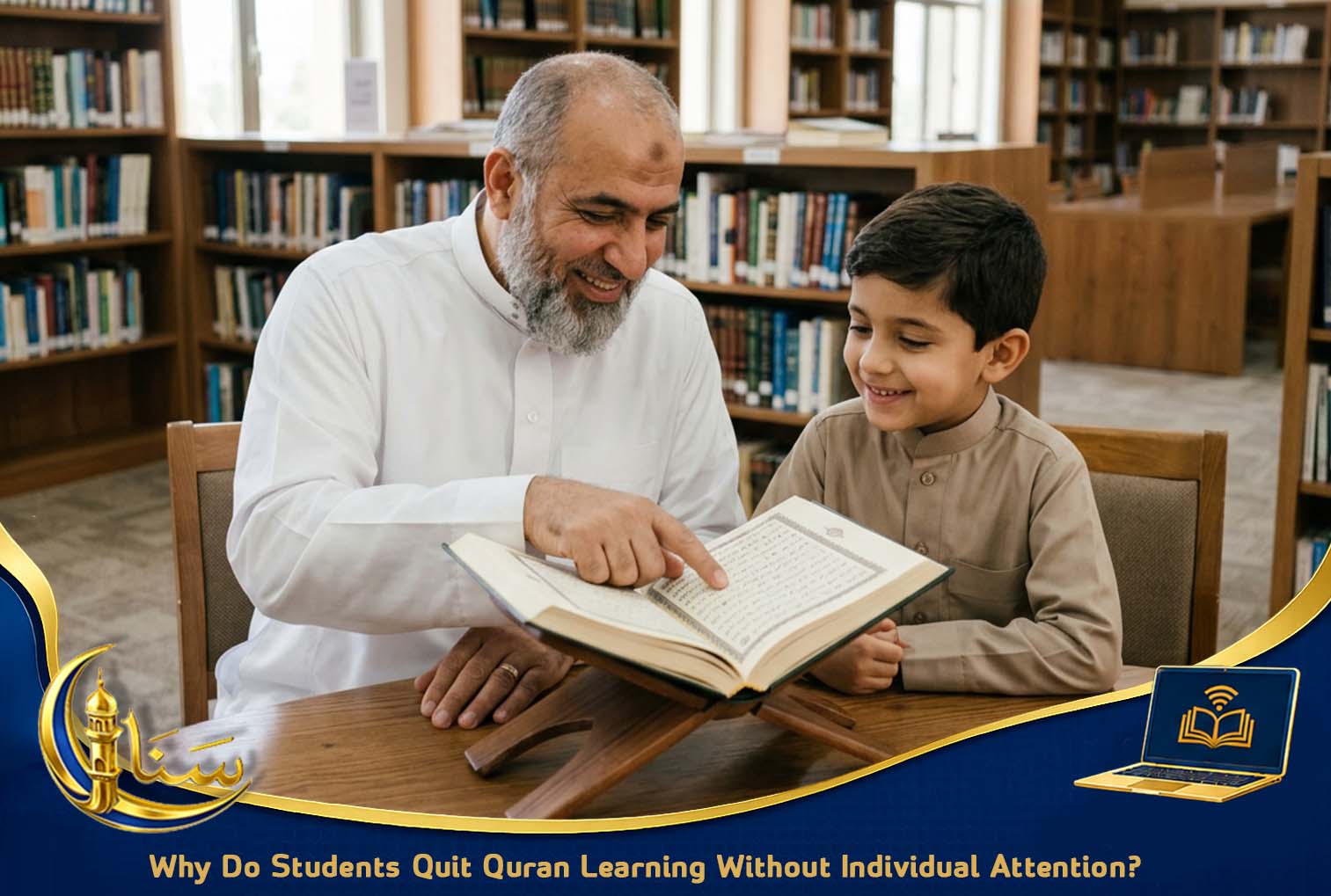
Every child makes different mistakes. While one student may struggle with heavy and light letters, another may need additional support with fluency, memorization, or confidence during recitation. Large classes often make it difficult for teachers to give every student the personalized guidance they need. As a result, small mistakes remain uncorrected, eventually slowing progress and reducing motivation. Individual attention allows teachers to:
- Correct mistakes immediately to prevent bad reading habits.
- Adjust the lesson pace according to each student’s progress.
- Focus on each student’s specific weaknesses and learning needs.
- Provide continuous encouragement to build confidence and motivation.
- Build stronger teacher-student relationships through personalized support.
Children who receive personalized instruction usually improve faster because every lesson directly addresses their individual needs instead of following a fixed pace for everyone. At Sana Online Quran Academy, one-to-one learning and personalized feedback help students overcome challenges early, making Quran learning more enjoyable and productive.
Low Motivation and Loss of Confidence
Children are naturally motivated when they experience success. However, if every Quran lesson feels difficult or filled with repeated corrections, they may begin to doubt their abilities. Over time, this lack of confidence becomes one of the most overlooked reasons Why Students Quit Quran Learning.
Motivation does not disappear overnight. Instead, it gradually fades when students feel that their efforts produce little progress. A child who once looked forward to Quran lessons may start avoiding revision, making excuses to skip class, or becoming anxious when asked to recite aloud. Parents and teachers can rebuild confidence by celebrating small but meaningful achievements, such as:
- Reading a Quran page without hesitation.
- Correctly pronouncing a difficult Arabic letter.
- Completing a full week of consistent Quran revision.
- Memorizing a short Surah with accurate Tajweed.
- Receiving positive feedback after a Quran lesson.
Simple encouragement has a lasting impact. Children who feel appreciated are far more likely to continue learning with enthusiasm and determination. At Sana Online Quran Academy, teachers focus on creating a positive learning environment where every improvement is recognized. This supportive approach helps students develop confidence while making Quran learning an enjoyable experience instead of a stressful obligation.
Busy School and Family Schedules
Modern families often balance school, homework, extracurricular activities, and family responsibilities. Although Quran education remains a priority, finding consistent study time can become challenging. As a result, irregular attendance and inconsistent revision gradually slow a child’s progress.
Long study sessions are not always the answer. In fact, educational research consistently shows that shorter, consistent learning periods produce better long-term results than occasional intensive study.A practical Quran learning routine may include:
- Studying at the same time each day to build a consistent routine.
- Reviewing the Quran for 15–20 minutes daily instead of one long weekly session.
- Practicing immediately after school before children become tired.
- Setting realistic and achievable weekly learning goals.
- Allowing flexibility during exams or busy family events.
Consistency helps children retain what they learn while reducing stress and preventing large gaps between lessons. Understanding how daily routines influence learning also helps explain Why Students Quit Quran Learning. When Quran classes become difficult to fit into an already busy schedule, students often lose momentum. A structured yet flexible timetable allows children to continue progressing without feeling overwhelmed.
At Sana Online Quran Academy, flexible online scheduling enables families to choose lesson times that fit comfortably into their daily routines, making consistent Quran learning easier to maintain.
No Clear Assessment or Learning Plan
Many students attend Quran classes for months without knowing whether they are truly improving. Parents may see completed lessons, but they often receive little information about pronunciation, Tajweed accuracy, memorization quality, or overall progress.
Without measurable goals, children may begin to feel that their efforts are not leading anywhere. Eventually, this uncertainty affects motivation and becomes another important factor behind Why Students Quit Quran Learning.
An effective Quran learning program should include regular assessments that help both teachers and parents monitor progress. A structured assessment usually includes:
- An initial assessment to determine the student’s current Quran learning level.
- Personalized learning goals based on individual needs.
- Continuous correction of pronunciation and Tajweed mistakes.
- Weekly progress tracking and performance reviews.
- Regular revision assessments to reinforce learning.
- Parent updates with constructive feedback and improvement recommendations.
These assessments allow teachers to identify challenges before they become long-term obstacles. They also give children a sense of achievement as they reach each milestone.
At Sana Online Quran Academy, every student follows a personalized learning pathway supported by regular evaluations and detailed progress reports. This structured approach keeps students motivated while giving parents confidence that their child is moving steadily toward accurate Quran recitation, stronger Tajweed skills, and long-term success.
Why Students Quit Quran Learning: Why Is Quran Learning Difficult?
Many parents ask the same question after watching their child attend Quran classes consistently without achieving the expected results. In reality, Quran learning becomes difficult when students face several challenges at the same time. A weak Noorani Qaida foundation, inconsistent revision, incorrect pronunciation, low confidence, and ineffective teaching methods can all slow progress and make learning feel overwhelming.
However, these obstacles are not permanent. With early guidance and the right learning environment, children can overcome them and continue improving step by step. Understanding Why Students Quit Quran Learning helps parents recognize these difficulties before they develop into long-term problems. A successful Quran learning journey usually includes:
- A strong foundation in Noorani Qaida.
- Qualified teachers with experience in Tajweed instruction who explain why Tajweed is important in Quran reading.
- Regular revision between lessons.
- Personalized feedback and continuous encouragement.
- A structured learning plan with measurable goals.
- Continuous support from parents at home.
At Sana Online Quran Academy, every lesson is designed to strengthen these essential areas. Students receive individualized attention, regular assessments, and practical guidance that helps them build confidence while improving their Quran recitation and memorization skills.
Common Mistakes That Explain Why Students Quit Quran Learning
Many families have good intentions but unintentionally develop habits that slow their child’s Quran progress. Fortunately, these mistakes are easy to recognize and correct once parents understand their impact. Avoiding these common mistakes significantly reduces the risk of Why Students Quit Quran Learning becoming a reality for your child.
Expecting Fast Results
Every parent wants to see quick improvement. While enthusiasm is positive, expecting children to master Quran reading within a short period often creates unnecessary pressure.
Learning the Quran requires patience, consistency, and gradual development. Children first need to recognize Arabic letters, understand pronunciation, apply Tajweed correctly, and then build fluency through repeated practice.
Instead of measuring success by the number of completed pages or memorized Surahs, parents should celebrate continuous improvement. Healthy progress looks like:
- Fewer pronunciation mistakes during Quran recitation.
- Greater confidence while reciting the Quran.
- Better application of Tajweed rules.
- Improved concentration during Quran lessons.
- More consistent daily Quran revision.
Small improvements eventually lead to remarkable long-term results.
Skipping Daily Revision
Revision is one of the most important parts of Quran learning, yet it is often overlooked. Many students attend classes regularly but spend very little time reviewing previous lessons at home.
Without revision, newly learned information fades quickly, forcing teachers to repeat the same material again and again. Eventually, students feel they are not making progress, which affects both confidence and motivation. Parents can establish a simple revision routine by:
- Reviewing yesterday’s Quran lesson.
- Reading one previously memorized Surah.
- Practicing difficult Arabic sounds and letter pronunciation.
- Listening to correct Quran recitation together.
- Ending every revision session with positive encouragement.
Prioritizing Memorization Before Correct Recitation
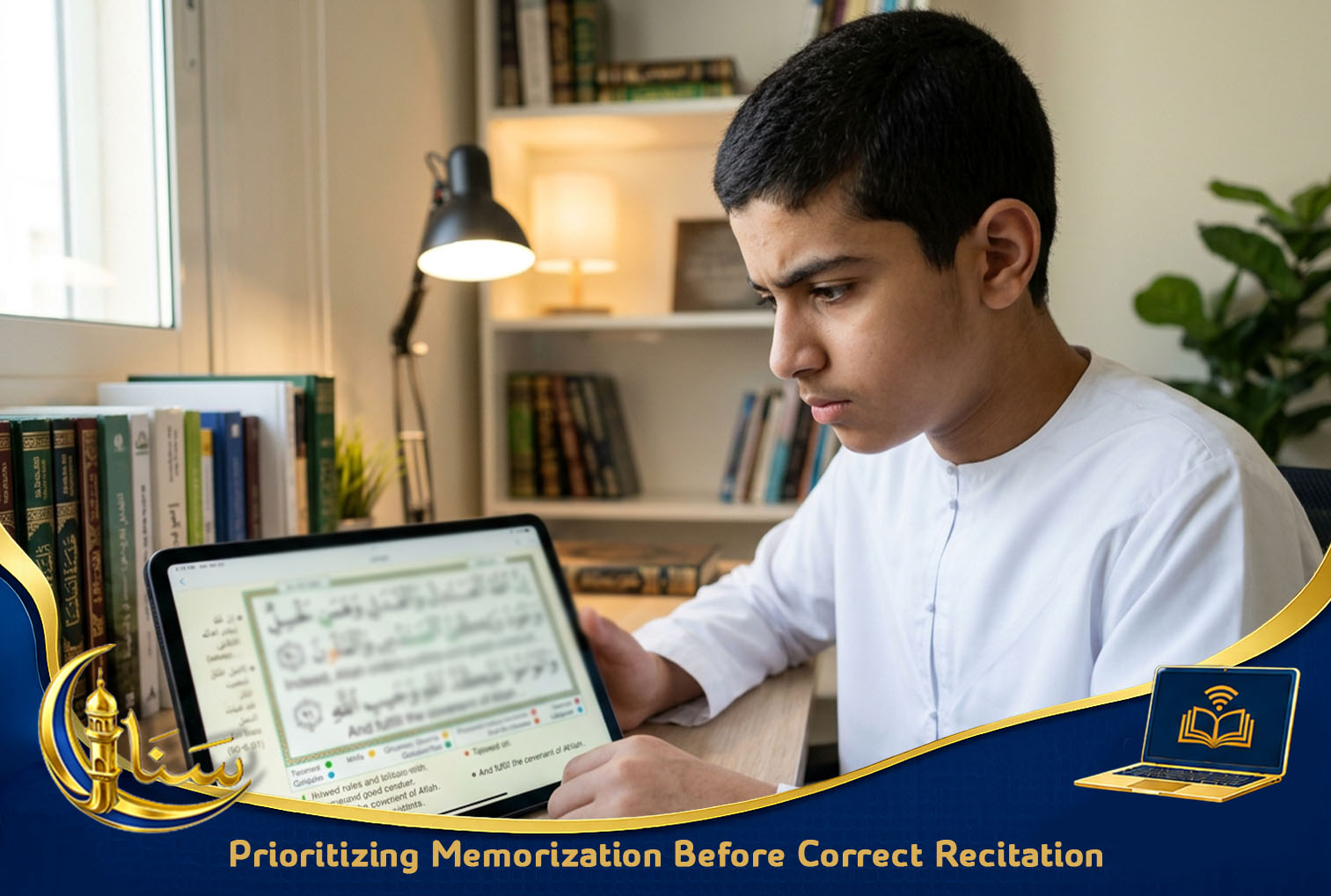
Many families become excited when children begin memorizing Surahs. Although memorization is a beautiful achievement, accuracy should always come before speed.
If a child memorizes verses with incorrect pronunciation or Tajweed, correcting those mistakes later becomes much more difficult. Students often need to relearn entire Surahs, which can reduce confidence and slow future progress. Experienced Quran teachers always focus on:
- Correct pronunciation before starting a Quran memorization course.
- Proper Makharij (correct articulation points of the letters).
- Accurate application of Tajweed rules.
- Smooth and fluent Quran reading.
- Consistent memorization after mastering the basics.
This gradual approach helps students develop lifelong Quran recitation skills built on accuracy rather than speed. At Sana Online Quran Academy, teachers carefully balance recitation, Tajweed, and memorization so that students build strong foundations before advancing to more challenging lessons. This method helps children enjoy steady progress while avoiding many of the challenges associated with Why Students Quit Quran Learning.
Lack of Engagement During Quran Lessons
Children learn best when they actively participate in the lesson. If Quran classes rely only on repetition and memorization without interaction, many students gradually lose interest. They may begin attending classes physically or online, but their attention and enthusiasm slowly disappear.
This lack of engagement is another important reason Why Students Quit Quran Learning. Young learners need lessons that encourage curiosity, discussion, and participation rather than passive listening. Teachers can make Quran learning more enjoyable by:
Interactive learning transforms Quran classes into an enjoyable experience, helping students stay motivated and eager to continue learning. At Sana Online Quran Academy, teachers use interactive teaching strategies that keep children involved throughout every lesson. This approach strengthens concentration while making Quran learning both meaningful and enjoyable.
Teaching Methods That Do Not Match a Child’s Learning Style
No two children learn in the same way. Some students understand new concepts by listening carefully, while others learn more effectively through visual examples, repeated practice, or guided correction.
When teachers use only one teaching style for every student, some children struggle unnecessarily. Eventually, they begin believing they are poor learners, even though the real issue is the teaching method rather than their ability. Experienced Quran teachers recognize different learning styles by:
- Observing how quickly students understand new Quran concepts.
- Adjusting the lesson pace to match each student’s needs.
- Using visual aids and practical demonstrations to improve understanding.
- Repeating difficult exercises using different teaching methods.
- Encouraging students to ask questions and participate in discussions.
This flexibility allows every child to learn according to their strengths instead of forcing everyone into the same approach. At Sana Online Quran Academy, instructors personalize every lesson to match each student’s learning style, helping children progress comfortably while building confidence in their Quran recitation.
Limited Family Support at Home
Parents play an essential role in a child’s Quran education. Even the most experienced teacher cannot replace the encouragement children receive at home. When families rarely discuss Quran learning or show little interest in their child’s progress, students may begin to think their lessons are unimportant. Over time, motivation decreases, making it easier to understand Why Students Quit Quran Learning despite attending regular classes.
Parents do not need to be Quran teachers to make a positive difference. Simple daily habits can greatly improve a child’s enthusiasm. Helpful family practices include:
- Listening to your child while they recite the Quran.
- Asking them what they learned after each lesson.
- Praising consistent effort rather than focusing only on perfect results.
- Reviewing one short Surah together.
- Celebrating important learning milestones.
How Parents Can Prevent Why Students Quit Quran Learning?
The best way to address Why Students Quit Quran Learning is to prevent problems before they become serious. Parents who stay involved throughout the learning journey often notice difficulties early and can work with teachers to solve them quickly. Here are several practical strategies that make a lasting difference:
- Build a Consistent Routine: Choose a regular time each day for Quran revision. Even 15 to 20 minutes of focused practice is more effective than long, irregular study sessions.
- Choose Qualified Quran Teachers: Experienced teachers identify mistakes early, correct pronunciation immediately, and adapt lessons according to each student’s abilities.
- Focus on Progress, Not Perfection: Children gain confidence when they see continuous improvement. Celebrate small achievements and avoid comparing your child with others.
- Encourage Questions: Allow children to ask about pronunciation, Tajweed rules, or Quran meanings. Curiosity creates deeper understanding and strengthens long-term learning.
- Maintain Communication With Teachers: Regular communication helps parents understand their child’s strengths, weaknesses, and overall progress. Working together creates a supportive learning environment that benefits the student. At Sana Online Quran Academy, parents receive continuous feedback, allowing them to stay involved in every stage of their child’s Quran education while supporting steady improvement at home.
Why Sana Online Quran Academy Reduces Why Students Quit Quran Learning?

Choosing the right learning environment can make a significant difference in a child’s Quran journey. Many of the challenges discussed throughout this guide can be minimized when students receive structured guidance, qualified instruction, and continuous encouragement. At Sana Online Quran Academy, the learning experience is designed to help students succeed by providing:
- Certified and experienced Quran teachers providing high-quality Quran reading classes.
- Personalized one-to-one online classes designed according to each student’s learning needs.
- Structured Noorani Qaida and Tajweed programs to improve Quran reading skills.
- Flexible scheduling options that suit busy families and children’s routines.
- Regular student assessments to monitor learning progress.
- Individual progress reports to help parents follow their child’s development.
- Interactive lessons that make Quran reading classes engaging and enjoyable for children.
- Positive encouragement that builds confidence and motivates students to continue learning.
Rather than simply completing lessons, teachers focus on helping every student understand, apply, and enjoy what they learn. This student-centered approach improves consistency and greatly reduces the factors behind Why Students Quit Quran Learning.
(FAQ) Why Students Quit Quran Learning
Have questions about Why Students Quit Quran Learning? Below are clear and practical answers to some of the most common questions parents ask before choosing the right Quran learning approach for their children.
1. At what age should children start learning the Quran?
Most children are ready to begin learning the Quran between the ages of 4 and 6, depending on their attention span and language development. Starting with Noorani Qaida before moving to Quran recitation helps children develop strong pronunciation and reading skills from the beginning.
2. How many Quran lessons per week are recommended for steady progress?
For most children, two to four structured lessons each week, combined with 15–20 minutes of daily revision, provide an excellent balance. Regular practice is more effective than attending many classes without reviewing between sessions.
3. Can online Quran classes be as effective as in-person learning?
Yes. High-quality online Quran classes can be just as effective when they include qualified teachers, one-to-one instruction, interactive lessons, regular assessments, and personalized feedback. Many families choose online learning because it offers greater flexibility while maintaining consistent educational standards.
4. How can parents tell if a Quran teacher is qualified?
Parents should look for teachers who have recognized Quran or Islamic studies qualifications, strong Tajweed knowledge, teaching experience, and the ability to adapt lessons to different learning styles. A qualified teacher should also provide regular feedback, correct mistakes patiently, and encourage students in a positive and supportive manner.
In conclusion, understanding why students quit Quran Learning is the first step toward helping children remain motivated and successful throughout their Quran education. In most cases, students do not stop learning because they lack ability or interest. Instead, they encounter preventable challenges such as weak foundational skills, inconsistent revision, limited individual attention, low confidence, or ineffective teaching methods.
The encouraging news is that these obstacles can be overcome with the right guidance. When children receive personalized instruction, regular assessments, positive encouragement, and continuous family support, they develop stronger Quran reading skills, improve their Tajweed, and gain the confidence needed to continue learning with enthusiasm.
Parents also play a vital role by creating a consistent learning routine, celebrating progress, and maintaining open communication with qualified teachers. Small daily efforts often lead to remarkable long-term achievements.
At Sana Online Quran Academy, every student benefits from a structured learning pathway designed to meet their individual needs. Through experienced Quran teachers, personalized lesson plans, flexible scheduling, and continuous progress monitoring, the academy helps children build a strong relationship with the Quran while avoiding the common challenges behind Why Students Quit Quran Learning. With the right environment and consistent support, every child can enjoy a rewarding Quran learning journey that lasts a lifetime.