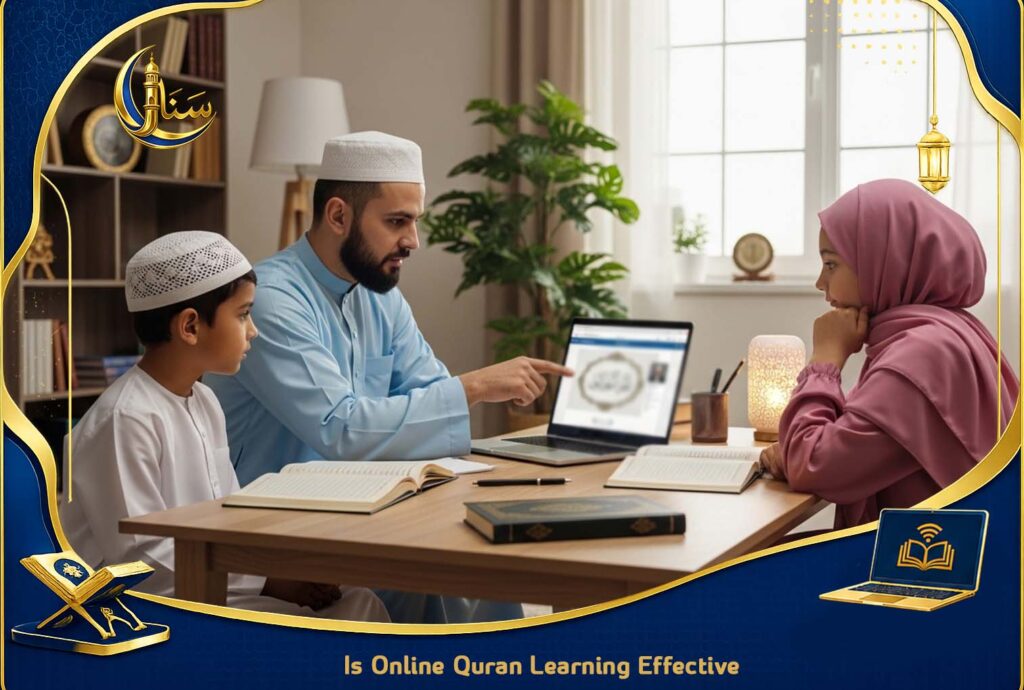
Why Many Families Prefer Female Quran Tutors is a question many parents consider when searching for the right Quran teacher for their children. A tutor’s teaching style, patience, communication skills, and ability to build trust can significantly influence a child’s learning experience. For this reason, many families are increasingly interested in female Quran tutors, especially when choosing online Quran lessons for younger learners.
Female Quran tutors can create a warm and supportive learning atmosphere that helps children feel comfortable during lessons. Many parents value clear communication with teachers about their child’s progress, challenges, and areas that need additional practice. A calm teaching style can encourage children to ask questions, make mistakes, and continue learning without unnecessary pressure.
Female tutors can teach both boys and girls, particularly when they have appropriate experience working with children. A tutor’s qualifications, Quran knowledge, teaching experience, and ability to understand individual learners should remain important factors in the selection process. Online lessons can make it easier for parents to find a qualified female Quran tutor who matches their child’s learning needs.
Why Many Families Prefer Female Quran Tutors for Children?
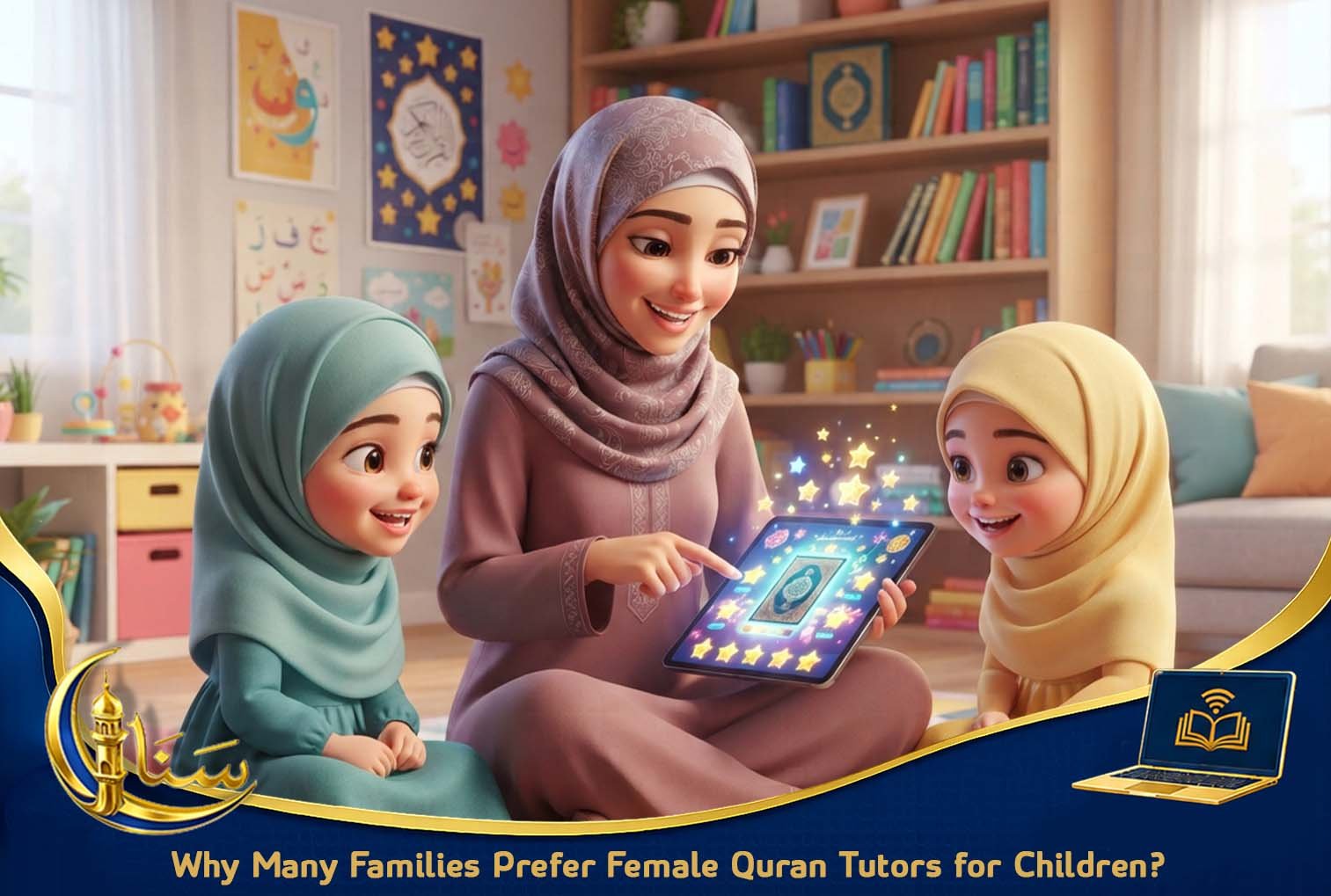
Choosing a Quran teacher is more than finding someone who can recite the Quran correctly. Parents also need to consider how that teacher interacts with children, explains difficult concepts, corrects mistakes, and keeps learners engaged throughout the lesson.
This is one reason Why Many Families Prefer Female Quran Tutors has become an increasingly relevant topic for parents exploring online Quran education. A teacher who creates a respectful and encouraging relationship with a child can make regular Quran study feel less stressful and more meaningful.
For younger learners, emotional comfort can be particularly important. Children may hesitate to recite when they are afraid of making mistakes. They may also lose interest when lessons feel too strict or difficult. A supportive tutor can address these challenges by using encouragement, repetition, simple explanations, and age-appropriate activities.
The goal should not simply be to complete a certain number of pages or memorize a specific amount each week. Instead, children should gradually develop accurate Quran reading, confidence, good learning habits, and a positive connection with their Quran studies.
Start Your Quran Learning Journey Today with Sana Online Quran Academy
Start your Quran learning journey today with Sana Online Quran Academy, where structured and simple programs are designed for both children and adults. In fact, lessons are delivered step by step by qualified teachers who focus on reading skills, basic Tajweed, and gradual improvement with clear explanations.
In addition, you can study from home with flexible schedules that fit your daily routine. Moreover, regular practice and feedback help you improve steadily. As a result, learning becomes easier, more consistent, and more effective.

How do Female Quran Tutors Create a Nurturing Learning Environment?
One reason parents consider female Quran tutors is the supportive atmosphere they may create during lessons. A nurturing approach can help children feel that their questions and mistakes are a normal part of learning rather than something they should be embarrassed about.
This does not mean that every female teacher has the same personality or teaching style. Every tutor is different. However, parents may appreciate teachers who combine clear expectations with patience and encouragement. A supportive Quran lesson can help a child:
- Feel comfortable asking questions.
- Attempt difficult verses without fear.
- Accept corrections more positively.
- Celebrate small improvements.
- Develop greater confidence in recitation.
- Become more willing to practice between lessons.
When children feel respected, they are often more willing to participate actively. This can make the lesson more interactive instead of turning it into a one-sided activity where the teacher speaks and the child simply repeats.
For parents, this distinction matters because Quran learning is a long-term journey. A child who enjoys the learning process is more likely to develop habits that can continue beyond the first few months of study.
How Do Female Quran Tutors Create a Nurturing Learning Environment?
Children do not all learn Quran at the same speed. One child may quickly recognize Arabic letters, while another may need considerable repetition before becoming comfortable with basic sounds. Some children memorize quickly but struggle with accurate pronunciation. Others read slowly but have strong listening and retention skills.
A patient tutor understands these differences instead of expecting every learner to follow exactly the same path. This is another important consideration behind Why Many Families Prefer Female Quran Tutors. Parents may look for a teacher who can repeat an explanation without becoming frustrated and who can correct a child without making the learner feel incapable.A patient lesson might include:
- Repeating a difficult letter several times.
- Breaking a verse into smaller sections.
- Revisiting a previous lesson before introducing new material.
- Allowing additional practice when pronunciation needs improvement.
- Adjusting the pace when a child is tired or distracted.
- Giving positive feedback after improvement.
Patience does not mean lowering standards. A qualified tutor can maintain accurate Quran instruction while still allowing the child enough time to understand and practice.
Female Quran Tutors and Better Parent-Teacher Communication
A child’s Quran education becomes more effective when parents know what is happening during lessons. They need to understand what their child has learned, where difficulties appear, and how they can support practice at home. Many parents therefore value a tutor who communicates clearly and regularly. A strong parent-teacher relationship can help parents understand:
- Which Surah or verses the child is currently studying.
- Whether the child is progressing at the expected pace.
- Which pronunciation or Tajweed rules need more attention.
- How much revision should be completed at home.
- Whether the current lesson structure is suitable for the child.
For some families, communicating with a female tutor may also feel particularly comfortable, especially when mothers are closely involved in their children’s daily Quran routine.
The important point is that communication should be professional, respectful, and focused on the learner. Parents should not have to guess whether their child is progressing. A good tutor should be willing to explain the child’s development and provide practical recommendations.
Creating a Comfortable Environment With Female Quran Tutors
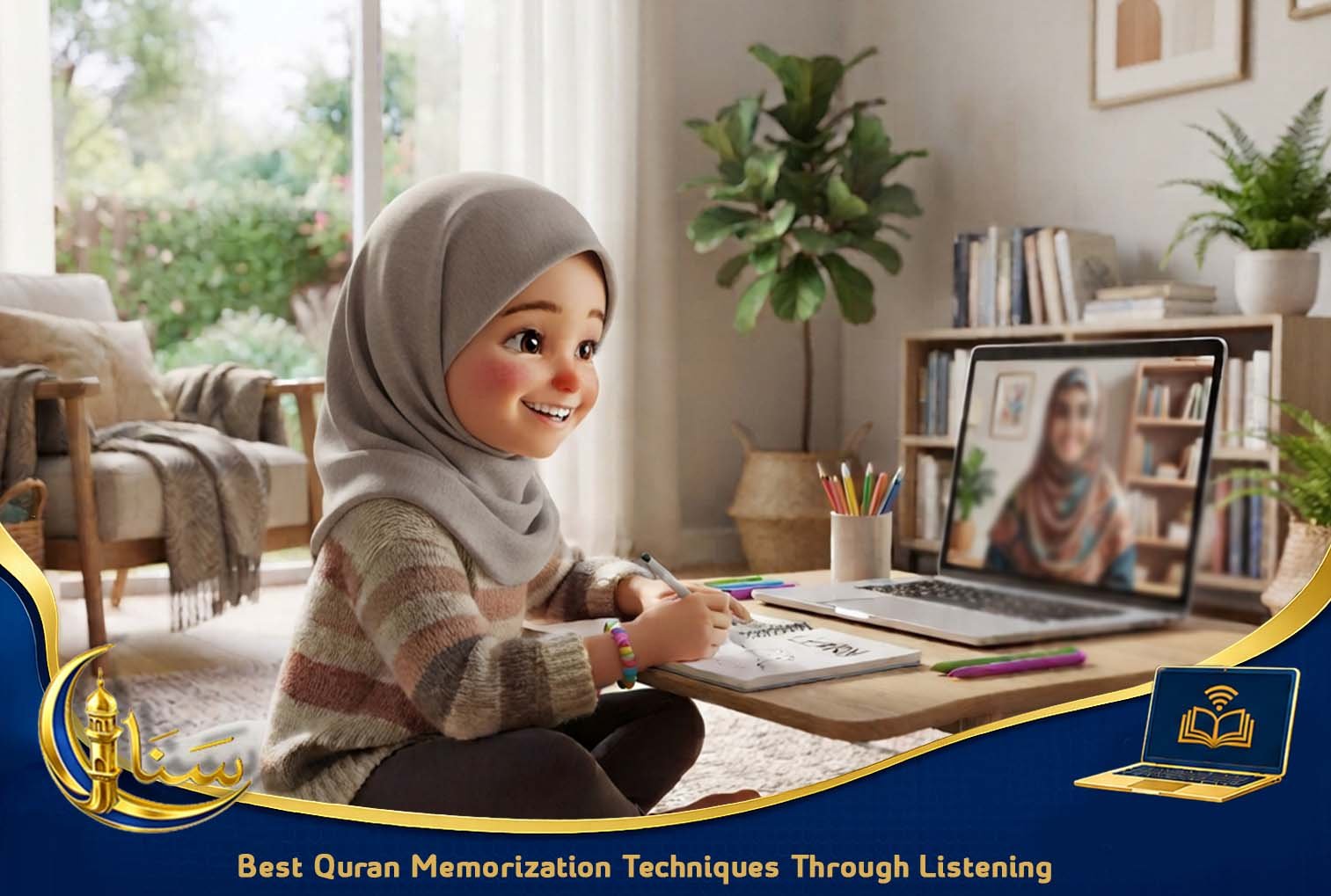
A child learns better when the learning environment feels secure and predictable. This is especially important during Quran lessons because recitation requires the learner to speak aloud and accept correction.
A child who is constantly worried about making mistakes may avoid participating. In contrast, a child who understands that mistakes will be corrected kindly is more likely to keep trying. A comfortable environment can encourage children to:
- Recite aloud with greater confidence.
- Ask for clarification when something is unclear.
- Admit when they have forgotten a verse.
- Practice challenging words repeatedly.
- Participate rather than simply listen.
- Develop a more positive attitude toward Quran lessons.
This is one area where online learning can offer additional flexibility. A child can attend the lesson from a familiar space at home while communicating with the tutor through a structured virtual classroom.
However, comfort should never replace discipline. Children still need a consistent schedule, clear learning objectives, and appropriate expectations. The best environment combines emotional support with purposeful instruction.
Are Female Quran Tutors Suitable for Boys?
Some parents specifically search for female Quran teachers for their daughters and wonder whether the same choice is appropriate for their sons.
For younger boys, a qualified female tutor can certainly be an effective option. The most important factors are usually the teacher’s Quran knowledge, experience with children, teaching ability, and compatibility with the learner.
A young boy may respond very well to a female tutor who understands how to maintain his attention, explain concepts clearly, and encourage him when he struggles.
Parents should therefore avoid choosing a tutor based solely on gender. Instead, they can consider the complete picture:
1. Does the teacher have strong Quran and Tajweed knowledge?
2. Does she have experience teaching children?
3. Can she adapt lessons to the child’s level?
4. Does she communicate well with parents?
5. Does the child feel comfortable during lessons?
6. Is the teacher able to maintain appropriate classroom structure?
These questions help parents make a more informed decision when choosing a suitable Quran tutor for their child.
Why Do Girls Prefer Female Quran Teachers?
For families looking for a female Quran tutor for their daughters, the choice may offer additional advantages. A female teacher can become a positive educational role model who demonstrates that women can develop deep knowledge of the Quran and confidently teach others.
This can be particularly meaningful for girls as they grow older. They can see Islamic education as something they actively participate in rather than something they simply receive.
A good female Quran teacher can also understand some of the practical concerns that affect girls’ learning experiences at different stages of childhood and adolescence. More importantly, she can provide a respectful educational relationship built around Quran learning, proper recitation, and Islamic manners.
Parents should still evaluate the individual tutor rather than assuming that every female teacher will automatically be the right fit. Personality and teaching ability remain essential.
Female Quran Teachers for Children Who Need Extra Support
Some children require more individualized instruction than others. They may need additional repetition, shorter activities, visual support, frequent breaks, or a slower pace. A calm and flexible tutor can be valuable for these learners.
For example, a child who struggles to maintain attention may benefit from dividing a lesson into several short learning activities. Another learner may need to hear the same pronunciation several times before reproducing it accurately. Children with different learning needs may benefit from:
- Predictable lesson routines.
- Short and clearly explained tasks.
- Repeated listening and recitation.
- Frequent but constructive feedback.
- Individualized lesson pacing.
- Encouragement after small achievements.
Parents should be careful, however, not to assume that a teacher is automatically qualified to address a specific developmental or educational condition simply because she is patient. If a child has specialized educational needs, families should look for a tutor with relevant experience and communicate openly about the child’s requirements.
What Makes a Qualified Female Quran Tutor?
Gender should never be the only reason for selecting a Quran teacher. A female tutor still needs strong knowledge, effective teaching skills, and a serious commitment to helping students improve. When comparing teachers, parents can consider several qualifications.
Quran and Tajweed Knowledge
Accurate Quran recitation should be a foundation of the teaching process. A tutor should understand pronunciation, Tajweed rules, common recitation mistakes, and the appropriate way to correct learners.
Teaching Experience
Experience with adults does not necessarily mean a teacher knows how to teach young children. Parents should ask whether the tutor has previously worked with learners of the same age and level.
Child-Friendly Methods
Young learners often require different methods from adults. A teacher should know how to use repetition, listening, examples, encouragement, and manageable lesson goals.
Communication Skills
Clear communication helps both the child and the parent. The tutor should be able to explain mistakes in an understandable way and provide useful feedback after lessons.
Consistency
Children benefit from predictable expectations. A teacher who maintains a regular lesson structure can help the learner develop a stable Quran study routine.
How do Online Quran Classes Help Families Find Female Quran Tutors?
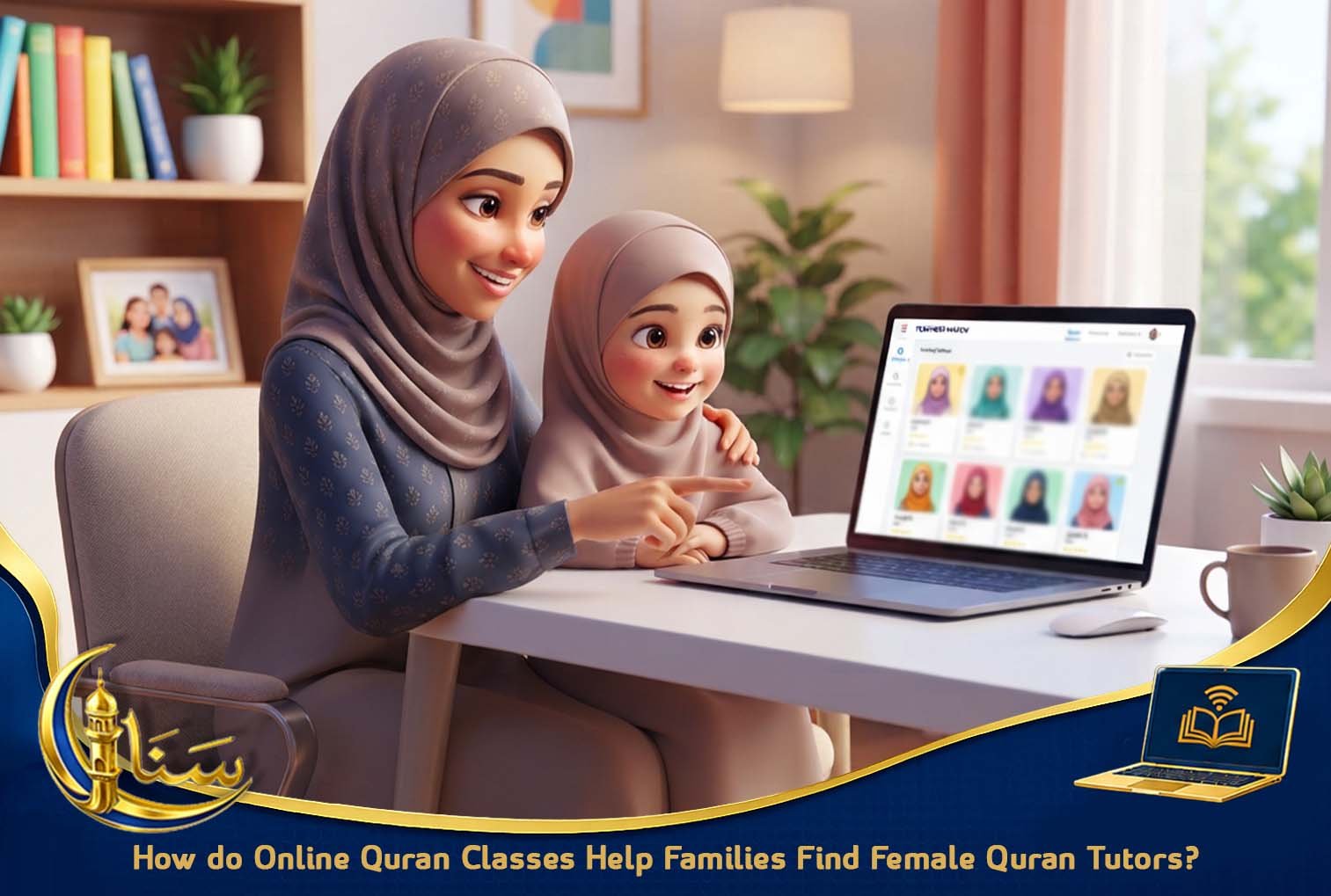
An online Islamic center for kids because it gives children access to qualified teachers who can provide Quran and Islamic education according to their needs while allowing them to learn in a comfortable home environment.
Through online classes, families can compare tutors based on qualifications, teaching experience, availability, communication style, and the needs of the learner. This can be especially useful for parents who specifically want a female Quran teacher. Choosing an appropriate online Islamic school allows parents to provide their children with a structured learning experience where teachers can focus on Quran reading, Tajweed, Islamic manners, and age-appropriate educational methods.
Another advantage is convenience. Children can attend lessons from home without spending time traveling to a learning center. Parents can also create a regular Quran routine around school, family responsibilities, and other activities. This flexibility helps children maintain consistency and makes Quran learning easier to include in their daily schedule.
However, convenience should not be the only consideration. Parents should still make sure that the online program provides structured lessons, qualified teachers, appropriate supervision, and clear communication. A professional online quran institute should offer a clear curriculum, experienced instructors, and organized lessons that help students progress according to their abilities.
How to Choose the Right Female Quran Tutor for Your Child?
Knowing Why Many Families Prefer Female Quran Tutors is helpful, but understanding how to choose the right teacher is even more important. Before enrolling, parents can prepare a short list of questions to make sure the tutor matches their child’s learning needs and personality.
Ask About the Teacher’s Qualifications
Find out whether the tutor has formal Quran education, an Ijazah where applicable, and experience with the type of Quran instruction your child needs. A qualified teacher should understand Tajweed rules, Quran recitation methods, and how to explain lessons clearly to children of different ages.
Discuss Your Child’s Current Level
A beginner who is still learning Arabic letters needs a different lesson structure from a child who already reads fluently and wants to improve Tajweed. Parents should explain the child’s current abilities so the teacher can prepare suitable lessons and avoid making the learner feel overwhelmed.
Explain Your Child’s Personality
Tell the tutor whether your child is shy, energetic, easily distracted, highly independent, or motivated by encouragement. This information can help the teacher adapt her approach and create a positive relationship with the student.
Ask How Progress Is Measured
Parents should know how the program evaluates improvement. Progress may involve reading accuracy, memorization, Tajweed application, fluency, revision, or a combination of these areas. Regular evaluation helps families understand strengths and identify areas that need more attention.
Consider a Trial Lesson
A trial class can reveal a great deal. Observe how the teacher speaks to the child, explains mistakes, manages attention, and responds when the learner struggles. A successful relationship between teacher and student can make the learning process more enjoyable and effective.
The goal is not to find the teacher with the most impressive description. It is to find the teacher whose approach fits the child, supports their learning style, and encourages steady improvement.
How Does Sana Online Quran Academy Support Families Seeking Female Quran Tutors?
For families considering online Quran education, Sana Online Quran Academy can be presented as an option for parents who want structured Quran learning from home.
The academy can support the needs of families looking for accessible online instruction while allowing parents to consider factors such as the teacher’s qualifications, the child’s level, lesson structure, and learning goals. The right program should provide a balanced approach that combines Quran knowledge, teaching experience, and a supportive learning environment.
When selecting a program, families should look beyond the convenience of online lessons. They should ask whether the academy provides teachers who understand children’s needs and whether the learning experience encourages steady progress.
A suitable program should help the child develop practical Quran skills rather than simply attend lessons without a clear direction. Children need lessons that build confidence, improve pronunciation, and encourage a lasting connection with the Quran.
Parents can also use the first lessons to evaluate whether the teacher-child relationship feels productive. If the child becomes more confident, participates actively, and understands what is expected during each lesson, these can be encouraging signs.
Creating a Successful Quran Learning Routine at Home
Even an excellent tutor cannot do all the work alone. Children’s progress becomes stronger when families create simple habits outside the live lesson. Parents do not need to turn the home into a second classroom. Instead, they can establish a short and consistent routine.
For example:
- Set aside a regular time for Quran practice.
- Keep the daily revision manageable.
- Encourage the child to listen to the assigned verses.
- Let the child recite without unnecessary interruptions.
- Praise genuine improvement.
- Avoid comparing the child’s progress with siblings or classmates.
- Communicate with the tutor when a recurring difficulty appears.
Consistency is generally more useful than occasional long study sessions. A child who practices a small amount regularly can gradually develop stronger recall and reading confidence. This makes quran learning for kids more successful because children develop their skills through patience, repetition, and positive encouragement.
Creating a Successful Quran Learning Routine at Home
Parents naturally want their children to learn the Quran correctly. Yet academic progress should not come at the expense of the child’s relationship with learning.
A child may need correction, repetition, and discipline, but these elements can coexist with encouragement. Instead of focusing only on mistakes, parents can ask questions such as:
- What did your teacher teach you today?
- Which verse did you enjoy learning?
- Was anything difficult?
- Can you show me the letter or rule you practiced?
- What would you like to improve next time?
These conversations can make Quran learning feel like a shared family goal rather than a daily obligation imposed on the child. This is also why Why Many Families Prefer Female Quran Tutors cannot be answered by gender alone. The real value comes from the qualities that make a teacher effective: knowledge, patience, communication, adaptability, consistency, and the ability to inspire a learner.
How Can Female Quran Tutors Make Quran Learning Positive?
Even after deciding to work with a female tutor, parents can make choices that unintentionally create difficulties for the child. One common mistake is focusing entirely on credentials while ignoring the teacher’s interaction with the learner. Qualifications matter, but children also need an instructor who can translate knowledge into effective teaching.
Another mistake is expecting rapid progress. Quran learning develops gradually, and different children require different amounts of practice. Parents should also avoid changing teachers repeatedly whenever the child encounters a difficult stage. Sometimes the learner simply needs additional support or a revised lesson strategy. Enrolling in a structured quran memorization course can help children follow organized memorization steps, maintain revision habits, and receive guidance throughout their learning journey.
Other mistakes include:
- Giving the child unrealistic memorization targets.
- Comparing one child’s progress with another’s.
- Skipping revision because new lessons seem more exciting.
- Ignoring repeated pronunciation mistakes.
- Treating every lesson as a test.
- Focusing on speed instead of accuracy.
A balanced approach gives children room to improve while maintaining clear expectations. With the right teacher, supportive family habits, and a suitable learning plan, children can develop strong Quran skills while building a positive relationship with their faith.
Common Mistakes to Avoid When Choosing a Female Quran Tutor
The relationship between a child and a Quran tutor can influence motivation just as much as the lesson material itself. A child who trusts the teacher may be more willing to attempt difficult passages and accept correction.
Trust develops through consistency. When the teacher listens, responds respectfully, remembers the child’s challenges, and notices improvement, the learner begins to understand that mistakes are part of progress.
For parents researching Why Many Families Prefer Female Quran Tutors, this relationship is often one of the most important considerations. The best tutor is not necessarily the strictest or the most relaxed. She is the teacher who understands when to encourage, when to correct, when to repeat, and when to move forward.
Frequently Asked Questions: Why the Female Quran Tutor-Child Relationship Matters
Frequently Asked Questions address common concerns parents may have when choosing the right Quran tutor and online learning program for their children.
1. What age is best for a child to start learning Quran online?
There is no single ideal age for every child. Many children can begin with basic Arabic letters and Quran reading once they can focus on short learning activities and follow simple instructions. The program should be adjusted to the child’s developmental readiness rather than based only on age.
2. How can parents know if a child is genuinely enjoying Quran lessons?
Look for behavioral signs such as willingness to attend lessons, voluntary practice, asking questions, talking positively about the teacher, and showing interest in what was learned. A child does not need to enjoy every lesson, but persistent fear or resistance may indicate that the teaching approach needs to be reconsidered.
3. Should parents sit beside their child during every online Quran lesson?
Not necessarily. The appropriate level of parental involvement depends on the child’s age, independence, and online learning experience. Younger children may need supervision, while older learners may benefit from greater independence. Parents can remain involved by checking progress and communicating with the tutor.
4. How long should a child’s Quran lesson be?
The ideal lesson length depends on the learner’s age, concentration, level, and goals. Younger children often benefit from shorter, focused sessions, while older students may be able to manage longer lessons. Quality of attention is generally more important than simply increasing lesson duration.
In conclusion, choosing a Quran teacher is an important decision because the experience can influence how a child approaches Quran learning for years to come. A supportive tutor can help children build confidence, develop accurate recitation, and establish habits that remain valuable as they grow.
Why Many Families Prefer Female Quran Tutors is therefore connected to several practical considerations, including patience, communication, comfort, teaching experience, and the ability to understand individual learners.
Female tutors can be an excellent choice for both boys and girls when they possess the appropriate Quran qualifications and child-teaching skills. At the same time, parents should evaluate each teacher individually rather than relying on gender as the sole deciding factor.
For families exploring online learning, Sana Online Quran Academy can be considered as part of the search for a structured and convenient Quran education option. The right choice ultimately depends on the child’s age, current level, personality, learning goals, and compatibility with the tutor.
A successful Quran learning experience should help children do more than memorize or recite. It should help them become confident learners who approach the Quran with respect, consistency, and love.