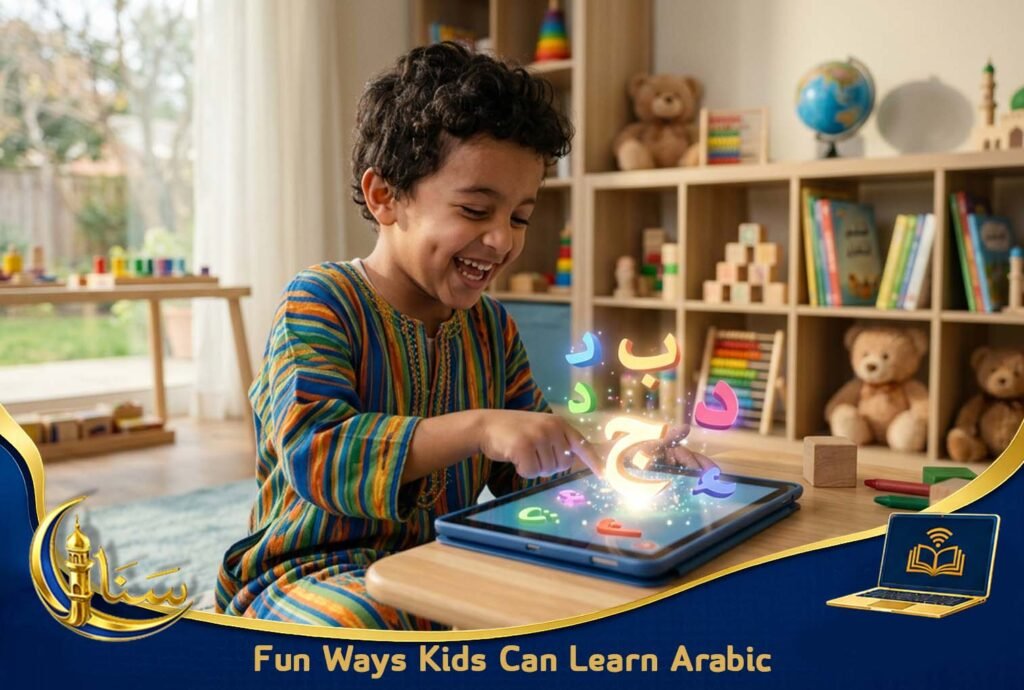
Best Online Arabic Academy for Kids is a practical choice for parents who want their children to develop Arabic skills through structured, engaging, and age-appropriate lessons. Learning Arabic at a young age can support reading, pronunciation, vocabulary, communication, and Quranic understanding.
However, children do not all learn in the same way, so the learning experience should be flexible enough to match their age, level, attention span, and personal goals.
For many families, online education makes this process easier. Children can attend live lessons from home without spending time traveling to a physical classroom. In addition, parents can choose learning times that fit school, family activities, and other responsibilities.
With the right teacher and a well-organized curriculum, online Arabic lessons can become a positive part of a child’s weekly routine rather than another stressful obligation.
Why Choose an Online Arabic Academy for Kids?

Arabic requires regular exposure and consistent practice. Therefore, children need more than occasional lessons if they are expected to build useful language skills. A structured online program gives them repeated opportunities to hear Arabic, practice pronunciation, recognize vocabulary, and use new words in meaningful situations.
Another advantage is direct interaction with a teacher. Instead of relying only on recorded videos or educational applications, children can ask questions and receive immediate corrections. This personal interaction is especially valuable when a child is still learning the Arabic alphabet or struggling with pronunciation.
An effective program should also make learning enjoyable. Young students usually respond better when lessons include stories, pictures, questions, repetition, and simple activities. Consequently, the teacher’s ability to maintain attention can be just as important as the curriculum itself.
For parents comparing different programs, the goal should not simply be to find a cheap or convenient course. Instead, they should look for a learning environment that combines qualified teaching, clear objectives, regular practice, and communication with parents.
Start Your Quran Learning Journey Today with Sana Online Quran Academy
Start your Quran learning journey today with Sana Online Quran Academy, where structured and simple programs are designed for both children and adults. In fact, lessons are delivered step by step by qualified teachers who focus on reading skills, basic Tajweed, and gradual improvement with clear explanations.
In addition, you can study from home with flexible schedules that fit your daily routine. Moreover, regular practice and feedback help you improve steadily. As a result, learning becomes easier, more consistent, and more effective.

Best Online Arabic Academy for Kids: What Should Parents Look For?
Choosing the right program becomes easier when parents know which qualities matter most. Although every child has different needs, several features can make an online Arabic course more effective.
A Child-Friendly Teaching Style
First, the teacher should understand how children learn. A lesson designed for an adult beginner may contain too much information for a young child. In contrast, children usually benefit from shorter explanations, repetition, visual examples, and frequent opportunities to participate.
A supportive teacher also avoids making mistakes feel embarrassing. Instead, corrections should be presented positively so that children remain willing to speak and try again.
A Structured Curriculum
A strong curriculum should have a clear sequence. Children can begin with letters and sounds, then move toward words, reading, vocabulary, sentences, and communication. This gradual progression prevents learners from being overwhelmed.
Furthermore, each level should build on what the student has already learned. When new material connects naturally with previous lessons, children are more likely to remember it and use it correctly.
Regular Assessment
Progress should not be based only on completing lessons. Teachers should periodically check pronunciation, reading ability, vocabulary, comprehension, and speaking skills.
For example, a child may recognize many Arabic words but still struggle to pronounce them. Another student may read well but needs more practice forming sentences. Regular assessment allows the teacher to identify these differences and adjust instruction accordingly.
How the Best Online Arabic Academy for Kids Makes Learning Easier?
Online learning removes several barriers that can make traditional lessons difficult for families. There is no need to arrange transportation, spend time commuting, or follow a rigid classroom location.
Instead, children can learn from a familiar space at home. This can be particularly useful for families with several children or demanding school schedules. Parents can also organize lessons around other activities instead of rearranging the entire day.
Moreover, online lessons can provide access to teachers who may not be available locally. A family living in a country where Arabic-speaking teachers are difficult to find can still connect with an experienced instructor.
Technology can also support the learning process. Digital whiteboards, screen sharing, visual materials, online exercises, and interactive communication can make lessons more dynamic. Nevertheless, technology should support the teacher rather than replace meaningful interaction.
The most successful approach combines digital convenience with human guidance. That balance allows children to enjoy the advantages of online education while still receiving personal attention.
How to Choose the Best Online Arabic Academy for Kids?
Beginners need a particularly careful introduction to Arabic. The first lessons can influence whether a child feels confident or frustrated about learning the language.
Learning the Arabic Alphabet
The Arabic alphabet should be introduced gradually. Children need to recognize each letter, understand its sound, and become familiar with the different forms that some letters take within words.
Rather than presenting the entire alphabet at once, teachers can divide it into manageable groups. Children can then practice recognition before moving to combinations and simple words.
Developing Correct Pronunciation
Pronunciation deserves attention from the beginning. Some Arabic sounds may be unfamiliar to children who speak another language. Therefore, they need repeated listening and guided practice.
A teacher can demonstrate a sound, ask the child to repeat it, and then provide a correction when necessary. Over time, this process helps prevent incorrect pronunciation from becoming a habit.
Building Basic Vocabulary
Once children become comfortable with letters and sounds, they can begin learning practical vocabulary. Topics such as family members, colors, numbers, food, school objects, and daily activities provide familiar contexts.
Using words in simple sentences is even more useful. For instance, learning a noun together with a basic sentence gives the child a clearer understanding of how Arabic works.
Fun and Interactive Arabic Lessons for Kids
Children learn more effectively when they are involved in the lesson. Therefore, an online Arabic program should avoid relying on long explanations or repetitive drills alone.
Games That Reinforce Learning
Simple language games can encourage children to recall vocabulary without making practice feel like a test. A teacher might ask the student to identify an object, match a word with a picture, complete a sentence, or answer a quick question.
These activities create frequent opportunities for repetition. As a result, children can review vocabulary while remaining active during the lesson.
Storytelling for Natural Language Exposure
Stories are another useful teaching method. A short story can introduce vocabulary, sentence patterns, and pronunciation within a meaningful context.
Instead of memorizing isolated words, children encounter language as part of a situation. This makes the material easier to understand and can encourage them to use new expressions independently.
Pictures and Visual Materials
Young learners often respond strongly to visual information. Pictures can help explain vocabulary before a child fully understands an Arabic definition.
For example, a teacher can show a picture of a house and introduce related words. The student can then describe the image using increasingly complete sentences.
Positive Encouragement
Motivation matters throughout the learning journey. Children should receive encouragement when they make progress, even when that progress is little.
A supportive environment can make students more comfortable with speaking and answering questions. As confidence grows, they are more willing to experiment with unfamiliar vocabulary.
What do Children Learn at an Online Arabic Academy for Kids?

A well-designed course can cover several areas rather than focusing on one skill. The exact content should depend on the child’s age and starting level.
Reading Skills at the Best Online Arabic Academy for Kids
Reading instruction can begin with letter recognition and gradually move toward syllables, words, phrases, and complete sentences. Children learn to connect written symbols with their sounds and meanings.
Regular reading practice also improves fluency. Instead of stopping after every letter, students gradually learn to recognize common patterns and read more naturally.
Writing Skills for Kids in an Online Arabic Academy
Writing gives children another way to reinforce what they learn. They can begin by tracing or copying letters before practicing independent writing.
Later, exercises can include writing simple words, completing sentences, and producing short responses. These activities strengthen spelling and help children remember the structure of Arabic words.
Speaking and Conversation for Kids Learning Arabic Online
Speaking practice gives Arabic a practical purpose. Children can learn greetings, introductions, questions, answers, and expressions related to everyday life.
Teachers can create short conversations appropriate to the student’s level. Gradually, these exchanges can become longer as the child’s vocabulary expands.
Listening Comprehension in Online Arabic Lessons for Kids
Listening is essential because children need to understand Arabic before they can communicate comfortably. Teachers can use short questions, stories, dialogues, and instructions to develop listening ability.
At first, students may understand only familiar expressions. However, consistent exposure gradually improves their ability to recognize words and understand meaning from context.
Vocabulary Development at an Online Arabic Academy for Kids
Vocabulary should grow steadily rather than through overwhelming lists. New words can be grouped according to familiar themes, reviewed regularly, and used in sentences.
This method gives children repeated exposure without making lessons feel monotonous.
Best Online Arabic Academy for Kids and Quranic Learning
Arabic has a special role in Quranic education. Children who learn Arabic can develop a stronger foundation for reading Quranic words and understanding commonly encountered expressions.
However, Arabic language learning and Quran learning are not the same. A child may learn conversational vocabulary while also needing specialized instruction for Quranic reading and recitation.
For this reason, parents should consider programs that understand the connection between the two areas. Arabic lessons can support recognition of letters, sounds, vocabulary, and sentence structures, while Quran lessons can focus on accurate recitation and appropriate pronunciation.
At Sana Online Quran Academy, children can benefit from an educational environment that connects Arabic learning with Quranic studies while maintaining an organized learning process. The focus should remain on gradual development rather than rushing children through difficult material.
When language and Quranic learning are introduced appropriately, children can gain useful skills while developing a meaningful relationship with the Arabic language.
How Can Teachers Keep Children Focused Online?
Maintaining attention during an online lesson requires planning. Children may become distracted by toys, other devices, background noise, or unrelated activities at home.
Therefore, parents can prepare a quiet learning area before the lesson begins. A stable internet connection, working microphone, and suitable screen position can also reduce interruptions.
Teachers have an important role as well. Long explanations can make young learners lose focus, so lessons should alternate between listening, speaking, reading, and interactive activities.
Short tasks can create a natural rhythm. For example, the teacher might introduce a few words, ask questions, practice pronunciation, complete a visual activity, and then review the vocabulary.
This variety helps maintain attention because the child is not performing the same type of activity for the entire session.
How Parents Can Support Arabic Learning at Home?
The teacher provides instruction, but parents can make practice more consistent. Fortunately, home support does not need to involve complicated teaching methods.
Create a Regular Routine
A predictable schedule helps children know when it is time to study. Regular lessons and short review sessions are generally easier to maintain than irregular periods of intensive study.
Parents can establish a simple routine that includes the live lesson and a few minutes of review afterward.
Encourage Arabic Outside the Lesson
Children can encounter Arabic through books, songs, stories, labels, and simple conversations. The purpose is not to turn every moment into formal study. Instead, occasional exposure can make the language feel familiar.
For example, parents can ask a child to name objects they already know in Arabic. This small habit can reinforce vocabulary naturally.
Celebrate Progress
Learning a new language takes time. Consequently, children need realistic expectations and encouragement.
Parents can celebrate milestones such as recognizing new letters, reading a short sentence, remembering vocabulary, or answering a question independently. Positive feedback helps children associate learning with achievement.
Best Online Arabic Academy for Kids: Choosing the Right Teacher

A teacher can strongly influence a child’s attitude toward Arabic. For that reason, parents should consider more than qualifications alone.
Experience With Young Learners
Teaching children requires patience and flexibility. An experienced children’s teacher knows how to simplify explanations, change activities, and respond when a student loses attention.
The teacher should also understand that children progress at different speeds. One learner may need additional pronunciation practice, while another may be ready for more advanced reading.
Clear Communication
Parents should be able to understand how their child is progressing. Regular communication can help families identify strengths and areas that need additional practice.
When parents know what their child is currently learning, they can provide appropriate support without creating unnecessary pressure.
Adaptability
A rigid teaching method may not work equally well for every child. Some learners respond to visual materials, while others learn better through conversation or repetition.
An adaptable teacher can modify activities while still following the overall curriculum.
Building a Long-Term Arabic Learning Plan
Arabic development should be viewed as a gradual process rather than a short-term project. A child may make quick progress at first and then experience periods when improvement appears slower.
That is normal. Language learning involves several interconnected abilities, including recognition, memory, pronunciation, comprehension, and production. For families interested in combining Arabic learning with Quran education, understanding Why Many Families Prefer Female Quran Tutors can also help parents consider the type of teacher and learning environment that may suit their child.
A long-term plan can divide learning into realistic stages:
- Foundation: Arabic letters, sounds, and basic recognition.
- Early reading: Simple combinations, words, and short sentences.
- Vocabulary growth: Everyday words and useful expressions.
- Communication: Questions, answers, introductions, and simple conversations.
- Reading development: Longer sentences and age-appropriate texts.
- Quranic support: Greater familiarity with Quranic vocabulary and reading patterns.
- Independent use: Increasing confidence in understanding and producing Arabic.
This progression gives parents a clearer picture of development. It also prevents the common mistake of expecting advanced communication skills after only a few weeks. For children who also study Quran, Learn Quran Online With Female Teachers may provide another approach that families can consider when planning their child’s online education.
How Can Sana Online Quran Academy Support Children?
Sana Online Quran Academy can be a suitable option for families looking for online Quran and Arabic education in a structured environment. The learning experience can be organized around the student’s current level instead of assuming that every child begins with the same abilities.
A child who is completely new to Arabic may need foundational work first. Meanwhile, another student may already recognize letters and require more attention to reading, pronunciation, or vocabulary.
Personalized guidance is particularly useful in these situations. Rather than moving every student through identical material at the same speed, teachers can identify areas that need reinforcement and build lessons accordingly. Parents should also understand potential challenges by reviewing resources about Common Problems in Online Quran Classes and considering how a suitable program can address them.
Parents can also benefit from having a clear learning pathway. When goals are understandable, it becomes easier to follow progress and encourage children without overwhelming them.
Most importantly, children’s education should combine academic development with an atmosphere that makes them feel comfortable asking questions and making mistakes.
Best Online Arabic Academy for Kids for Different Age Groups
The ideal learning approach can change as children grow. Younger students generally need more visual and playful activities, whereas older children can handle more complex reading, grammar, and conversation. When comparing programs, parents may find guidance on How to Choose the Best Online Arabic Academy useful for evaluating curriculum, teachers, lesson structure, and student support.
Preschool and Early Learners
Young children can begin with letter recognition, sounds, colors, numbers, basic vocabulary, and simple expressions. Lessons should remain short and active because attention spans are still developing. Starting with resources such as Arabic Alphabet for Beginners can help establish an appropriate foundation for early Arabic learning.
Elementary-Age Children
At this stage, students can usually handle more structured reading and writing exercises. Teachers can introduce sentence formation, themed vocabulary, simple grammar, and short conversations.
Older Children
Older learners may be ready for more advanced reading, comprehension, grammar, and speaking practice. They can also begin exploring Arabic texts connected to their interests and educational goals.
Regardless of age, the curriculum should remain flexible. A child’s actual level is often more important than age alone.
Common Mistakes Parents Should Avoid
Parents naturally want their children to progress quickly. Nevertheless, excessive pressure can produce the opposite result.
One common mistake is comparing one child with another. Children develop language skills at different rates, so comparisons can damage confidence without improving performance.
Another issue is focusing exclusively on memorization. Remembering words has value, but children also need to understand and use those words.
Some families also expect immediate fluency. Language development requires repeated exposure, practice, correction, and time. Therefore, realistic expectations create a healthier learning environment.
Finally, parents should avoid changing teachers or programs too frequently. While a poor fit should be addressed, constant changes can interrupt continuity and make it difficult for children to establish stable learning habits.
Best Online Arabic Academy for Kids for Better Learning
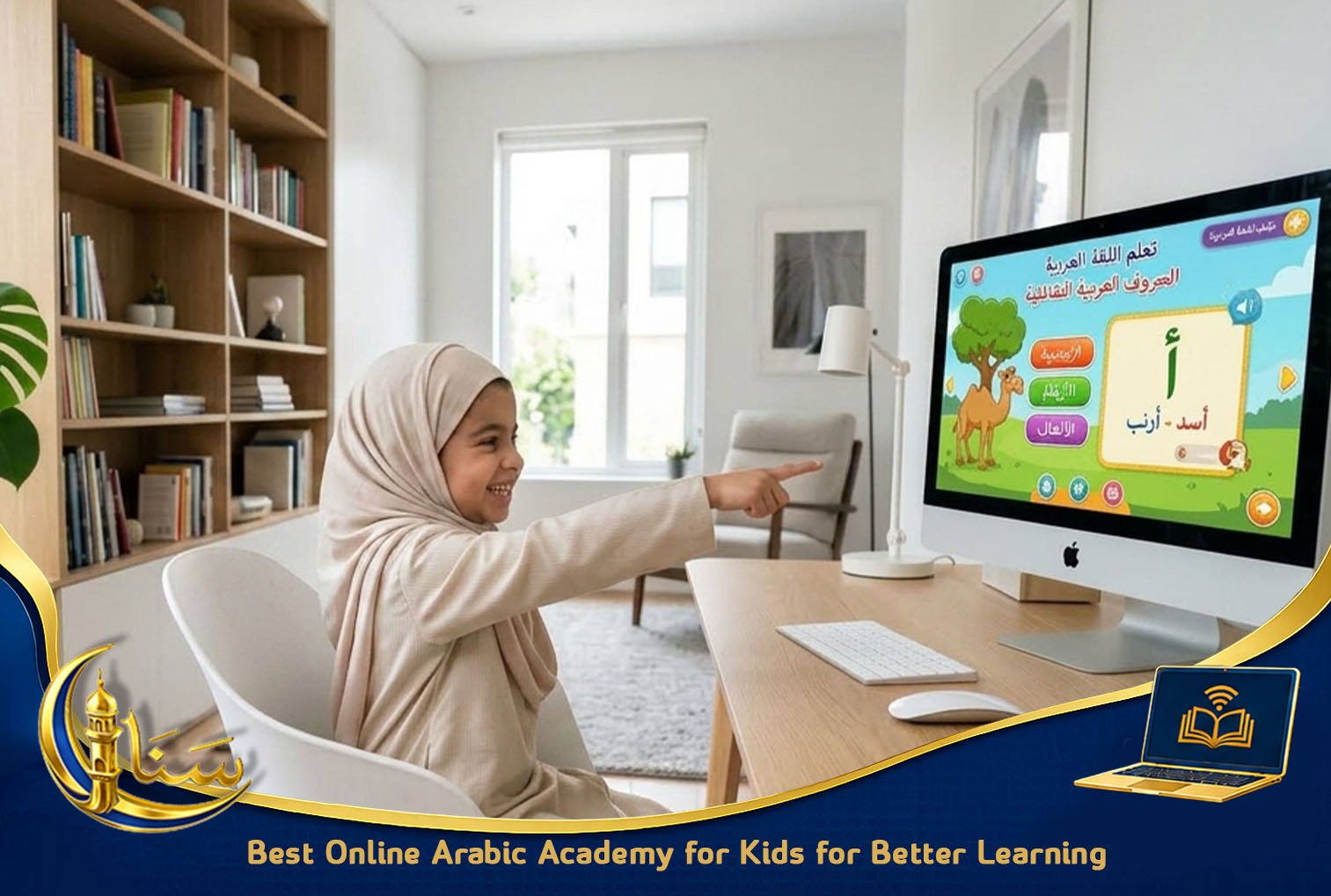
Successful online Arabic learning depends on consistency more than occasional intensive effort. A child who studies regularly and reviews previous material is more likely to retain what has been learned.
Parents can improve results by following a few practical habits:
- Keep lesson times consistent.
- Prepare the learning area before class.
- Encourage the child to speak during lessons.
- Review a small amount of vocabulary regularly.
- Avoid turning every mistake into criticism.
- Ask teachers about areas that need additional practice.
- Give children realistic goals.
- Celebrate improvement rather than demanding perfection.
In addition, children should have enough time to use what they learn. A short conversation at home or a few minutes of reading can reinforce the lesson without making the child feel that the entire day is devoted to studying.
Frequently Asked Questions About Learning Arabic Online for Children
Provide parents with clear answers about online lessons, teaching methods, progress, and the best learning approach for different age groups.
1. Can a child learn Arabic online without living in an Arabic-speaking country?
Yes. A child can develop Arabic skills through regular online exposure even when Arabic is not spoken around them. However, progress depends heavily on consistent lessons, active participation, listening practice, and opportunities to use the language outside class.
2. What should parents do if their child refuses to attend Arabic lessons?
First, parents should identify the reason rather than immediately increasing pressure. The problem may involve lesson difficulty, teacher compatibility, tiredness, or lack of interest. Discussing the issue with the teacher can help determine whether the lesson format or schedule should be adjusted.
3. How can parents tell whether an Arabic course is genuinely suitable for their child?
Parents can look beyond promotional claims by asking about the curriculum, lesson objectives, teacher experience with children, assessment methods, class format, and how individual learning needs are handled. A trial lesson can also reveal whether the teacher communicates comfortably with the child.
4. Is it possible for a child to become bilingual through online Arabic lessons alone?
Online lessons can provide a strong foundation, but becoming fully bilingual usually requires extensive exposure and regular opportunities to use Arabic in real situations. Children benefit most when online instruction is combined with reading, listening, conversation, and meaningful exposure to the language.
Conclusion
The best online Arabic Academy for Kids should offer more than convenient video lessons. Children need an organized curriculum, patient teachers, engaging activities, regular feedback, and a learning pace that respects their individual abilities.
Online education can make Arabic accessible to families around the world while removing many of the practical challenges associated with traditional classes. At the same time, parents play an important role by creating a consistent routine, encouraging practice, and keeping expectations realistic.
For families interested in combining Arabic development with Quranic education, Sana Online Quran Academy can provide a structured learning environment designed around children’s needs. With appropriate guidance and steady practice, young learners can gradually improve their reading, pronunciation, vocabulary, comprehension, and confidence.
Ultimately, the best results come from consistency. When children experience Arabic as an enjoyable and meaningful part of their routine, they are more likely to remain motivated and continue developing their skills over time.