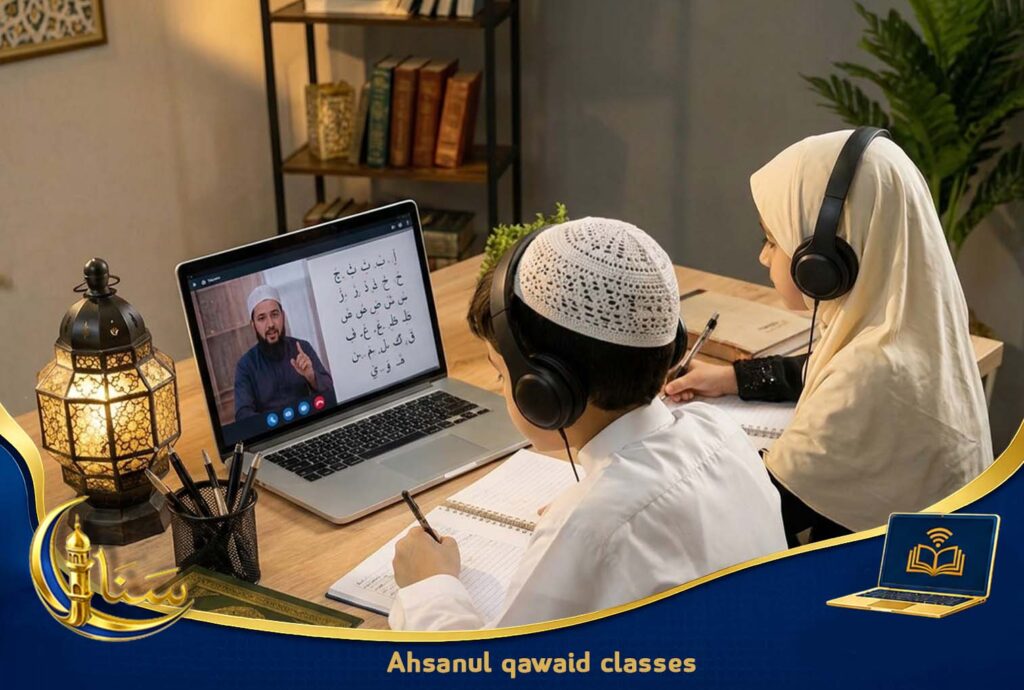
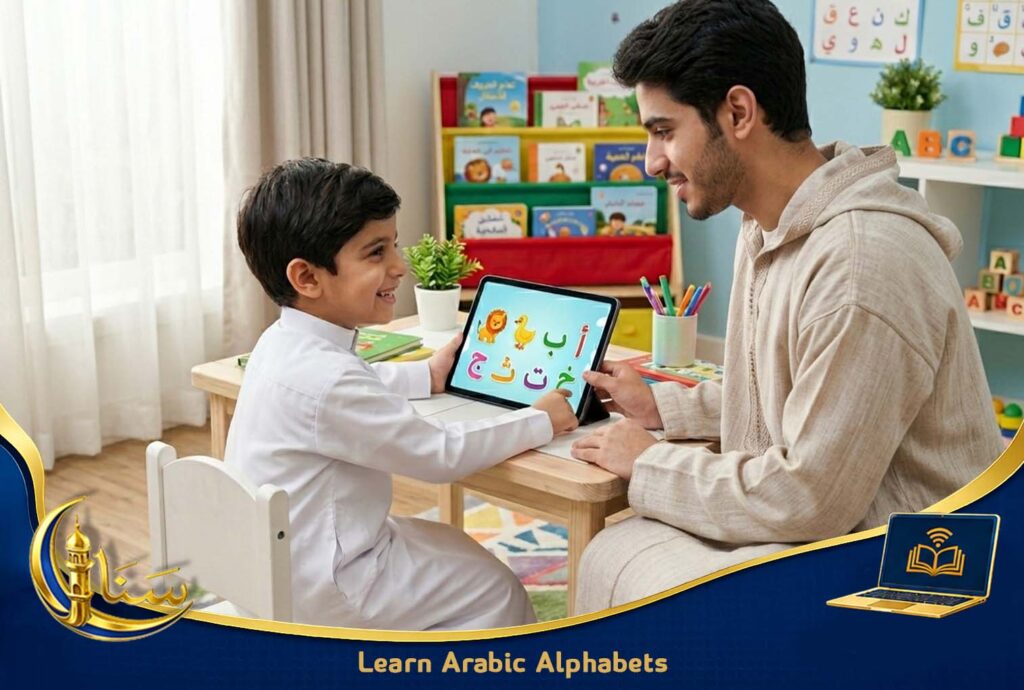
Arabic Basics Before Learning Quran is the essential foundation for anyone who wants to understand the Quran deeply and correctly, not just read its words. At Sana Online Quran Academy, we focus on helping students build strong Arabic skills step by step before moving into advanced Quranic understanding.
This includes learning the alphabet, pronunciation, basic vocabulary, and simple grammar in a structured and easy way. When learners develop these basics, they begin to recognize words in the Quran and understand meanings without relying fully on translation. This approach makes the journey smoother, clearer, and more meaningful, leading to a stronger connection with the Quran over time.
Why Learning Arabic Basics Matters Before the Quran
The Quran was revealed in Classical Arabic, a language known for its precision, depth, and richness. Unlike many modern languages, Arabic is built on a root system that allows words to carry layered meanings depending on context.
Translations can give you a general idea, but they cannot fully capture:
- The depth of meaning in each word
- The beauty of the linguistic structure
- The emotional and spiritual impact of the original text
When you begin learning Arabic basics, you will notice a real transformation:
- You read with more confidence and accuracy
- You recognize familiar words without translation
- You understand how words connect within verses
- You feel a deeper emotional connection during recitation
- You reduce pronunciation mistakes significantly
Simply put, these basics are not just technical knowledge—they are the key to unlocking true reflection and understanding.
Start Your Quran Learning Journey Today with Sana Online Quran Academy
Begin your path of learning the Holy Quran with comfort and confidence at Sana Online Quran Academy. Our well-structured programs are designed for beginners and children, offering clear lessons, experienced teachers, and personalized one-on-one sessions that make learning the Quran simple, effective, and engaging.
Learn from the comfort of your home with flexible schedules that fit your daily routine. Gradually improve your Quran reading, memorization, and Tajweed skills in a supportive and encouraging environment. Enroll today and take your first step toward a meaningful journey of spiritual growth, confidence, and steady progress.

Step One: Learning the Arabic Alphabet Correctly
Every language starts with its alphabet, and Arabic is no different. However, what makes Arabic unique is that each letter has a precise articulation point.
What should you focus on?
- Learning all 28 Arabic letters
- Understanding how letters change shape depending on their position
- Practicing correct pronunciation
- Differentiating between similar letters (like س / ص and د / ض)
Why is this critical?
Because even a small mistake in pronunciation can completely change the meaning—especially when reading the Quran. That’s why early accuracy is far more important than speed.
Listening and repeating regularly is one of the most effective ways to master this stage, especially when learning through the Best Online Quran Academy for Women.
Short Vowels (Harakat): The Hidden Key to Meaning
After learning the letters, the next essential step is understanding short vowels, known as harakat.
The main vowels:
- Fatha (َ)
- Damma (ُ)
- Kasra (ِ)
These small marks completely change how a word sounds and what it means.
Example:
- Kataba (كَتَبَ) = he wrote
- Kutiba (كُتِبَ) = it was written
A slight change in vowels leads to a completely different meaning. Ignoring this stage creates major confusion later on.
Building a Strong Vocabulary Foundation
Vocabulary is the backbone of any language. When it comes to the Quran, learning frequently repeated words is one of the fastest ways to improve comprehension.
Why focus on common words?
Because a relatively small number of words appears repeatedly throughout the Online Quran Classes for Sisters. Learning them gives you access to a large portion of the text.
Examples:
- Rabb = Lord
- Amana = believe
- Ilm = knowledge
- Haqq = truth
- Kitab = book
- Yawm = day
The more words you learn, the less you rely on translations—and the more direct your understanding becomes.
Basic Grammar (Nahw): Making Sense of Sentences
Grammar may seem intimidating, but at the beginner level, it is quite manageable.
Focus on essentials:
- Nominal sentences (subject + predicate)
- Verbal sentences (verb + subject)
- Masculine and feminine forms
- Singular and plural forms
- Basic sentence structure
Grammar helps you understand how words interact, which is essential for grasping the full meaning—not just individual words.
The Difference Between Reading and Understanding the Quran
This is one of the most important distinctions to understand early.
Reading:
The ability to pronounce words correctly using Tajweed rules.
Understanding:
The ability to comprehend meanings, context, and relationships between words.
Many learners spend years perfecting recitation but still rely entirely on translations. Learning Arabic bridges that gap.This level of flexibility simply does not exist in YouTube learning, since it is non-interactive content, which can slow down progress for students aiming to learn How to Memorize Quran Faster.
Should You Start with Tajweed or Language?
This is a common question, and the best answer is balance.
Ideal approach:
- Learn pronunciation (Tajweed basics)
- Learn meaning (Arabic basics)
Practical tip:
- Divide your study time between recitation and language learning
This dual approach ensures steady and meaningful progress.
A Practical Step-by-Step Learning Plan
A Practical Step-by-Step Learning Plan: Start with Arabic letters and pronunciation, then move to basic vocabulary, followed by simple grammar, and gradually progress to reading Quranic verses with understanding and regular practice.
(1–3 months)
- Learn the alphabet
- Practice pronunciation
- Understand short vowels
- Read simple words
(3–6 months)
- Memorize 100–300 common words
- Read short sentences
- Recognize Quranic vocabulary
(6–12 months)
- Learn basic grammar
- Read short surahs with partial understanding
- Use simple tafsir
Advanced Stage (after 1 year)
- Analyze verses
- Understand deeper meanings
- Recognize root patterns
Consistency is the most important factor in this journey.
The Role of Structured Learning
Self-study is helpful, but it can be slow and unorganized. That’s why many learners benefit from structured programs.
Programs offered by Sana Online Quran Academy for Hifz provide a guided path that helps beginners build a strong Arabic foundation step by step.
Benefits of structured learning:
- Clear roadmap
- Continuous feedback
- Immediate correction of mistakes
- Motivation and accountability
Learning with a teacher also prevents bad habits from forming early.
Choosing the Right Learning Method
There is no single perfect method. Your choice should depend on:
- Your daily schedule
- Your learning goals
- Your current level
- Your preferred learning style
Key advice:
Start simple, then improve your approach over time.
Common Mistakes to Avoid
Common Mistakes to Avoid: Focusing only on memorization, ignoring grammar, relying completely on translation, rushing results, and lacking consistency in learning.
1. Focusing only on memorization
Memorization without understanding limits your growth.
2. Ignoring grammar
Grammar connects meanings—don’t skip it.
3. Expecting quick results
Language learning takes time and patience.
4. Relying entirely on translation
Translation is helpful, but not a replacement.
5. Inconsistency
Stopping and restarting slows progress significantly.
How to Stay Consistent
Consistency matters more than intensity.
Practical tips:
- Study daily (even 20–30 minutes)
- Review regularly
- Read short Quranic passages
- Learn with a teacher or group
A small daily habit is far more effective than occasional long sessions.
The Power of a Supportive Learning Environment
Your environment plays an important role in your success when learning Arabic for the Quran. A supportive atmosphere makes learning easier and more consistent. Through Sana Online Quran Academy, students Learn Arabic Online in a motivating environment with guidance, support, and accountability.
A good learning environment offers:
- Encouragement
- Interaction with teachers
- Continuous correction
- A sense of commitment
These elements work together to build confidence and eliminate confusion early on. Having access to Female Quran Teachers Online allows you to ask questions, receive feedback, and correct mistakes before they become habits.
Ultimately, this kind of environment makes the learning journey smoother, more structured, and far more enjoyable, helping you stay committed until you reach your goals.
When Will You Start Understanding the Quran?
Once you master the essential Arabic basics, your journey with the Quran begins to shift in a meaningful way. Understanding does not happen suddenly, but rather develops gradually as your language skills grow and your familiarity with the text increases. With consistent effort, you will start noticing small but important improvements that build over time.
You will begin to:
- Recognize repeated words
- Understand general meanings
- Connect ideas within verses
At first, your understanding may be partial, but even recognizing a few words in each verse creates a strong sense of progress and motivation. As your vocabulary expands and your grasp of basic grammar improves, the connections between words and meanings will become clearer.
Over time, your comprehension becomes deeper and more natural, allowing you to engage with the Quran in a more reflective and personal way. This gradual progress is what transforms reading into true understanding.
Can Anyone Learn This?
Absolutely.
It does not matter:
- How old you are
- What your native language is
- Your educational background
What truly matters is:
- Consistency
- Patience
- Following the right method
Many learners have started from zero and achieved remarkable progress.
Daily Practice: The Secret to Progress
Daily practice is one of the most powerful tools in your learning journey, especially when it comes to understanding Arabic and connecting with the Quran. Consistency, even in small amounts, creates long-term progress and builds confidence step by step. Instead of relying on long, irregular study sessions, a short daily routine can make a significant difference over time.
How to practice effectively:
- Read short verses daily
- Identify known words
- Write down new vocabulary
- Listen to correct recitation
By following these simple steps, you train both your eyes and ears while reinforcing what you have already learned. Over time, familiar words will appear more frequently, making comprehension easier and more natural. Writing vocabulary also helps move information from short-term to long-term memory.
Repetition strengthens memory and builds confidence, allowing you to progress steadily without feeling overwhelmed or lost.
FAQs
section provides clear answers to common queries about learning Arabic basics before studying the Quran.
Can I learn Arabic basics quickly?
Yes, you can learn the basics in 3–6 months, but mastery requires longer consistent effort.
Do I need to memorize many words at the beginning?
No, start with a small number of common words and expand gradually.
Does listening to the Quran help with learning Arabic?
Yes, it improves pronunciation and helps you recognize words more quickly.
In conclusion, Arabic Basics Before Learning Quran is not just a learning step but a necessary foundation for anyone seeking true understanding of the Quran. Building strong skills in letters, vocabulary, and grammar allows learners to move beyond simple reading into real comprehension and reflection.
At Sana Online Quran Academy, students are guided through a clear and structured path that supports steady progress and confidence. With patience, practice, and the right guidance, learners gradually begin to understand Quranic meanings directly. This journey transforms learning into a meaningful spiritual connection that grows stronger over time with consistency and dedication.