How Long Does It Take to speak Arabic depends on several factors, including your starting level, learning goals, study schedule, exposure to Arabic, and the type of Arabic you want to use. Some learners want to hold everyday conversations, while others need Arabic for work, travel, religious studies, or communication with family and friends.
Arabic can seem challenging at first because learners encounter a different writing system, unfamiliar sounds, new grammatical patterns, and several widely used dialects. However, steady practice can make the learning process much more manageable. Rather than looking for one fixed number of months, it is more useful to understand what affects speaking progress and what you can realistically achieve at each stage.
For students interested in learning Arabic alongside Quranic studies, Sana Online Quran Academy can provide a structured learning environment where Arabic practice can complement broader Islamic education. The most important factor, however, remains consistency: regular speaking, listening, vocabulary review, and meaningful interaction gradually turn knowledge into communication.
How Long Does It Take to Speak Arabic for a Beginner?
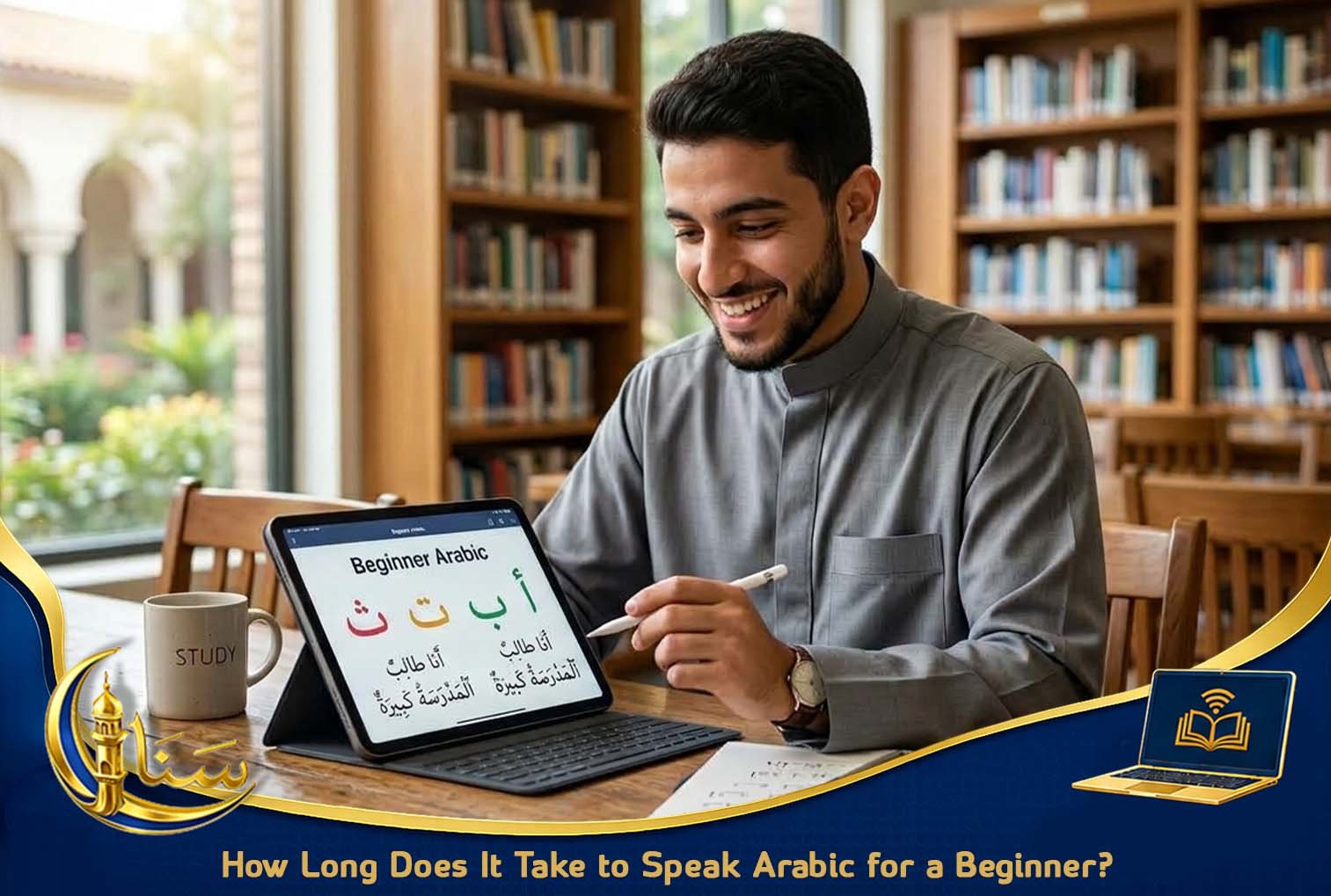
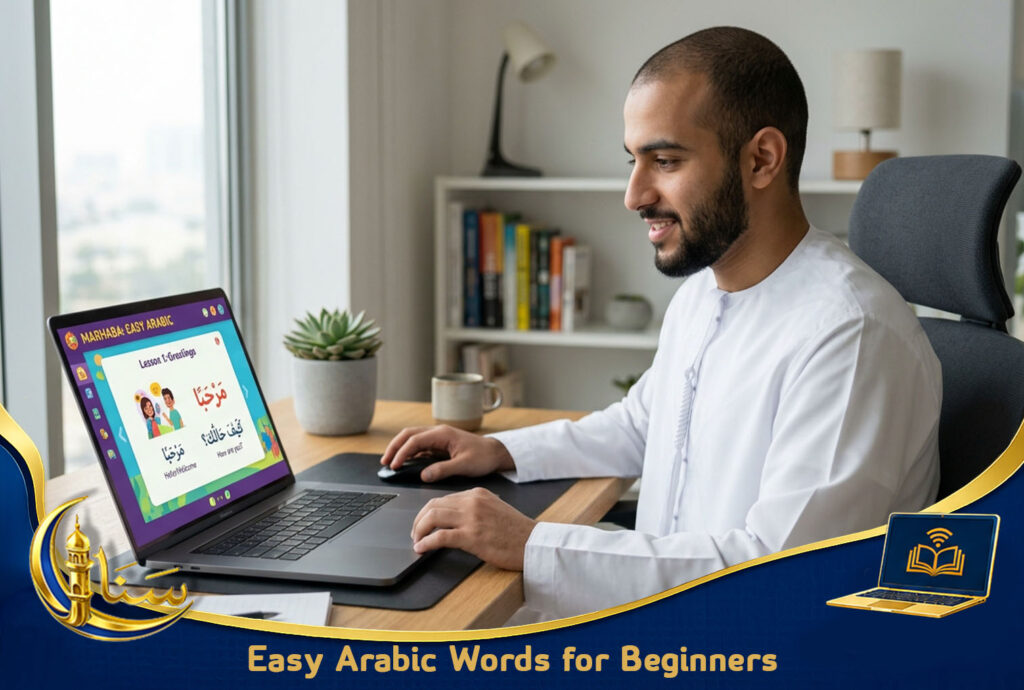
For a complete beginner, speaking Arabic usually starts with learning basic sounds, common expressions, simple vocabulary, and essential sentence patterns. During this stage, learners should not expect fluent conversations immediately. Instead, the goal is to build enough language knowledge to communicate simple ideas.
With consistent study, a beginner may begin producing short Arabic sentences within a few months. The exact timeline varies considerably because two learners studying for the same number of hours may have very different levels of exposure and practice. A beginner can focus on:
- Greetings and introductions.
- Numbers, dates, and basic descriptions.
- Common questions and answers.
- Everyday verbs and frequently used nouns.
- Simple sentence structures.
- Listening to slow, clear Arabic.
- Repeating useful expressions aloud.
Speaking should begin early rather than waiting until grammar feels perfect. In fact, making manageable mistakes can help learners identify gaps and remember new expressions more effectively.
For students working with Sana Online Quran Academy, connecting new Arabic vocabulary to familiar religious or everyday contexts can also make practice more meaningful.
Start Your Quran Learning Journey Today with Sana Online Quran Academy
Start your Quran learning journey today with Sana Online Quran Academy, where structured and simple programs are designed for both children and adults. In fact, lessons are delivered step by step by qualified teachers who focus on reading skills, basic Tajweed, and gradual improvement with clear explanations.
In addition, you can study from home with flexible schedules that fit your daily routine. Moreover, regular practice and feedback help you improve steadily. As a result, learning becomes easier, more consistent, and more effective.

How Long Does It Take to Speak Arabic at a Conversational Level?
How Long Does It Take to Speak Arabic conversationally depends heavily on what you mean by “speaking Arabic.” A learner who wants to order food, introduce themselves, ask for directions, and discuss familiar topics has a different goal from someone who wants to debate complex subjects.
A conversational learner generally needs more than vocabulary memorization. Speaking requires the ability to retrieve words quickly, understand another speaker, form sentences under pressure, and respond without translating every sentence mentally.
Progress often becomes easier when learners practice situations rather than isolated words. For example, instead of memorizing the word for “restaurant” alone, practice sentences about ordering food, asking about ingredients, requesting the bill, and expressing preferences.
A useful conversational routine can include:
- Learning five to ten practical expressions.
- Listening to each expression several times.
- Repeating it aloud.
- Creating two or three personal examples.
- Using the expression in a short conversation.
- Reviewing it later in the week.
This approach turns passive vocabulary into active speaking ability.
How Long Does It Take to Speak Arabic Fluently?
Fluency takes considerably longer than basic communication because it involves speed, flexibility, vocabulary range, listening comprehension, and the ability to communicate naturally across different situations.
For many learners, fluency develops gradually rather than appearing at one specific point. You may first become comfortable with everyday conversations, then improve your ability to discuss unfamiliar topics, and eventually become capable of expressing detailed opinions and explanations.
So, How Long Does It Take to speak Arabic fluently cannot be answered with one universal deadline. A learner studying for several hours every week and speaking regularly may progress differently from someone who studies intensively for a short period but rarely uses Arabic afterward.
Fluency also depends on the variety of Arabic being studied. Modern Standard Arabic can support formal communication, reading, education, and media. A spoken dialect may be more useful for everyday interaction in a particular Arab country.
Therefore, identifying your target language variety before choosing a study plan can save considerable time.
How Long Does It Take to Speak Arabic With Daily Practice?
Daily practice can significantly improve learning consistency. Even a relatively short session can be valuable when it includes active language use.
For example, a learner who practices Arabic for 30 minutes each day can divide the session into several activities:
- 10 minutes of listening.
- 5 minutes of vocabulary review.
- 10 minutes of speaking.
- 5 minutes of sentence formation.
The exact schedule can change according to your needs. What matters most is creating frequent opportunities to retrieve and use Arabic.
In addition, daily exposure reduces the long gaps that often cause learners to forget recently learned vocabulary. A person who studies intensely once a week may spend part of every session remembering previous material. Someone who practices consistently can spend more time building on existing knowledge.
Sana Online Quran Academy can be part of a broader learning routine for students who want structured instruction, while independent speaking practice can reinforce what they learn during lessons.
How Long Does It Take to Speak Arabic If You Study One Hour a Day?
One hour of focused study each day can provide a strong foundation when the time is used effectively. However, simply spending 60 minutes reading grammar explanations does not produce the same speaking progress as an hour that includes listening and conversation.
A balanced session could look like this:
| Activity | Suggested Time |
|---|---|
| Vocabulary | 10 minutes |
| Listening | 15 minutes |
| Grammar in context | 10 minutes |
| Speaking practice | 20 minutes |
| Review | 5 minutes |
This structure gives speaking a central role without ignoring the other skills required for communication.
After several months, learners may notice that familiar sentences become easier to produce. Eventually, they can begin combining known expressions into original statements. The transition from memorized phrases to spontaneous speech is an important milestone.
However, progress should be measured by ability rather than by the calendar. If you can understand more, respond faster, construct longer sentences, and communicate with fewer pauses, you are moving forward.
How Long Does It Take to Speak Arabic for Travel?
Travel Arabic has a narrower objective than full language fluency. A traveler may need enough Arabic to communicate basic needs without mastering advanced grammar or extensive vocabulary.
Useful travel topics include:
- Greetings and polite expressions.
- Transportation.
- Hotels and accommodation.
- Restaurants and food.
- Shopping.
- Directions.
- Emergency situations.
- Asking for help.
- Numbers and prices.
- Basic cultural expressions.
Because the vocabulary is highly focused, learners can prepare for common travel situations relatively quickly. Role-playing can make this preparation more effective.
For example, practice a complete interaction rather than memorizing individual words. Imagine entering a restaurant, asking for a table, requesting a menu, ordering a meal, and asking for the bill. Repeating the entire situation helps create a mental connection between vocabulary and real communication.
This method can also help answer How Long Does It Take to Speak Arabic for a specific purpose, because a focused objective requires less language than general fluency.
How Long Does It Take to Speak Arabic for Work?
Professional Arabic requires a different vocabulary range from everyday conversation. Someone working in sales, education, healthcare, technology, tourism, or customer service may need specialized terminology.
The first stage should involve general conversational Arabic. After that foundation develops, learners can add vocabulary related to their profession.
For example, a business learner may need to discuss:
- Meetings.
- Schedules.
- Contracts.
- Customers.
- Products.
- Services.
- Payments.
- Negotiations.
- Reports.
- Deadlines.
Workplace speaking also requires appropriate levels of formality. A phrase that sounds natural with a friend may not be suitable in a formal professional setting.
Therefore, learners should study both general communication and industry-specific expressions. Listening to authentic professional conversations can also reveal how speakers organize requests, explanations, and responses.
How Long Does It Take to Speak Arabic for Quranic Studies?
Learners interested in Islamic studies may have a different Arabic objective. They may want to understand Quranic vocabulary, recognize grammatical structures, or develop enough Arabic knowledge to engage more deeply with religious texts.
Quranic Arabic and conversational Arabic overlap in important ways, but they are not identical learning targets. A student focused on Quranic texts may spend more time studying vocabulary, grammar, morphology, and classical structures.
At the same time, conversational practice can strengthen general Arabic skills. Understanding how words function in sentences, recognizing common roots, and developing listening awareness can support broader language learning.
For students combining Quran education with Arabic study, Sana Online Quran Academy can serve as part of a structured educational routine. The learning plan should still reflect the student’s specific objective rather than assuming that every Arabic learner needs the same curriculum.
How Long Does It Take to Speak Arabic If You Already Know Another Language?
Previous language experience can influence the learning process. Learners who have studied languages with grammatical or vocabulary similarities may recognize certain concepts more quickly.
However, knowing another language does not automatically make Arabic easy. The Arabic script, pronunciation system, grammatical structures, vocabulary, and dialect differences can still require dedicated practice.
Previous language-learning experience can nevertheless provide useful habits. A learner who already understands how to memorize vocabulary, practice listening, use flashcards, and communicate despite mistakes may adapt more efficiently to a new language.
The key is to transfer useful learning strategies rather than assuming that similarities will eliminate the need for practice.
Why Does Arabic Speaking Take Longer for Some Learners?
There is no single learning timeline because individual circumstances differ. Several factors can speed up or slow down progress.
Study Consistency
Regular practice generally creates stronger continuity than irregular study. Missing occasional sessions is normal, but long gaps can make vocabulary retrieval harder.
Speaking Opportunities
A learner who speaks Arabic regularly receives immediate feedback and becomes more comfortable responding spontaneously. Someone who studies silently may understand a great deal but struggle to produce sentences.
Listening Exposure
Listening helps learners become familiar with pronunciation, rhythm, sentence patterns, and natural expressions. It also makes spoken Arabic less unfamiliar over time.
Learning Goals
Someone learning a few travel phrases has a smaller target than someone pursuing professional fluency. Consequently, their timelines should not be compared directly.
Arabic Variety
Modern Standard Arabic and regional dialects serve different purposes. Choosing the appropriate variety can prevent learners from spending time on material that does not match their communication needs.
How Long Does It Take to Speak Arabic Without Translating?
Thinking directly in Arabic is often considered an important milestone because constant translation can slow conversations. However, this ability develops gradually.
At the beginning, learners naturally connect Arabic words to their first language. With repeated exposure, common expressions become more automatic. Instead of translating every individual word, the learner begins recognizing complete phrases as meaningful units.
For example, a beginner may mentally translate a greeting before responding. Later, the same greeting may trigger an immediate response without conscious translation.
To encourage this development, try using:
- Picture descriptions.
- Simple questions and answers.
- Arabic-only vocabulary reviews.
- Short self-talk exercises.
- Repeated conversation patterns.
- Everyday object labeling.
The goal is not to ban translation completely. Rather, the aim is to reduce unnecessary dependence on it as familiarity increases.
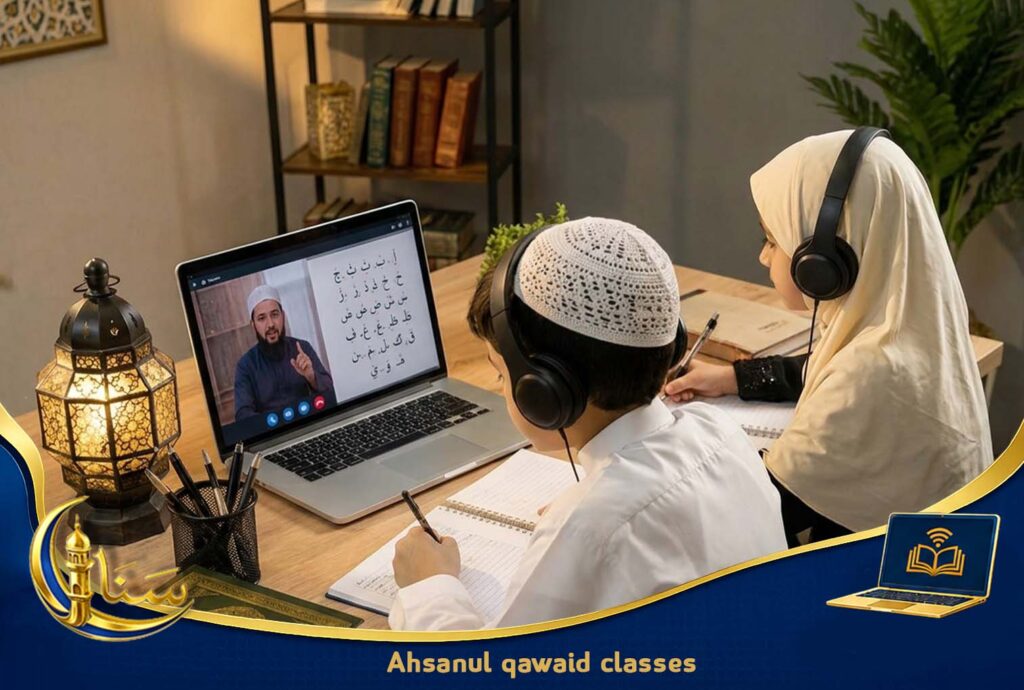
How Long Does It Take to Speak Arabic With an Online Teacher?
Online instruction can provide structured practice, especially when lessons include active speaking. However, the effectiveness of online learning depends on lesson quality, student participation, feedback, and practice between sessions.
A useful online Arabic lesson should not consist entirely of passive explanation. Learners need opportunities to answer questions, describe situations, repeat difficult sounds, construct sentences, and receive corrections.
A structured program can also help maintain accountability. Instead of wondering what to study next, students can follow a progression from foundational vocabulary to increasingly complex communication.
For learners combining Arabic with Quran education, Sana Online Quran Academy can be incorporated into a broader study routine according to the learner’s educational needs.
How Long Does It Take to Speak Arabic With Vocabulary Practice?
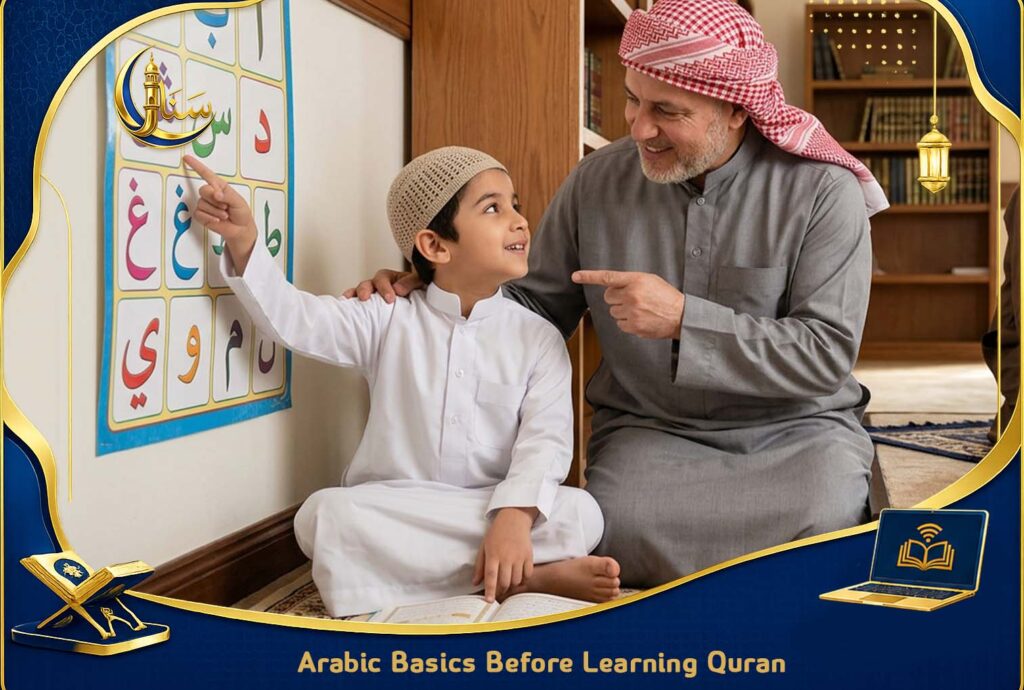
Vocabulary is essential, but memorizing thousands of isolated words does not automatically create speaking ability. Learners need to understand how words behave in sentences and when native speakers actually use them. For complete beginners, building a strong foundation with the Arabic Alphabet for Beginners can make it easier to recognize words, pronounce them correctly, and gradually connect vocabulary with spoken Arabic.
For this reason, vocabulary should be learned in context.
Instead of learning:
كتاب = book
you can learn:
هذا كتاب جديد.
Then create additional sentences using the same structure.
This method teaches vocabulary and sentence formation simultaneously. Furthermore, reviewing words through speaking helps strengthen retrieval. Learners who want a structured approach can also Learn Arabic Online Step by Step so that vocabulary, grammar, pronunciation, and communication skills develop progressively.
A practical vocabulary system can include:
- New words.
- Example sentences.
- Pronunciation.
- Related words.
- Common expressions.
- Personal examples.
- Regular review.
Over time, these connections make vocabulary easier to access during real conversations.
How Long Does It Take to Speak Arabic With Listening Practice?
Listening is sometimes neglected by learners who focus heavily on grammar and vocabulary. Nevertheless, speaking depends partly on the ability to recognize what another person says. Understanding whether learning Arabic online is effective depends largely on how the learning program combines listening, speaking, interaction, and regular practice can help learners choose a more suitable study method.
Start with material that matches your current level. If every sentence contains unfamiliar vocabulary, the exercise may become frustrating rather than productive.
Gradually increase difficulty by moving from:
- Slow learner-friendly recordings.
- Short everyday conversations.
- Simple interviews.
- Longer natural conversations.
- Authentic media.
Repeated listening can be particularly useful. The first attempt may reveal only the general meaning. Later attempts can reveal individual words, grammatical patterns, and pronunciation details.
This process helps connect textbook Arabic with real communication.
How Long Does It Take to Speak Arabic If You Study Without a Teacher?
Self-study can work for motivated learners, especially when they have access to reliable materials and a clear plan. However, speaking presents a particular challenge because learners may not notice pronunciation or grammar errors on their own. Knowing how to Start Learning Arabic can help beginners establish a clear starting point and avoid trying to study every aspect of the language at the same time.
A self-directed student can reduce this problem by recording their speech and comparing it with reliable examples. Language-exchange conversations can also provide opportunities for real interaction.
Still, independent learning requires discipline. Without a schedule, learners may repeatedly study topics they already know while avoiding areas they find difficult.
A balanced approach can combine independent study with occasional guided feedback. That way, the learner retains flexibility while receiving help with persistent problems.
How Long Does It Take to Speak Arabic at Different Study Intensities?
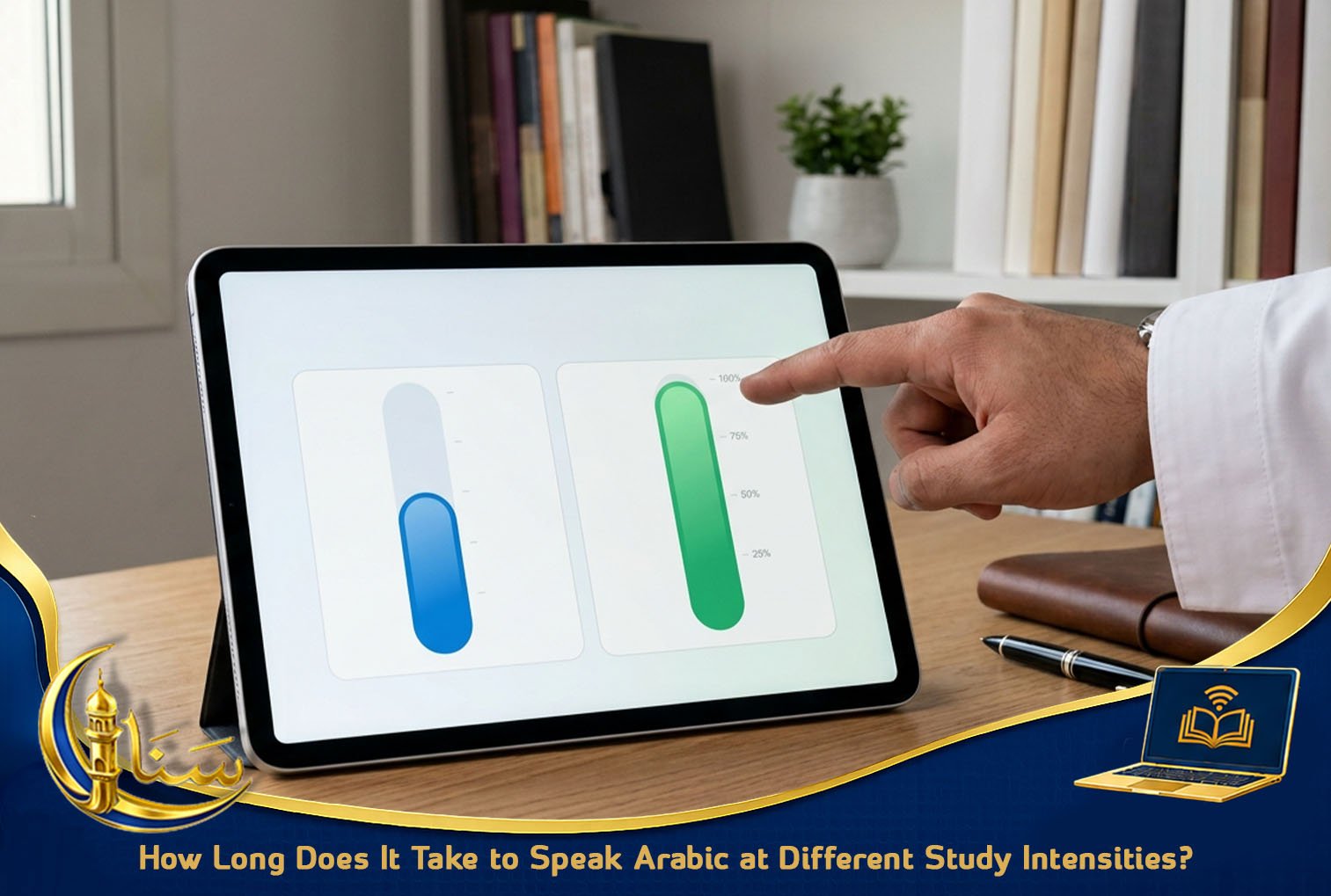
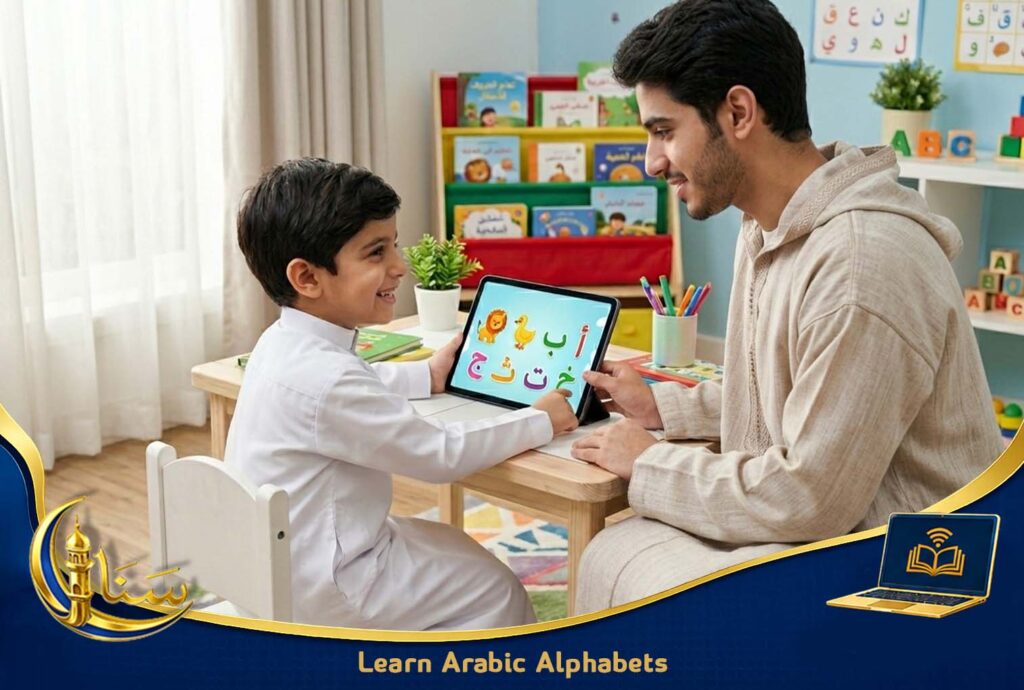
Study intensity can influence progress, but more hours do not always mean better results. Quality, concentration, active practice, and recovery all matter. Families choosing online lessons for younger learners may also consider a Best Online Arabic Academy for Kids based on factors such as teaching structure, age-appropriate materials, lesson flexibility, and opportunities for active language practice.
Consider three broad approaches:
| Study Pattern | Main Advantage | Possible Challenge |
|---|---|---|
| 20–30 minutes daily | Easy to maintain | Slower total exposure |
| About 1 hour daily | Balanced development | Requires regular commitment |
| Intensive study | Faster exposure | Can become difficult to sustain |
A learner should choose a routine that can continue for months rather than selecting an ambitious schedule that quickly becomes overwhelming.
Consistency creates cumulative progress. Therefore, a realistic daily routine can be more useful than occasional periods of intense study.
How Long Does It Take to Speak Arabic With Sana Online Quran Academy?
For students looking for a structured educational environment, Sana Online Quran Academy can be part of a broader plan for developing Arabic and Quran-related learning skills.
The most useful approach is to connect formal lessons with independent practice. After a lesson, students can review vocabulary, repeat new expressions, listen to related Arabic content, and practice speaking.
A weekly routine could include:
- Structured instruction.
- Vocabulary review.
- Listening practice.
- Speaking exercises.
- Reading practice.
- Weekly revision.
- Progress tracking.
This approach avoids treating each lesson as an isolated event. Instead, every session contributes to a continuing learning cycle.
The expected timeline still depends on the learner’s starting point and objective. A beginner preparing for basic communication should not use the same expectations as a learner working toward advanced fluency.
How to Know Whether Your Arabic Speaking Is Improving
Instead of measuring progress only by the number of months you have studied, use practical milestones.
You may be progressing when you can:
- Introduce yourself without preparing every sentence.
- Ask and answer common questions.
- Describe your daily routine.
- Explain basic preferences.
- Understand frequently used expressions.
- Retell a simple story.
- Maintain a short conversation.
- Correct some of your own mistakes.
- Speak for longer periods without switching languages.
Recording yourself once every few weeks can make progress easier to notice. Compare recordings using the same topic, such as describing your family, daily routine, studies, or work.
This method provides a clearer picture than relying on memory alone.
How Long Does It Take to Speak Arabic Comfortably?
Comfort is different from perfect fluency. A learner may communicate successfully while still making grammatical mistakes or searching for occasional words. The goal should therefore be functional communication rather than perfection.
If you can understand the main idea, express what you need, ask for clarification, and continue a conversation despite occasional mistakes, you are developing useful speaking ability.
Furthermore, comfort increases through repetition. The same situations that initially feel difficult often become easier after several conversations.
For that reason, learners should deliberately revisit familiar topics while gradually introducing more challenging ones.
Common Mistakes That Slow Down Arabic Speaking
Some study habits can make speaking progress less efficient, especially when learners focus on passive activities, avoid regular conversation practice, or spend too much time memorizing information without actually using it.
- Studying Grammar Without Using It
- Grammar becomes more useful when learners immediately apply it in sentences.
- Memorizing Isolated Vocabulary
- Individual words are harder to retrieve than vocabulary learned within meaningful phrases.
- Avoiding Mistakes
- Fear of errors can prevent learners from getting the speaking practice they need.
- Focusing Only on Reading
- Reading supports vocabulary and comprehension, but it does not replace oral communication.
- Changing Learning Methods Too Often
- Constantly switching resources can create fragmented knowledge. A clear curriculum usually makes progression easier to track.
- Expecting Fast Fluency
- Unrealistic expectations can lead to frustration. Language development is cumulative and requires repeated exposure.
A Practical Arabic Speaking Plan
A simple and consistent study plan can help you organize your learning time, build useful Arabic skills gradually, and turn daily practice into measurable progress.
- Month 1: Build the Foundation
- Focus on pronunciation, basic expressions, essential vocabulary, and simple sentence patterns.
- Months 2–3: Start Communicating
- Introduce short conversations about familiar subjects. Practice answering questions without reading prepared responses.
- Months 4–6: Expand Your Range
- Add longer conversations, more listening material, broader vocabulary, and increasingly complex sentence structures.
- After Six Months: Increase Real-World Use
- Continue developing fluency by discussing unfamiliar subjects, listening to natural Arabic, reading regularly, and seeking more speaking opportunities.
These stages are guidelines rather than guarantees. Some learners move faster, while others require additional time because of their schedule, language background, or goals.
How Long Does It Take to Speak Arabic? What to Expect?

The most useful answer to How Long Does It Take to Speak Arabic is that there is no universal deadline. Speaking ability develops through the interaction of time, consistency, exposure, instruction, vocabulary, listening, and real communication.
A learner focused on basic conversation may reach useful communication much sooner than someone aiming for advanced professional or academic fluency. Similarly, someone practicing every day will have a different experience from someone studying only occasionally.
Therefore, build your plan around a specific objective. Decide what you want to do in Arabic, choose the appropriate variety, create a realistic schedule, and measure progress through actual communication.
For students seeking structured Quran and Arabic-related education, Sana Online Quran Academy can be included within a consistent learning routine. However, the learner’s own practice remains essential. Lessons provide direction, while repeated use turns knowledge into a practical speaking skill.
The most important question is not only How Long Does It Take to speak Arabic, but also what you want to accomplish when you begin speaking. A clear goal makes it easier to select the right vocabulary, practice the right situations, and recognize meaningful progress.
Frequently Asked Questions
Find clear answers to common questions about learning Arabic, speaking confidently, and understanding how long it may take to develop practical Arabic speaking skills.
1. Can I learn to speak Arabic if I have never studied a foreign language?
Yes. Previous language-learning experience can be helpful, but it is not a requirement. Beginners can start with pronunciation, common expressions, basic vocabulary, and simple sentence structures before gradually expanding their speaking ability.
2. Should I learn Modern Standard Arabic or an Arabic dialect first?
The answer depends on your purpose. Modern Standard Arabic is useful for formal contexts, reading, education, and many written materials, while dialects are commonly used in everyday conversation. Your target audience and communication environment should guide the choice.
3. Is it possible to improve Arabic speaking skills without living in an Arab country?
Yes. Regular online conversations, listening practice, structured lessons, Arabic media, and speaking exercises can create substantial exposure without requiring relocation. The important point is to use Arabic actively rather than studying it only passively.
4. What should I do when I understand Arabic but cannot speak it?
Start with short, predictable speaking exercises. Describe your day, answer simple questions, retell short events, and repeat useful phrases aloud. Gradually increase the difficulty instead of waiting until you feel completely ready to speak.
In conclusion, how long it take to speak Arabic depends on your starting level, learning goals, study routine, and the type of Arabic you want to use. Some learners may begin having simple conversations within a few months, while reaching a comfortable level of fluency can take considerably longer.
The most effective approach is to focus on consistent practice rather than expecting a fixed timeline. Regular speaking, listening, vocabulary building, and interaction with Arabic speakers can gradually improve your ability to communicate with confidence.
Whether you are learning Arabic for travel, work, study, family communication, or personal interest, setting realistic goals can make the learning process more manageable. With patience and consistent practice, you can continue developing your Arabic speaking skills and make steady progress over time.