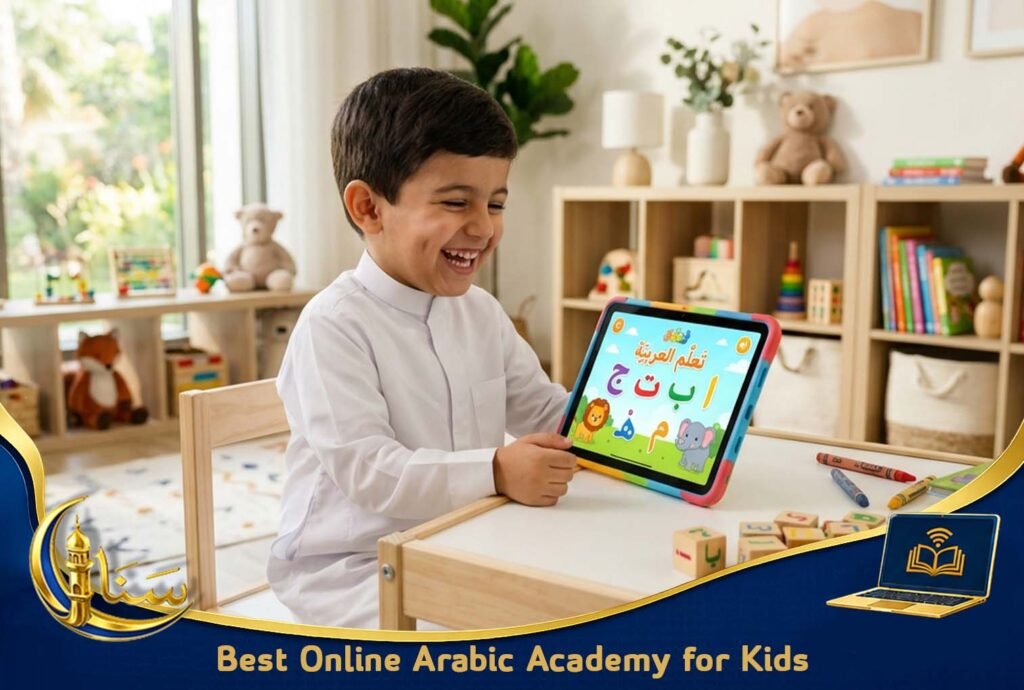
Fun Ways Kids Can Learn Arabic become much more effective when children feel that they are playing, exploring, and communicating rather than simply completing another lesson. For many parents, teaching Arabic to children can feel challenging, especially when Arabic is not the main language spoken at home. However, the right activities can turn language practice into an enjoyable part of everyday life.
Arabic offers children more than vocabulary and grammar. It can help them communicate with relatives, understand cultural traditions, develop listening skills, and build a connection with Arabic-speaking communities. At the same time, children learn differently from adults, so lessons that rely only on memorization may quickly become boring. Structured support from a program such as Sana Online Quran Academy can complement these activities when children benefit from regular guidance and practice.
Fortunately, parents do not need complicated resources to make Arabic more engaging. Stories, songs, games, drawing, role-play, cooking, and short conversations can all become useful learning opportunities. The key is to choose activities that match the child’s age, interests, and current ability.
This guide explores practical Fun Ways Kids Can Learn Arabic and explains how families can make them part of a consistent routine. It also looks at how structured online learning through Sana Online Quran Academy can complement activities at home when a child needs regular guidance and opportunities to practice.
Why Do Fun Ways Kids Can Learn Arabic Work Better?
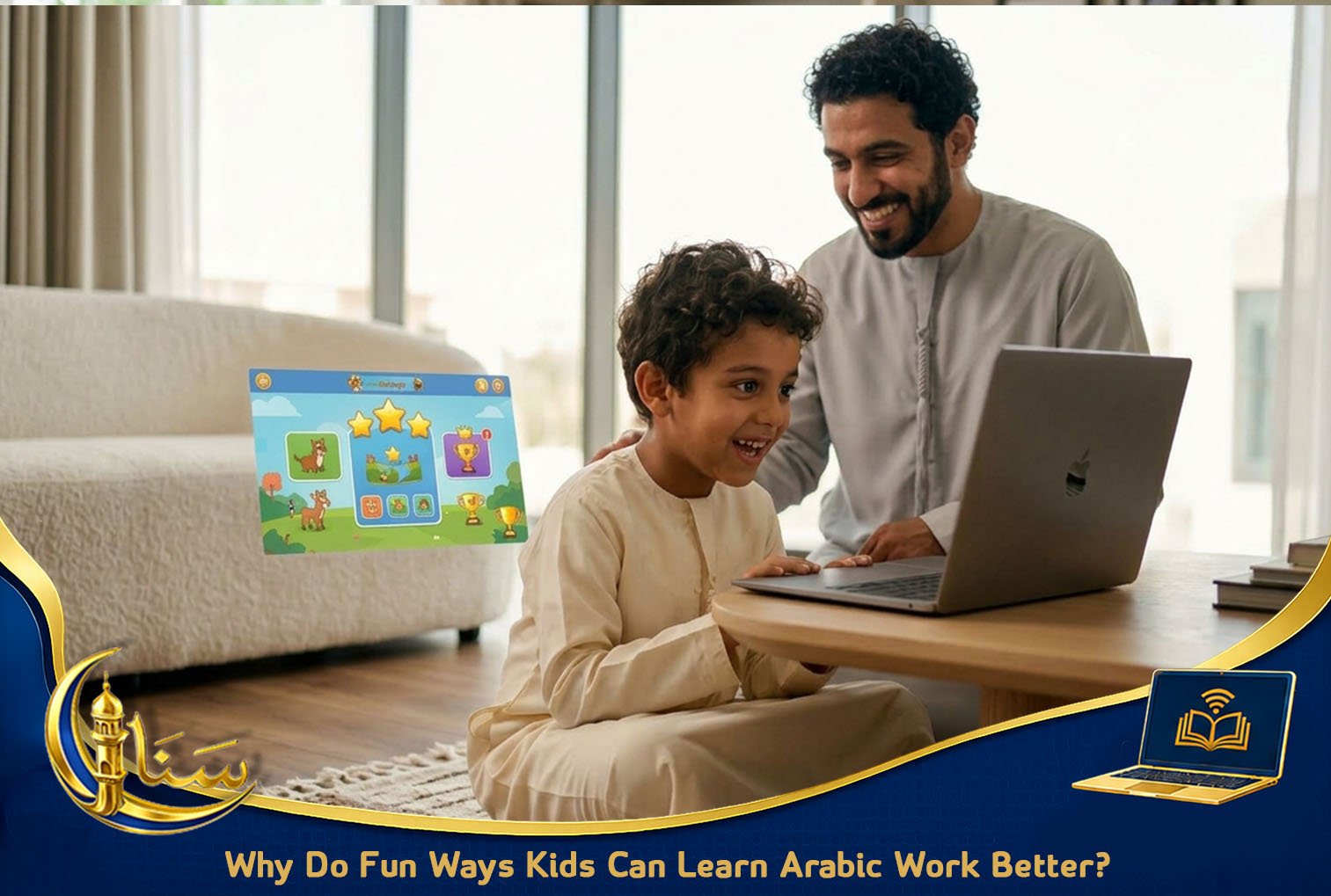
Children naturally pay attention to activities that involve movement, imagination, curiosity, and interaction. Therefore, turning Arabic into something they can actively experience may make practice feel less like a school assignment.
A child who learns the Arabic word for “apple” from a vocabulary list may remember it temporarily. However, that same child might remember the word more easily after holding an apple, drawing one, hearing the Arabic word, and using it in a simple sentence.
This does not mean that structured learning is unnecessary. Instead, enjoyable activities can support formal lessons by giving children additional opportunities to hear and use what they have learned. Parents can make Arabic practice more engaging by:
- Keeping activities short and age-appropriate.
- Using topics that already interest the child.
- Repeating useful words in different situations.
- Allowing children to move, draw, sing, or act.
- Celebrating effort rather than demanding perfection.
- Connecting new vocabulary with familiar objects and routines.
As a result, Arabic becomes part of the child’s daily experience rather than something that only happens during a lesson.
Start Your Quran Learning Journey Today with Sana Online Quran Academy
Start your Quran learning journey today with Sana Online Quran Academy, where structured and simple programs are designed for both children and adults. In fact, lessons are delivered step by step by qualified teachers who focus on reading skills, basic Tajweed, and gradual improvement with clear explanations.
In addition, you can study from home with flexible schedules that fit your daily routine. Moreover, regular practice and feedback help you improve steadily. As a result, learning becomes easier, more consistent, and more effective.

Fun Ways Kids Can Learn Arabic Through Short Stories
Stories are one of the simplest ways to introduce Arabic naturally. Children already understand the basic concept of storytelling, so parents can use that familiarity to introduce new vocabulary and expressions.
Start with very short stories that contain language appropriate for the child’s level. Picture books can be especially useful for younger learners because illustrations provide context even when the child does not understand every word.
During a story session, avoid stopping after every unfamiliar word. Instead, allow the child to follow the general meaning first. Then, choose a few useful words to explain and practice.
For example, if a story includes a house, a cat, a tree, and a ball, parents can point to the pictures while saying the Arabic words. Later, they can ask simple questions such as:
- أين القطة؟
- أين الكرة؟
- ما هذا؟
- ما لون الشجرة؟
The objective is not to translate every sentence. Rather, the goal is to help the child associate Arabic sounds with objects, actions, and ideas.
How to Make Fun Arabic Learning for Kids More Interactive?
Story time becomes even more useful when children participate instead of simply listening.Try asking the child to:
- Point to objects when they hear their Arabic names.
- Repeat selected words.
- Guess what happens next.
- Describe a picture using one or two words.
- Act out a character.
- Draw a favorite scene.
- Retell part of the story in simple Arabic.
Moreover, parents can read the same story several times. Repetition is not necessarily boring when the child enjoys the story. In fact, familiar stories give children repeated exposure to vocabulary without making every session feel like a vocabulary exercise.
Fun Ways Kids Can Learn Arabic With Educational Games
Games are another practical option when parents are looking for Fun Ways Kids Can Learn Arabic without making every activity feel like formal study.
The best games do not need to be complicated. A simple matching activity can teach vocabulary, while a scavenger hunt can encourage children to recognize Arabic words around the house.
For younger children, parents can prepare cards containing pictures and Arabic words. The child then matches each picture with the correct word.
Older children can play games that require more language production. For example, one player describes an object using simple Arabic clues while the other tries to identify it. Useful game ideas include:
- Arabic picture matching.
- Letter recognition games.
- Word-and-picture bingo.
- Arabic treasure hunts.
- Memory card games.
- Object-labeling challenges.
- Simple guessing games.
- Alphabet puzzles.
- Word-building activities.
Fun Ways Kids Can Learn Arabic With Household Objects
You can also turn ordinary objects into learning materials. Place Arabic labels on selected items around the child’s room or home. Each day, practice a few of them. For example, children can learn words related to:
- Bedroom furniture.
- Kitchen objects.
- Clothing.
- Toys.
- School supplies.
- Food.
- Colors.
- Numbers.
After the child recognizes the words, increase the challenge by asking simple questions or creating short sentences.
For instance, instead of only learning the word “chair,” encourage the child to say a sentence that includes it. This gradual progression helps move vocabulary from recognition toward practical use.
Fun Ways Kids Can Learn Arabic Through Songs and Rhymes
Music can make language exposure feel natural because rhythm and repetition help children participate without worrying too much about making mistakes.
Parents can introduce simple Arabic children’s songs, alphabet songs, counting songs, or traditional children’s rhymes. The objective is not to make the child memorize difficult lyrics. Instead, choose songs with repeated phrases and understandable vocabulary.
For example, a song about colors can reinforce color names. A counting song can provide repeated exposure to numbers. An alphabet song can make Arabic letters more familiar.
Once the child becomes comfortable with a song, encourage participation rather than passive listening. You can:
- Sing together.
- Add hand movements.
- Clap along with the rhythm.
- Act out words.
- Pause before a familiar word and let the child complete it.
- Explain a few important words after singing.
In addition, playing familiar Arabic songs during suitable parts of the day can increase exposure without adding another formal study session.
Why Repetition Helps Kids Learn Arabic Naturally?
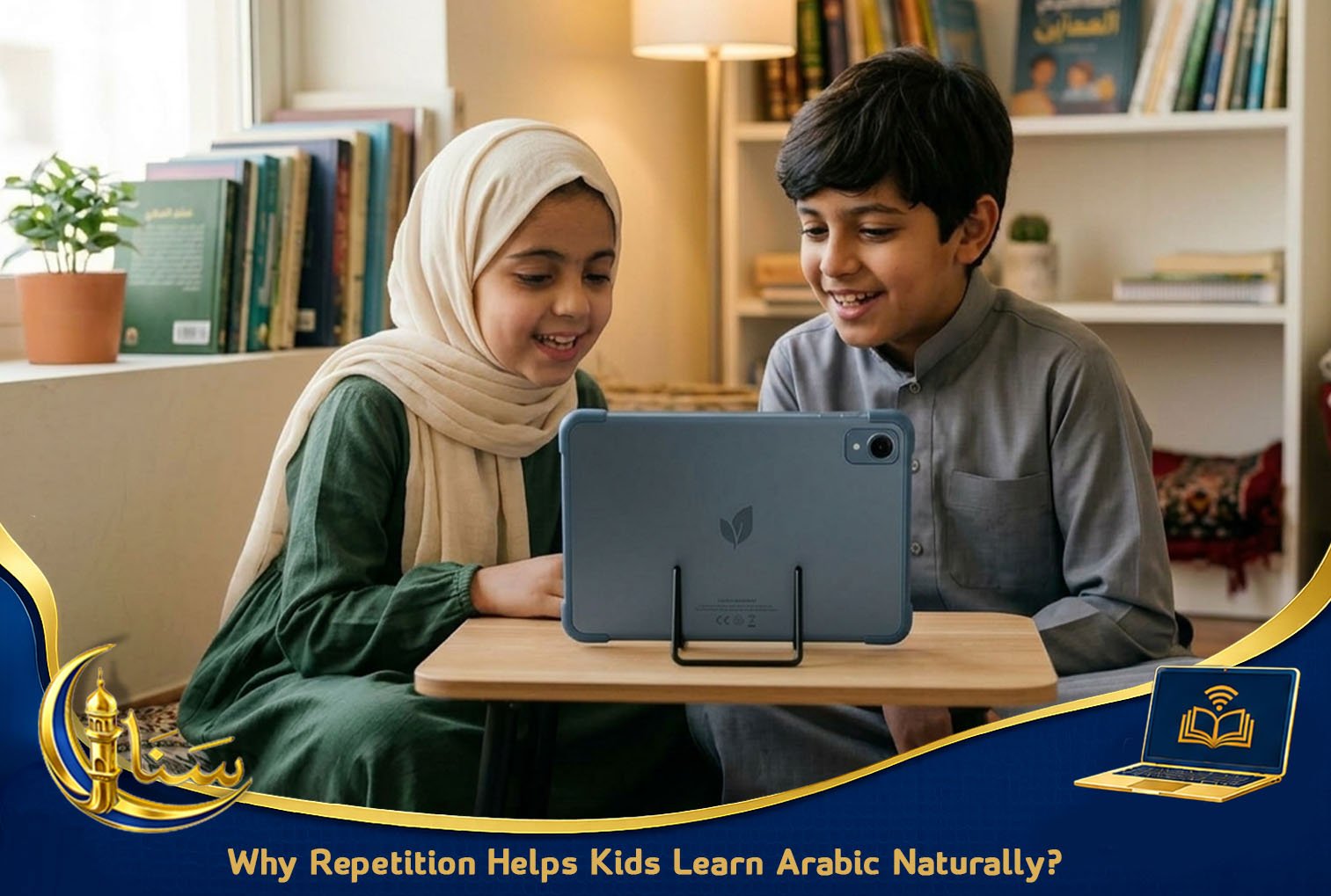
Children often need to encounter a word many times before they can confidently use it. Therefore, repeating the same song over several days can be useful.
Parents should not worry if a child wants to hear the same song repeatedly. That repetition provides another opportunity to recognize sounds, remember expressions, and become comfortable with pronunciation.
At the same time, introduce new songs gradually so that the child receives both familiar and fresh language input.
Fun Ways Kids Can Learn Arabic Through Everyday Activities
One of the most effective Fun Ways Kids Can Learn Arabic is to stop treating Arabic as something that exists only inside a lesson. Everyday routines offer countless opportunities for language practice.
For example, while preparing breakfast, parents can introduce words for food and kitchen objects. During shopping, they can name fruits, vegetables, numbers, and colors. While getting dressed, they can practice clothing vocabulary. Even a few minutes of conversation can be useful. Try using simple Arabic phrases such as:
- Good morning.
- Where is your bag?
- What would you like?
- Let’s eat.
- Come here.
- Open the door.
- Bring the book.
- What color is this?
The language does not have to be complicated. In fact, simple phrases that children hear repeatedly can become easier to understand and eventually use.
Create an Arabic Learning Corner for Kids at Home
Another idea is to create a small Arabic learning space. It does not need to be a full classroom. A small corner can contain:
- Arabic alphabet cards.
- Children’s books.
- Picture cards.
- A small whiteboard.
- Drawing materials.
- Simple Arabic puzzles.
- Labels for common objects.
Change some materials periodically to maintain curiosity. For example, one week could focus on animals, while another focuses on food.
This approach makes Arabic visible in the child’s environment and gives the child an easy place to practice.
Fun Ways Kids Can Learn Arabic Through Art and Drawing
Children who enjoy drawing can learn Arabic vocabulary through creative activities. Art gives them an opportunity to connect words with visual images while using their imagination.
For example, ask the child to draw a house and label several parts in Arabic. Another activity could involve drawing a favorite animal and writing its Arabic name underneath. Parents can also create simple vocabulary challenges:
- Choose five Arabic words.
- Ask the child to draw something connected to each word.
- Say each word together.
- Ask the child to use one or two words in a sentence.
The activity can become more challenging as the child’s ability improves.
Older children might create short comic strips with Arabic speech bubbles. This combines vocabulary, reading, writing, and creativity in one activity.
Turn Drawing Into a Vocabulary Challenge
Instead of simply asking children to memorize ten new words, choose a theme and let them illustrate it. Possible themes include:
- My family.
- My room.
- Animals.
- My favorite food.
- School.
- The weather.
- A trip.
- My favorite hobby.
After finishing the drawing, encourage the child to name the objects in Arabic. If the child is ready, ask for simple descriptions.
This method makes vocabulary meaningful because the child has created a personal connection with the words.
Introduce Arabic Through Role-Playing
Role-playing is particularly useful for children who enjoy pretending. It gives them a reason to use language instead of simply repeating isolated vocabulary. Set up familiar situations such as:
- Visiting a store.
- Going to a restaurant.
- Visiting a doctor.
- Meeting a new friend.
- Going to school.
- Visiting a family member.
- Asking for directions.
Parents can begin with a few prepared phrases. Once the child becomes comfortable, gradually allow them to create their own responses.
For example, a pretend restaurant could involve Arabic expressions for ordering food, asking for a drink, and saying thank you.
This approach also helps children understand that language is used to accomplish something. They are not simply saying words for practice; they are using Arabic to communicate.
Build Confidence Before Correcting Every Mistake
Children may become reluctant to speak if adults interrupt every sentence to correct pronunciation or grammar.
Instead, focus on communication first. If the meaning is clear, allow the conversation to continue. Then, after the activity, choose one or two mistakes to review.
For example, if a child repeatedly mispronounces one word, model the correct pronunciation naturally and invite them to repeat it.
A supportive environment can make children more willing to experiment with Arabic.
Explore Arabic Culture Through Food, Crafts, and Traditions
Language becomes more meaningful when children discover the culture connected to it. Therefore, cultural activities can be an important part of Fun Ways Kids Can Learn Arabic. Families can prepare a simple Arabic dish together while learning the names of ingredients. They can explore traditional crafts, look at Arabic calligraphy, listen to Arabic music, or learn about celebrations and customs. Parents who are comparing options for a Best Online Arabic Academy for Kids can also consider how cultural activities can complement structured lessons at home.
The activity should remain age-appropriate and interactive. For example, while cooking, parents can practice:
- Names of ingredients.
- Numbers and quantities.
- Colors.
- Simple instructions.
- Kitchen vocabulary.
Similarly, an art activity can introduce children to Arabic letters through decorative writing.
Connect Arabic With the Child’s Interests
Not every child will enjoy the same cultural activities. One child might love cooking, while another prefers football, drawing, animals, or technology. Therefore, start with the child’s existing interests. Children who love animals can practice with Arabic vocabulary related to different animals. For those interested in sports, introduce words connected to games, equipment, and favorite activities.
When stories capture a child’s attention, choose Arabic books that reflect those interests and encourage them to explore new vocabulary. This personalization can make language learning feel relevant rather than forced. Parents who are unsure how to Start Learning Arabic with a child can begin with familiar interests and gradually introduce new vocabulary.
Fun Ways Kids Can Learn Arabic With a Consistent Routine
Fun activities are valuable, but consistency is what turns occasional exposure into progress. Parents do not necessarily need to dedicate a long period every day. A short routine can be easier for children to maintain.
For families following Learn Arabic Online Step by Step, combining structured lessons with short activities at home can help children review what they have learned without feeling overwhelmed.
For example, a weekly routine might look like this:
| Day | Arabic Activity |
|---|---|
| Monday | Arabic story |
| Tuesday | Vocabulary game |
| Wednesday | Arabic song |
| Thursday | Drawing activity |
| Friday | Family conversation |
| Saturday | Role-play |
| Sunday | Review and free activity |
The schedule can be adjusted according to the child’s age and attention span. Moreover, flexibility matters. If a child is tired one day, a five-minute song may be more appropriate than a longer activity. On another day, the child may be enthusiastic and ready for a longer story or game. The goal is to build a sustainable habit rather than create pressure.
How can Parents Keep Children Motivated to Learn Arabic?
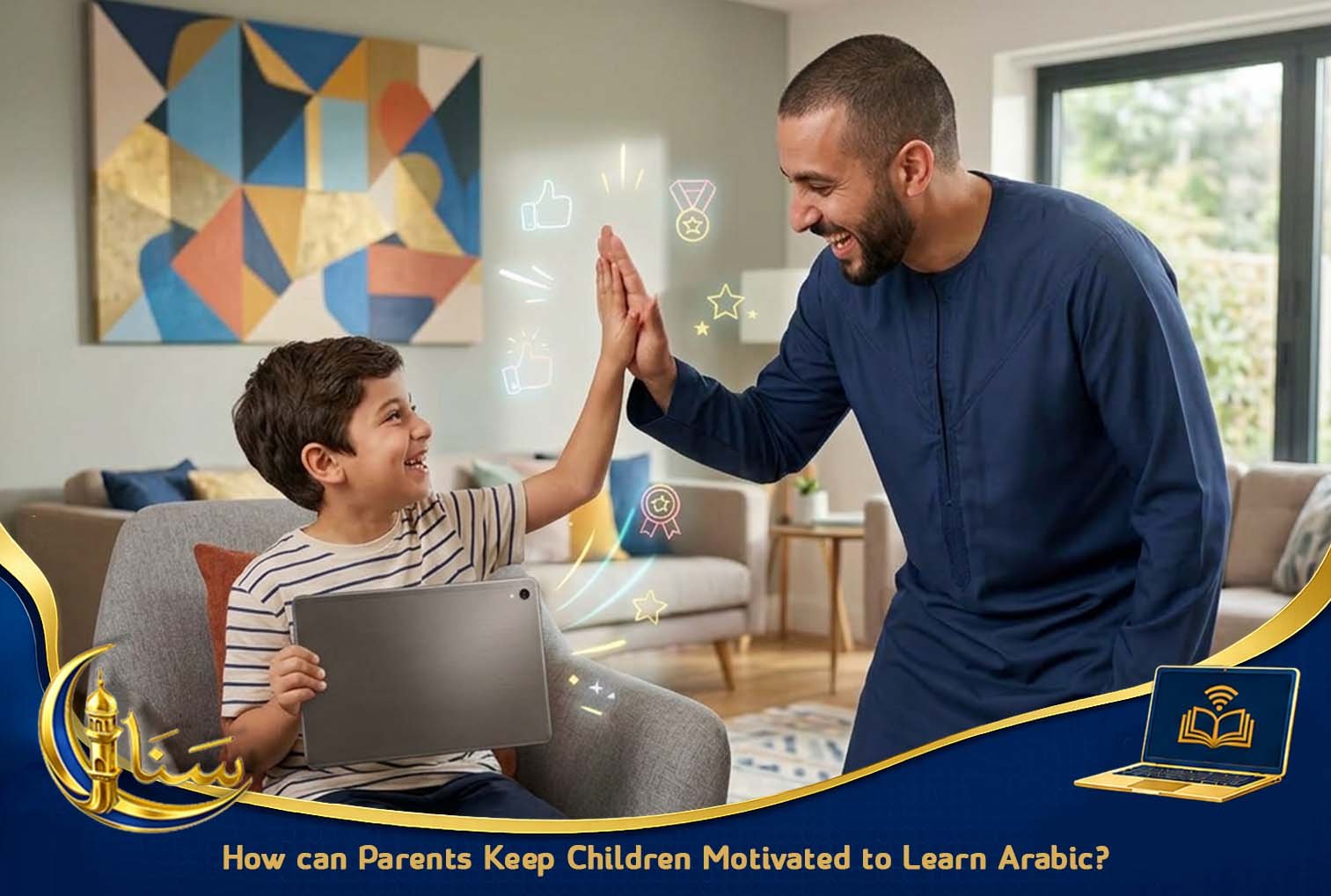
Motivation can change from one week to another. A child who enjoys Arabic today may resist it tomorrow. This is normal, especially when learning takes place over a long period. Parents can help by making progress visible.
For example, create a simple chart where children can mark completed activities. You can also celebrate milestones such as recognizing the Arabic alphabet, understanding a short story, or completing a simple conversation. However, avoid turning every achievement into a competition. Instead, praise specific efforts:
- “You remembered that word without help.”
- “Your pronunciation was clearer today.”
- “You understood the story.”
- “You used a new Arabic sentence.”
Specific encouragement tells children exactly what they are doing well, helping them understand their progress and motivating them to keep improving their Arabic skills. Parents can also consider Is Learning Arabic Online Effective when deciding whether structured online instruction suits their child’s age, personality, and learning goals.
Avoid Making Every Arabic Activity a Test
Another important point is to separate learning from constant testing. Children need opportunities to listen and experiment without feeling that every answer will be judged. Games and conversations should sometimes remain purely enjoyable.
Therefore, let some Arabic activities have no formal objective. Singing a favorite song or reading a familiar story can still provide valuable exposure.
When Should Parents Consider Online Arabic Lessons?
Home activities can create a strong learning environment. However, some children eventually need structured instruction, especially when parents are not confident Arabic speakers themselves.
An experienced teacher can provide regular lessons, guide pronunciation, introduce an appropriate progression, and give the child opportunities to communicate with another Arabic speaker. This is where Sana Online Quran Academy can become part of a family’s broader learning routine when its available instruction matches the child’s needs.
Parents should consider practical questions before choosing an online program. These include the child’s age, current Arabic level, learning objectives, preferred schedule, lesson format, and the amount of practice needed between sessions. Families comparing the Best Way to Learn Arabic Online can look at these factors rather than focusing only on convenience.
Online learning can work particularly well when the child has a quiet place to study and receives support from adults between lessons.
Fun Ways Kids Can Learn Arabic With Guided Online Practice
Online lessons do not have to replace games, stories, songs, or family activities. Instead, they can complement them. For example, a teacher may introduce vocabulary during a structured lesson. Later, parents can reinforce the same vocabulary through a game at home.
Similarly, children can practice words from their lesson while drawing, reading, or playing. For parents wondering How Long Does It Take to speak Arabic, it is important to remember that progress varies according to age, practice frequency, previous exposure, and the child’s opportunities to use Arabic. A balanced approach can therefore combine:
- Guided instruction.
- Independent practice.
- Family conversations.
- Games.
- Stories.
- Songs.
- Creative activities.
At Sana Online Quran Academy, parents looking for online Quran-focused learning can explore whether the available program fits their child’s specific learning goals and schedule. The important point is to choose instruction based on the child’s actual needs rather than simply selecting an online class because it is convenient.
How to Choose Activities According to Your Child’s Age?
A major reason some language activities fail is that they are not appropriate for the child’s developmental stage.
Younger children generally benefit from short, sensory, and highly interactive activities. Pictures, songs, movement, repetition, and simple stories can work well.
School-age children can usually handle more structured games, reading tasks, writing practice, and role-playing.
Older children may prefer activities connected to their interests. They can also begin reading longer texts, holding conversations, writing short paragraphs, and exploring Arabic media designed for learners. For example:
Young children:
- Songs.
- Picture books.
- Movement games.
- Letter activities.
- Object naming.
Elementary-age children:
- Stories.
- Vocabulary games.
- Drawing.
- Role-play.
- Simple reading.
Older learners:
- Conversations.
- Short Arabic videos.
- Reading passages.
- Writing activities.
- Topic-based discussions.
Consequently, the same activity can be adapted rather than discarded as the child grows.
Common Mistakes Parents Should Avoid
Parents usually want to help their children progress quickly. Nevertheless, too much pressure can have the opposite effect. One common mistake is introducing too many new words at once. Children need repeated exposure before vocabulary becomes familiar.
Another problem is expecting perfect pronunciation immediately. Correction has a place, but constant interruption can reduce confidence. Parents should also avoid comparing siblings or classmates. Every child has a different learning pace. Other mistakes include:
- Making every session too long.
- Using materials that are too difficult.
- Ignoring the child’s interests.
- Focusing only on memorization.
- Changing activities too frequently.
- Expecting immediate fluency.
- Treating mistakes as failure.
Instead, focus on gradual improvement. A child who understands a few more words this month than last month is making meaningful progress.
Create a Simple Weekly Arabic Learning Plan
A realistic plan can make it easier to turn Fun Ways Kids Can Learn Arabic into a regular habit. Parents can start with 15–20 minutes of intentional practice several times a week, depending on the child’s age and attention span. A simple plan could include:
- Monday – Story Day
Read a short Arabic story and introduce three useful words. - Tuesday – Game Day
Play a matching game or vocabulary treasure hunt. - Wednesday – Listening Day
Listen to an Arabic children’s song and repeat familiar phrases. - Thursday – Creative Day
Draw pictures and label them in Arabic. - Friday – Conversation Day
Use simple Arabic expressions during a family activity. - Saturday – Guided Lesson
Complete a structured online lesson if appropriate. - Sunday – Review Day
Revisit familiar words through a relaxed game or story.
The exact schedule does not matter as much as consistency. If the family cannot follow seven days, three or four regular sessions can still provide useful exposure.
How Sana Online Quran Academy Can Fit Into a Child’s Learning Routine?
For families considering structured online Quran education, Sana Online Quran Academy can be considered alongside the child’s home learning activities rather than as a replacement for them.
Parents can create a routine in which structured lessons provide guided instruction while everyday activities reinforce listening, vocabulary, pronunciation, and confidence.
Before enrolling, families should clarify what the child actually needs. For example, a child beginning Arabic from scratch may require a different approach from one who can already read Arabic letters and understands basic vocabulary.
It is also useful to consider the child’s attention span and preferred learning style. Some children respond well to direct instruction, while others need more visual or interactive activities.
The most useful program is one that fits the child’s learning goals and can be maintained consistently.
Make Arabic a Positive Part of Childhood
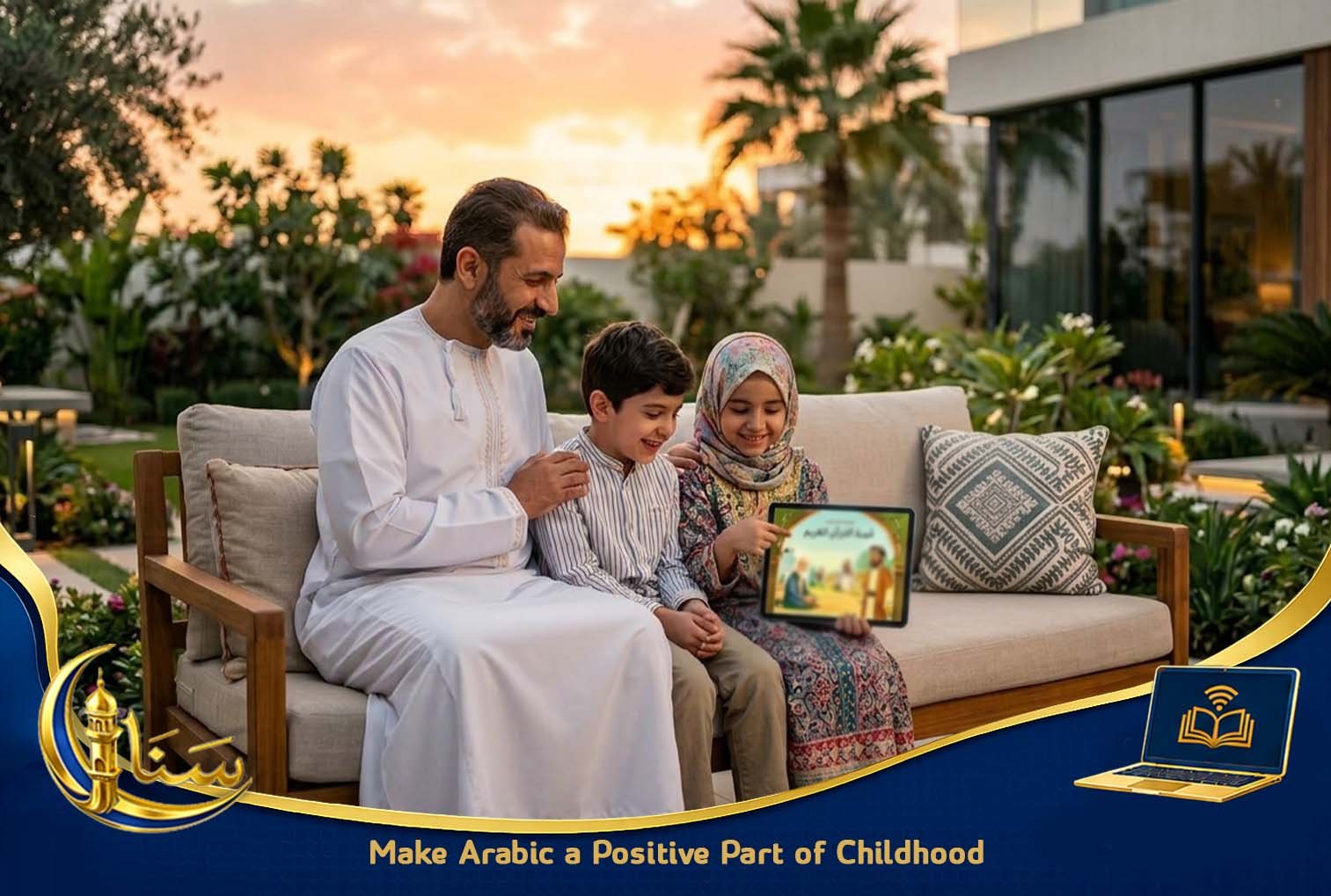
Ultimately, Fun Ways Kids Can Learn Arabic are not about finding one magical game that suddenly makes a child fluent. Successful language development usually comes from repeated exposure, meaningful communication, appropriate instruction, and positive experiences.
A child may learn one word during a song, another while playing, and another during a family conversation. Over time, those small moments can build a larger foundation.
Parents should therefore think beyond individual lessons. Arabic can become part of bedtime stories, weekend activities, family conversations, games, cooking, drawing, and structured online learning.
Most importantly, allow children to enjoy the process. When they associate Arabic with curiosity, creativity, communication, and encouragement, they may become more willing to keep learning.
Sana Online Quran Academy can be explored as a structured option for families whose goals include online Quran education, while parents can continue supporting their child’s broader Arabic exposure through enjoyable activities at home.
Frequently Asked Questions About Fun Ways Kids Can Learn Arabic
Here are some common questions parents ask about Fun Ways Kids Can Learn Arabic and how to make Arabic learning more enjoyable for children.
1. What is the best age to start teaching Arabic to a child?
There is no single age that works for every family. Children can be exposed to Arabic from an early age through songs, simple speech, picture books, and everyday interactions. The important factor is using age-appropriate language and keeping the experience positive.
2. How long should an Arabic activity last for a child?
The ideal duration depends on the child’s age, attention span, and activity. Younger children may benefit from very short sessions, while older learners can handle longer activities. Several short sessions can be more manageable than forcing a child to study for a long period.
3. Can a child learn Arabic if neither parent speaks it fluently?
Yes, a child can receive Arabic exposure through books, audio resources, structured classes, language-learning activities, and interaction with Arabic speakers. A consistent learning environment is particularly helpful when Arabic is not commonly spoken at home.
4. How can parents tell whether an Arabic activity is too difficult?
Watch how the child responds. If they consistently cannot understand the instructions, become frustrated, or avoid the activity, it may be above their current level. Simplifying the task, reducing the number of new words, or adding visual support can make it more accessible.
In conclusion, the most effective Fun Ways Kids Can Learn Arabic are those that turn language practice into an experience children want to repeat. Stories, games, songs, drawing, role-playing, cultural activities, and everyday conversations can all create meaningful opportunities to hear and use Arabic.
At the same time, enjoyable activities work best when they are supported by consistency. Parents can create a simple routine, adapt activities to the child’s age, and gradually increase the level of difficulty.
For families seeking structured online Quran education, Sana Online Quran Academy can be considered as part of a broader learning routine. The final goal should remain clear: help children develop their skills gradually while keeping Arabic connected to communication, curiosity, and positive experiences.